
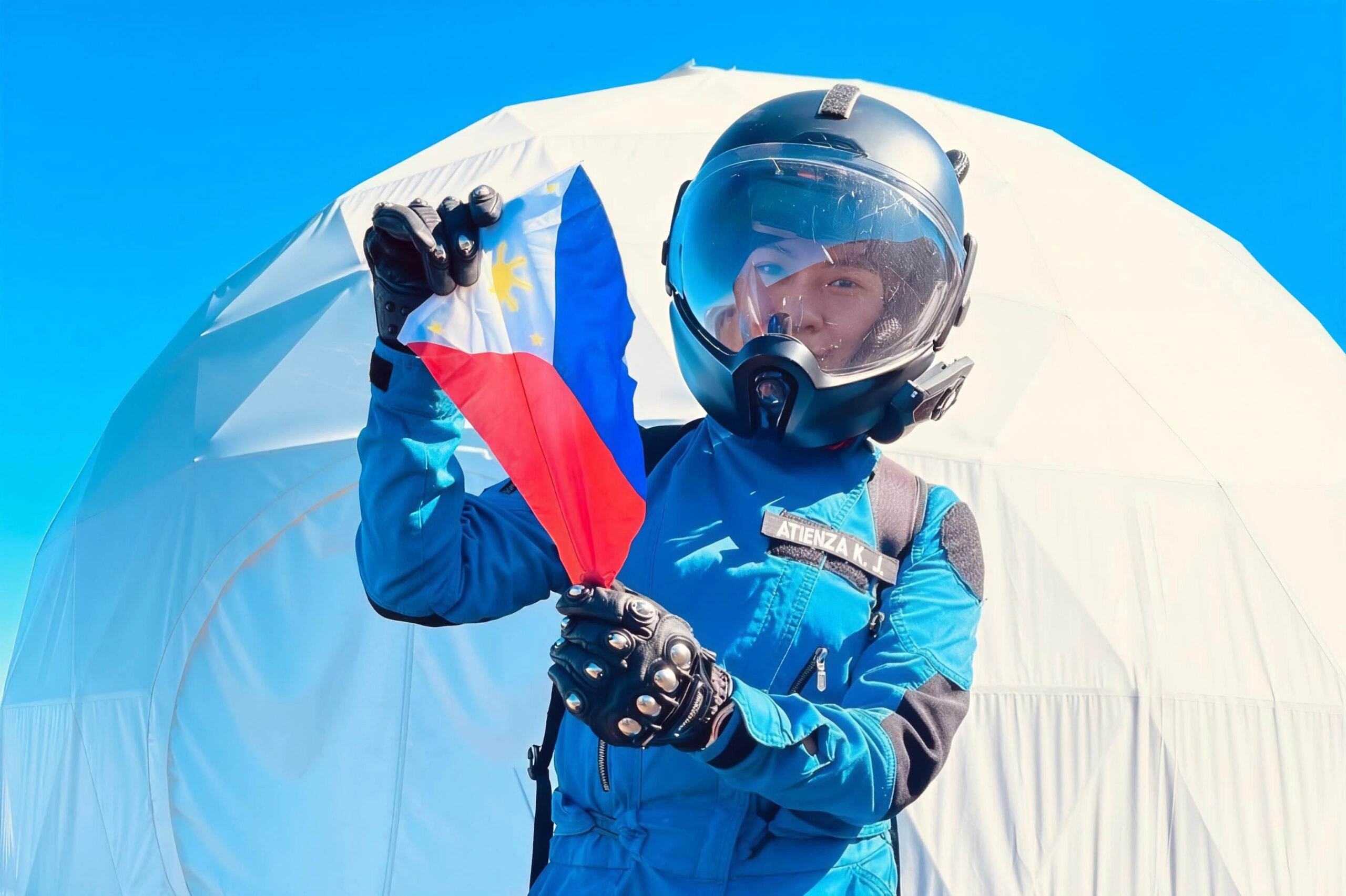

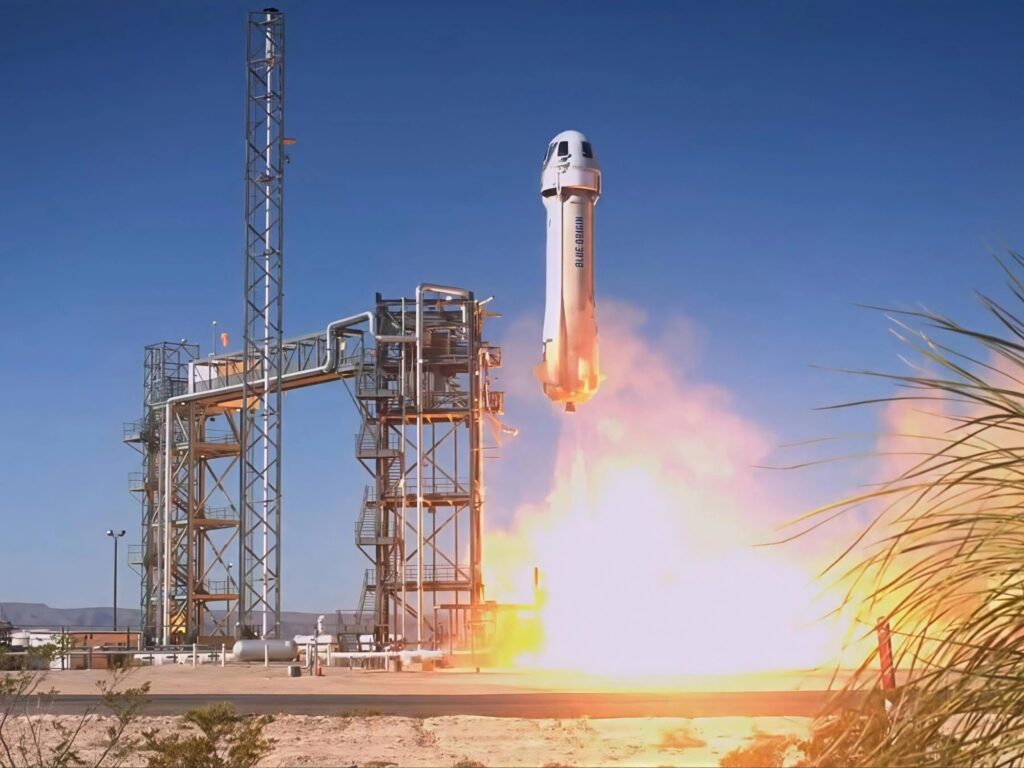
The Space Exploration and Research Agency (SERA) has teamed up with Blue Origin to launch a sub-orbital mission using the New Shepard rocket, offering one last seat open to public competition.
Five of the six seats on the flight have already been reserved for “emerging space nations” — Nigeria, India, Indonesia, Brazil, and Thailand — leaving a single slot to be won.
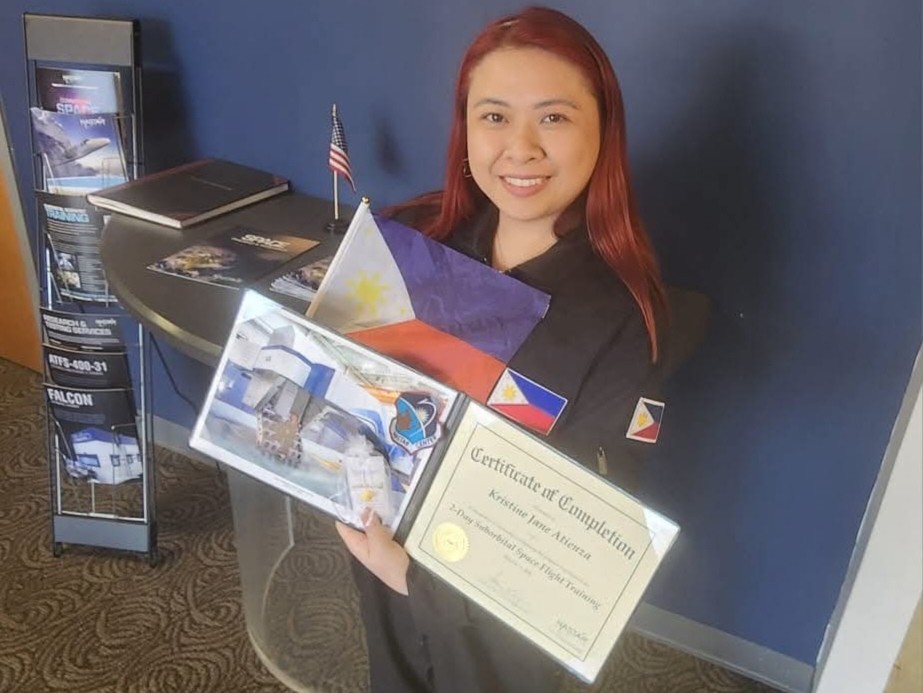
Among the contenders vying for that final slot is Filipino public-health nutritionist and dietitian Kristine Jane Atienza, who already holds the distinction of being the first Filipino certified for sub-orbital spaceflight by the U.S-based NASTAR Center.
With about 33,000 people worldwide in the running and several hundred applicants from the Philippines (though fewer than 10 are actively campaigning alongside her), Atienza’s bid may open a door long shut to Filipino participation in human spaceflight.
Why is this more than a personal ambition? Because the global human space-flight record reveals just how rare and exclusive the club remains. According to a recent count, 631 individuals from 43 countries have travelled to space (which includes astronauts, space tourists, and sub-orbital participants). Among them, the United States leads with 369 people, Russia/Soviet Union with 138, and China with 24. In that context, to send a Filipino would mark a breakthrough: the Philippines is not yet among the countries that have fielded a space-traveler.
Atienza emphasizes this wider significance. “I would love to see a Filipino to have that seat for us to break the highest glass ceiling, literally highest, ‘yung Kármán line… I’m just one ticket away from space,” she said in a PhilStar interview.
She also clarified that she prefers the phrase “the first Filipino in space” rather than “first Filipino astronaut,” mindful of the technical distinctions.
“Sobrang dami na nakarating beyond the Kármán line; makita ang Earth from above. But no Filipino has ever been to that place,” she reiterated.
The structure of the SERA competition underscores the public-engagement nature of the campaign. In the first phase, candidates complete daily tasks, earn “SpaceDust” credits and garner a “candidate badge” to advance. The second phase will ask remaining participants to build social campaigns, share stories and rally support; the top three from each region will advance to a final round where teams compete for the collective’s final vote. According to Atienza, the flight is slated for the second quarter of 2026.
For the Philippines, a nation of more than 116 million people, Atienza argues the campaign becomes a national moment: “We’re 116 million Filipinos, aren’t we curious why no one has gone to space yet? This is a good chance for us to finally, hopefully, bring a Filipino flag to space.”
Her online campaign reflects that ambition:
“Hi there, I’m Kristine, a Filipino analog astronaut, and certified by NASTAR Center to fly a suborbital… I am now officially campaigning for a seat on Blue Origin’s New Shepard with #SERASpace to become the FIRST FILIPINO IN SPACE. The dream: for the Philippines to break the highest glass ceiling and bring our flag beyond the Kármán line… Because every Filipino child (and child at heart) deserves to dream beyond our skies. You could help secure a seat for the Philippines by following, resharing and joining the campaign.”
At the time of writing, she was ranked 10th out of 8,000+ active campaigners (as of August 27).
In sum: the mission transcends individual ambition. It holds symbolic power — a chance for the Philippines to stake its place among the relatively few nations whose citizens have ventured into space. If Atienza succeeds, the country would join the cadre of 43 nations whose people to-date have crossed the threshold. That threshold is no mere metaphor.
As global space-flight diversifies beyond Cold War nationals and major powers, the Philippines has the opportunity to claim its first footprint in orbit (or sub-orbital space) — a milestone that could inspire future generations, shift public awareness of space science in the country, and potentially catalyze its own human-spaceflight ambitions.
Follow PHILIPPINES TODAY on Facebook and Instagram, and subscribe on YouTube for the latest updates.