


Ahead of the next typhoon season, the Philippine Atmospheric, Geophysical and Astronomical Services Administration (PAGASA) on Thursday, January 1, released the 2026 roster of tropical cyclone names. The announcement forms part of the country’s annual preparations for storms that regularly affect the western North Pacific.
The names will be assigned to tropical cyclones that enter or develop within the Philippine Area of Responsibility (PAR), the zone where PAGASA issues storm warnings and advisories. While weather systems also carry international names assigned by the Japan Meteorological Agency, PAGASA uses local names to make advisories easier to follow, particularly when multiple storms affect the country in close succession.
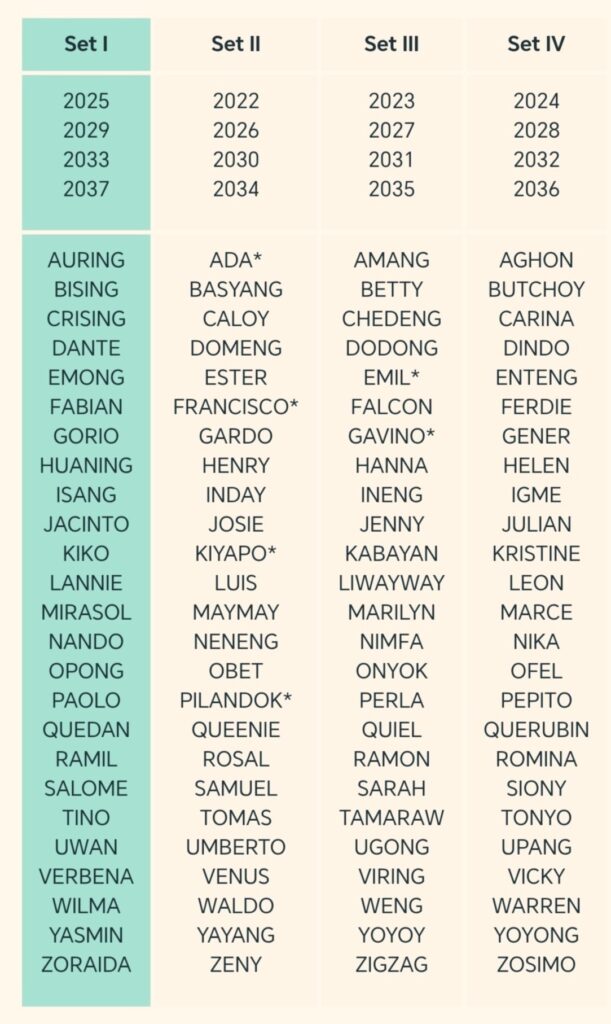
For 2026, the primary list—used in alphabetical order as storms enter the PAR—includes: Ada, Basyang, Caloy, Domeng, Ester, Francisco, Gardo, Henry, Inday, Josie, Kiyapo, Luis, Maymay, Neneng, Obet, Pilandok, Queenie, Rosal, Samuel, Tomas, Umberto, Venus, Waldo, Yayang, and Zeny. The naming sequence follows the alphabet, using all letters except X, which PAGASA excludes from its lists. Once assigned, these names quickly become fixtures in forecasts, emergency briefings, and daily news coverage.
If the number of tropical cyclones entering the PAR exceeds 25 in a single year, PAGASA will activate an auxiliary list to maintain the naming sequence. The backup names for 2026 are Agila, Bagwis, Chito, Diego, Elena, Felino, Gunding, Harriet, Indang, and Jessa. Auxiliary lists are not always used, but they are in place to account for unusually active seasons.
PAGASA follows a structured naming system. The agency maintains four sets of 25 local names, which rotate every four years. After a set is used, it is set aside and reused only after several seasons. This system balances familiarity and clarity, ensuring names remain recognizable without being repeated too frequently. The auxiliary lists function as overflow when storm activity surpasses the primary sequence.
Many of the names were selected for being easy to pronounce and familiar to Filipinos. In the late 1990s, PAGASA drew from public submissions when developing its modern name pool. Names that may cause confusion, resemble prominent personalities, or become strongly associated with destructive events are reviewed and replaced when necessary.
Storm names can also be retired. PAGASA removes names linked to severe loss of life or major damage, both to avoid distress and to prevent confusion in future advisories. Retired names are replaced with new ones to keep the lists current.
Earlier forecasts from PAGASA indicate that two to eight tropical cyclones may enter the PAR during the first half of 2026. Activity typically increases later in the year. The Philippines lies in the world’s most active tropical cyclone region, where an average of about 20 tropical cyclones develop annually, with roughly eight or nine crossing the country.
The peak of the typhoon season runs from July to October, when nearly 70% of storms form. Warm sea temperatures and favorable atmospheric conditions during these months allow systems to strengthen rapidly, often leaving limited time for preparation.
By releasing the list early, PAGASA reinforces a steady message: while storm paths cannot be predicted far in advance, early awareness and clear communication remain central to disaster preparedness.
Stay updated—follow Philippines Today on Facebook and Instagram, and subscribe on YouTube for more stories.