
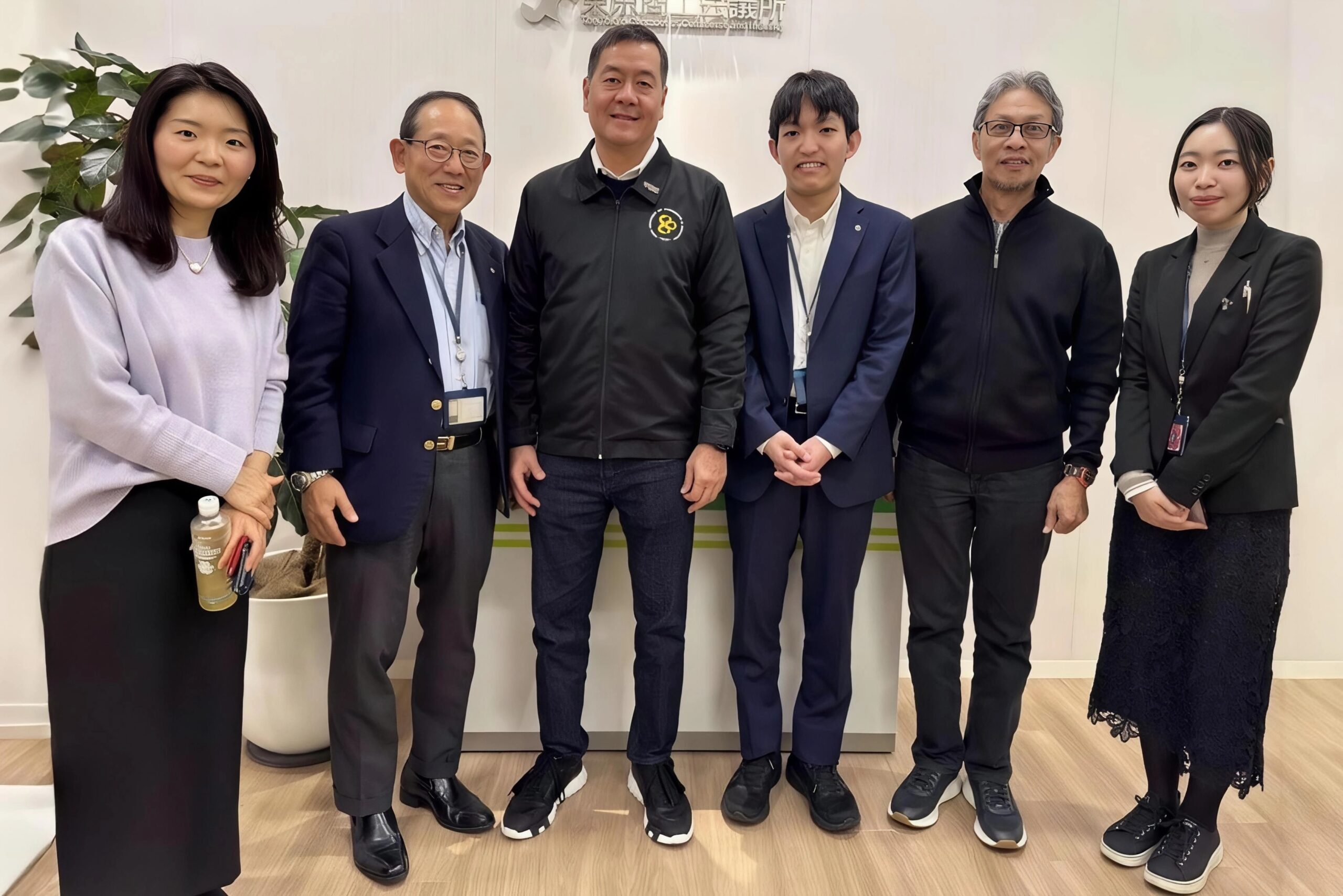

The Cebu Chamber of Commerce and Industry (CCCI) deepened its push into East Asian markets after senior officers met with counterparts from Japan’s largest business groups to expand cross-border cooperation and investment flows.
CCCI president Jay Yuvallos and vice president for international affairs Pedro Delantar held talks on Tuesday with Yuki Kawamuto and Kenjie Horie, senior manager of the international division at the Japan Chamber of Commerce and Industry and the Tokyo Chamber of Commerce and Industry. Discussions centered on Cebu’s participation in the East Asia Business Council through the East Asia Connect Program, a platform aimed at accelerating business matching and policy dialogue across the region.
The East Asia Connect Program links chambers and enterprises in Southeast Asia with partners in Japan and other Northeast Asian economies, providing structured channels for trade facilitation, technology exchange, and market access. Cebu’s entry into the initiative underscores its bid to position the central Philippine province as a gateway for Japanese firms seeking expansion in ASEAN, one of the world’s fastest-growing regional blocs.
The East Asia Business Council convenes business leaders from ASEAN, China, Japan, and South Korea to promote economic integration and regional trade. Through forums, trade missions, and coordinated advocacy, the group seeks to streamline partnerships between private-sector stakeholders and governments, particularly in areas such as supply-chain resilience, digital transformation, and sustainable growth.
For its part, the Tokyo chamber—one of Japan’s largest business associations—has long served as a conduit for Japanese outbound investment. The Japan chamber, meanwhile, represents a nationwide network of local chambers and industry groups, providing policy input to the Japanese government and facilitating overseas commercial linkages. Collaboration under the council framework offers Cebu-based companies exposure to potential investors and suppliers, while giving Japanese firms access to opportunities in manufacturing, services, tourism, and infrastructure in the Philippines.
Japan remains one of the Philippines’ largest trading partners and a leading source of official development assistance and foreign direct investment, supporting projects in transport, energy, and urban development. Cebu, the country’s second-largest metropolitan economy outside Metro Manila, has emerged as a hub for business-process outsourcing, furniture exports, food processing, and port logistics—sectors that align with Japanese firms’ regional supply-chain strategies.
Both sides identified Cebu as an emerging destination for Japanese capital, citing its expanding industrial base, skilled workforce, and improving connectivity through seaports and an international airport. The engagement is expected to translate into business-to-business meetings, sector-specific exchanges, and follow-up trade initiatives under the East Asia Connect framework.
Momentum will continue this week as CCCI leads a 45-member delegation to Tokyo from February 25 to 27 for a trade mission designed to formalize partnerships and explore joint ventures. The visit builds on the discussions held with Japanese chamber officials and forms part of CCCI’s broader strategy to strengthen advocacy, deepen regional linkages, and widen market access for its members.
By anchoring its international expansion strategy in structured partnerships with established trade bodies in Japan, the Cebu chamber is seeking to secure longer-term competitiveness for local enterprises amid intensifying regional integration and shifting global supply chains.
Stay updated—follow Philippines Today on Facebook and Instagram, and subscribe on YouTube for more stories.