


The Philippines has opened its first dedicated salt research center in Pangasinan, marking a significant step in a long-running effort to curb the country’s heavy reliance on imported salt and revive a once-thriving local industry.
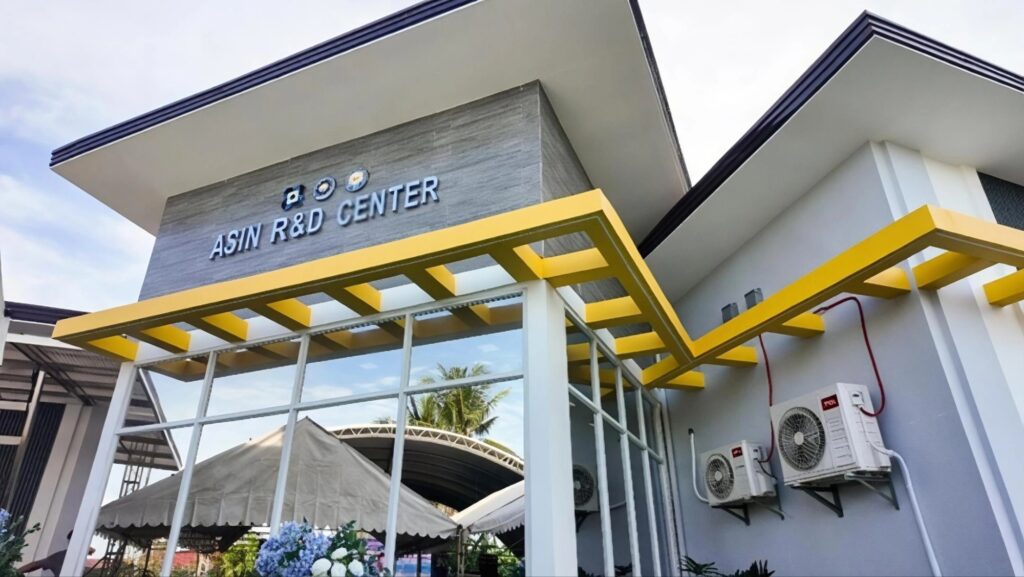
The Department of Science and Technology (DOST), through its Philippine Council for Industry, Energy and Emerging Technology Research and Development, formally inaugurated the Accelerating Salt Research and Innovation (ASIN) Center on February 17 at Pangasinan State University’s Binmaley campus.
Backed by ₱43 million in funding under the Niche Centers in the Regions for Research and Development program, the facility is designed to modernize salt production through science-based research, laboratory testing, training, and technology transfer.
“For years, our country has faced a difficult truth: we rely overwhelmingly on imported salt. Ninety-three percent of our total supply comes from abroad, while only seven percent is produced locally,” DOST Secretary Renato Solidum Jr. said during the inauguration.
Government data show the Philippines produces about 114,623 metric tons of salt annually—a fraction of national demand.
The shortfall has made the country dependent on imports, largely from Australia and China, even as domestic consumption continues to grow because of food, industrial, and agricultural needs.
Solidum said the ASIN Center was established in response to decades of underinvestment in salt science and technology. He cited multiple challenges hounding the sector: shrinking salt farms, aging producers, outdated production methods, quality control issues, climate disruptions, and the absence of modern facilities where new generations of salt makers can be trained.
“This is why the establishment of the ASIN R&D Center is our response to decades of underinvestment in salt science and a decisive step toward achieving true salt self-sufficiency,” he said.
Located in Pangasinan—long known as a major salt-producing province—the center features advanced laboratory testing equipment, training and workshop spaces, and a technology demonstration site where researchers and producers can pilot improved processes. Officials said the facility will serve not only Pangasinan but other salt-producing regions across the country.
Pangasinan State University president Elbert Galas said the center aims to increase both the volume and quality of domestic salt output.
“The purpose of this research center is, first, to increase the production of salt. Second, to improve quality. There are many pollutants and impurities that mix with our traditional methods, such as solar drying and cooking,” he said.
Galas said university researchers have developed a machine capable of large-scale salt production using an automated filtration system that removes impurities, including microplastics and other pollutants. The system is designed to reduce manual cleaning of filters and lower labor and maintenance costs.
“There will be no need for human intervention to clean the filters. This will save labor, time, effort, and expenses related to maintenance and logistics,” he said.
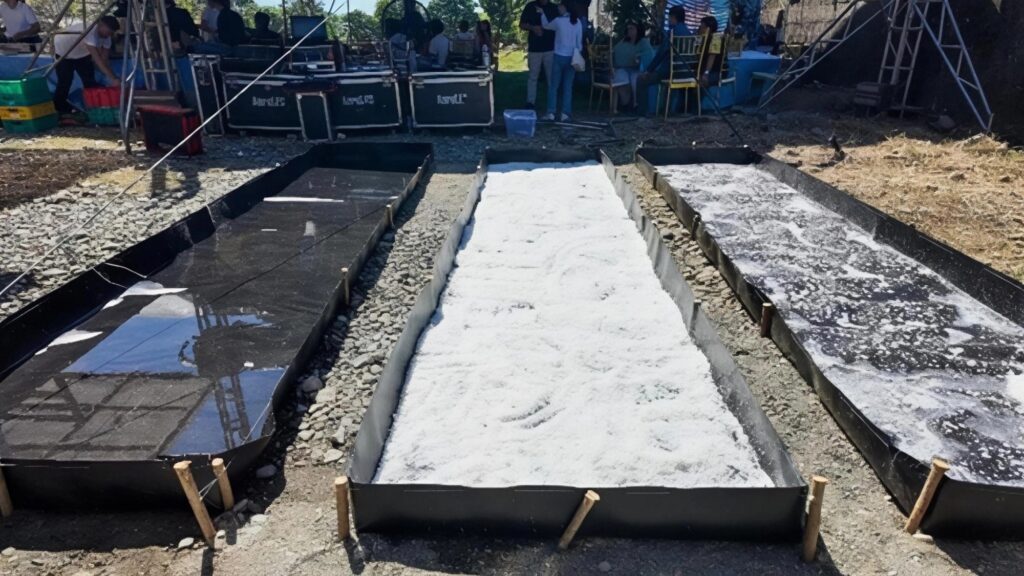
ASIN Center program leader, Engr. Rex Basuel, said the new technologies are intended to complement traditional salt-making practices rather than replace them. He said the system can produce 300 to 350 liters of concentrated brine in about three and a half hours while consuming roughly 30 kilowatts of electricity.
Researchers are also studying the potential extraction of high-value minerals such as magnesium chloride, sulfate, calcium, and potassium for possible industrial applications.
Officials said the center will focus on research and development, testing and analysis, extension and capacity-building, and technology transfer. As processes are refined and scaled up, they hope domestic production will steadily rise—narrowing the import gap and, eventually, positioning the Philippines not just as salt-sufficient, but competitive in regional markets.
Stay updated—follow Philippines Today on Facebook and Instagram, and subscribe on YouTube for more stories.