
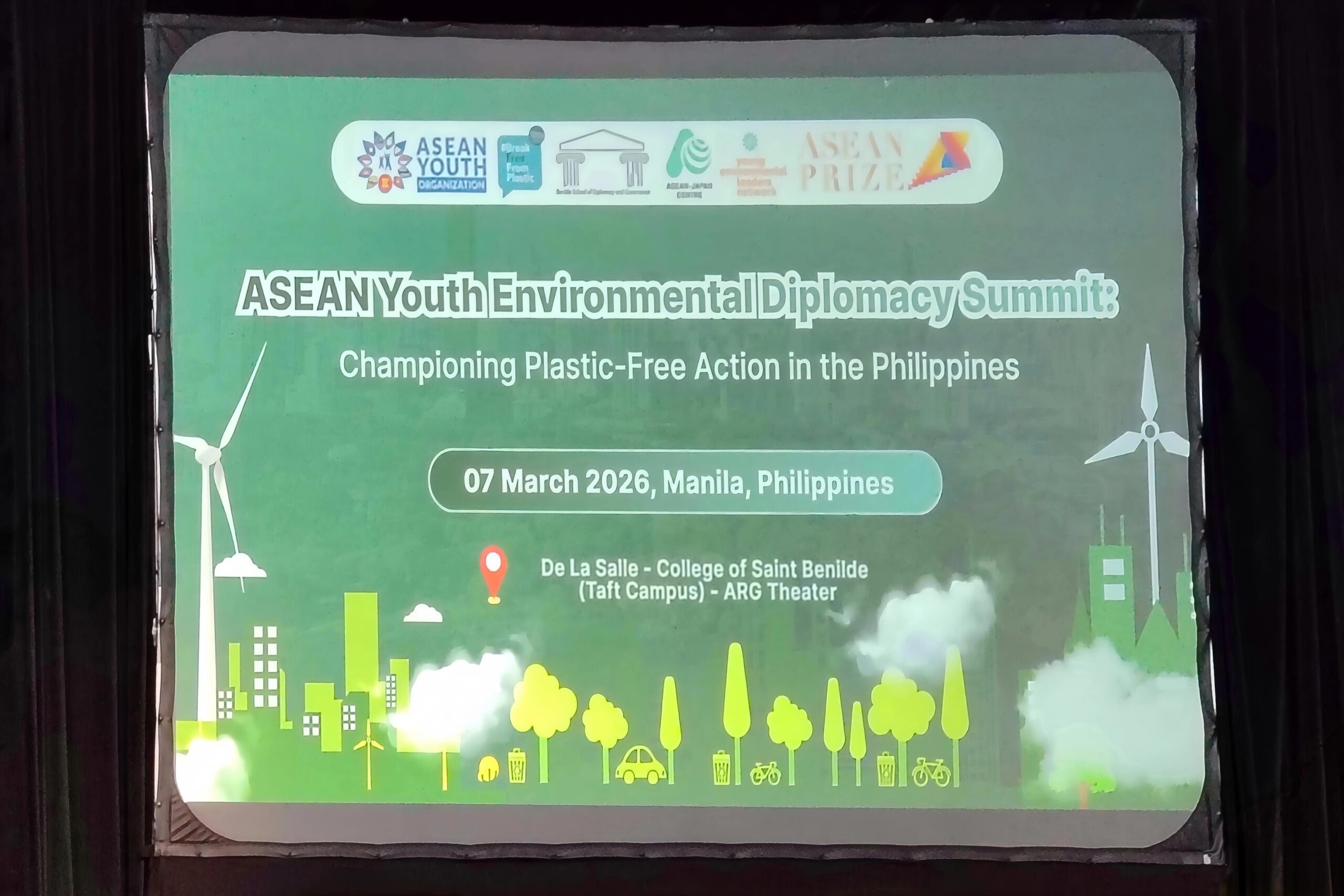

Plastic pollution threatens the Philippines’ coastal communities, ecosystems, and climate resilience, making action urgent across sectors, a Department of Environment and Natural Resources (DENR) official said on Saturday. Addressing young leaders in Manila, she urged the region’s youth to help drive solutions and strengthen the country’s push for a plastic-free future.
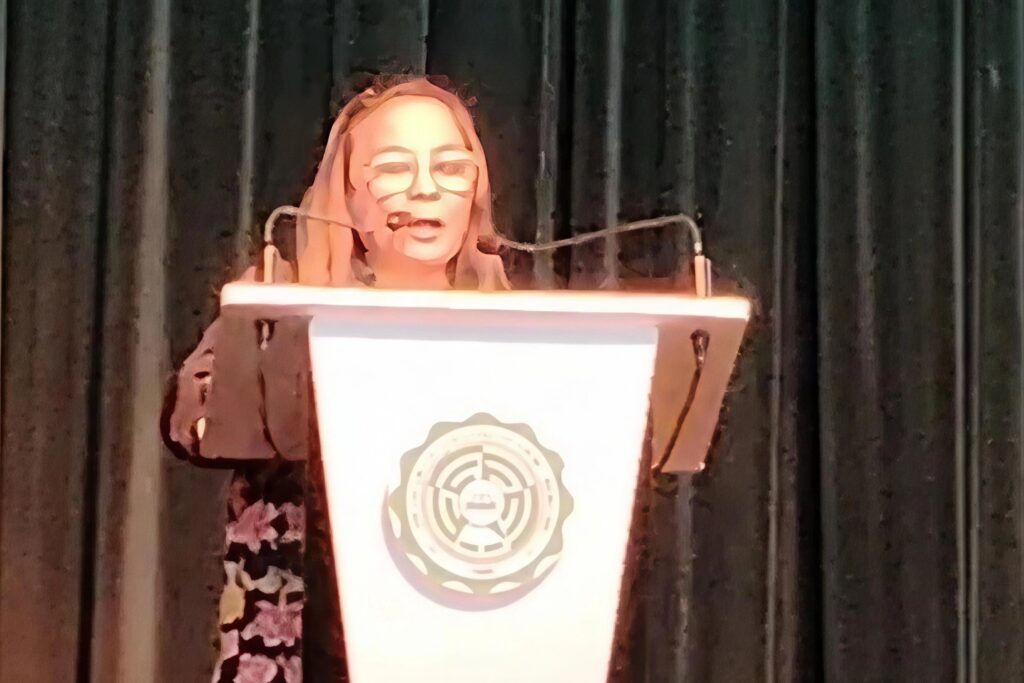
Maria Cristina Francisco, chief of the environmental education and information division of the DENR’s Environmental Management Bureau, delivered keynote remarks at the 2026 ASEAN Youth Environmental Diplomacy Summit at De La Salle – College of Saint Benilde.
“Our theme, ‘Championing Plastic Free Action in the Philippines,’ is not just a slogan. It is an urgent call to action,” Francisco said. “As an archipelago, we are on the front lines of the plastic crisis.”
She said the issue goes beyond waste management, warning that plastic pollution threatens the country’s environment, tourism sector, and public health.
Francisco highlighted the Philippines’ policy framework on waste management, citing Republic Act No. 9003, or the Ecological Solid Waste Management Act of 2000, as a landmark environmental law.
“At a time when sustainability is not yet part of everyday discourse, RA 9003 has already asserted a clear principle that waste must be reduced at source, managed responsibly, and addressed through shared responsibility from government to communities, from industries to households,” she said.
The law, she said, reshaped the country’s approach to waste management by treating it as an issue of governance and collective responsibility rather than a purely technical concern.
Over the past 25 years, Francisco said the law has led to the closure of open dumpsites, the establishment of materials recovery facilities, and the integration of solid waste management into local government planning. It has also strengthened community participation in implementing localized ecological solutions.
She also cited Republic Act No. 11898, or the Extended Producer Responsibility (EPR) Act of 2022, which requires large companies to take responsibility for the plastic packaging they produce.
Under the law, large enterprises must register and implement programs that reduce plastic waste, support recovery initiatives, and redesign products to improve reusability and recyclability.
“Through this legislation, producers are now directly involved in collection, recycling, and responsible disposal of their products,” Francisco said.
Participation in the program has expanded. As of 2025, a total of 201 companies were registered under the EPR framework, with about 700 large enterprises implementing initiatives alongside 300 micro, small, and medium enterprises.
In 2024, the Philippines recorded a plastic footprint of 440.59 million kilograms, with 246.62 million kilograms diverted from waste streams—a 55.98% diversion rate that exceeded the mandated 40%, she said.
Francisco also underscored the role of youth engagement through Republic Act No. 9512, the National Environmental Awareness and Education Act of 2008, which integrates environmental education across all levels of the school system.
The law mandates environmental education from early childhood to higher education, including technical and vocational programs, and designates November as Environmental Awareness Month.
Programs such as the National Search for Sustainable and Eco-Friendly Schools recognize institutions that integrate environmental education into their curriculum and campus operations while encouraging students and faculty to engage in environmental initiatives.
Francisco said teacher training and professional development are also key components of the program, ensuring educators have the knowledge and skills to effectively teach environmental stewardship.
Beyond the classroom, the Environmental Management Bureau and the DENR conduct public campaigns, upcycling workshops, seminars on plastic pollution, and community mobilization activities to strengthen awareness and action on solid waste management.
Francisco urged young people attending the summit to see themselves not just as beneficiaries of environmental policies but as partners in shaping them.
“To the youth in this room, we do not see you as merely beneficiaries of these policies,” she said. “We see you as partners, co-creators; and policies become more innovative when young people are involved.”
She said the government is committed to supporting youth-led initiatives through platforms, technical assistance, and institutional partnerships aimed at turning environmental advocacy into measurable action.
“The path to a plastic-free Philippines will pave the young leaders who are willing to lead by example,” Francisco said. “The future of our environment rests on your hands. The government is here to support you, guide you, and stand beside you as you champion this cause.”
Stay updated—follow Philippines Today on Facebook and Instagram, and subscribe on YouTube for more stories.