
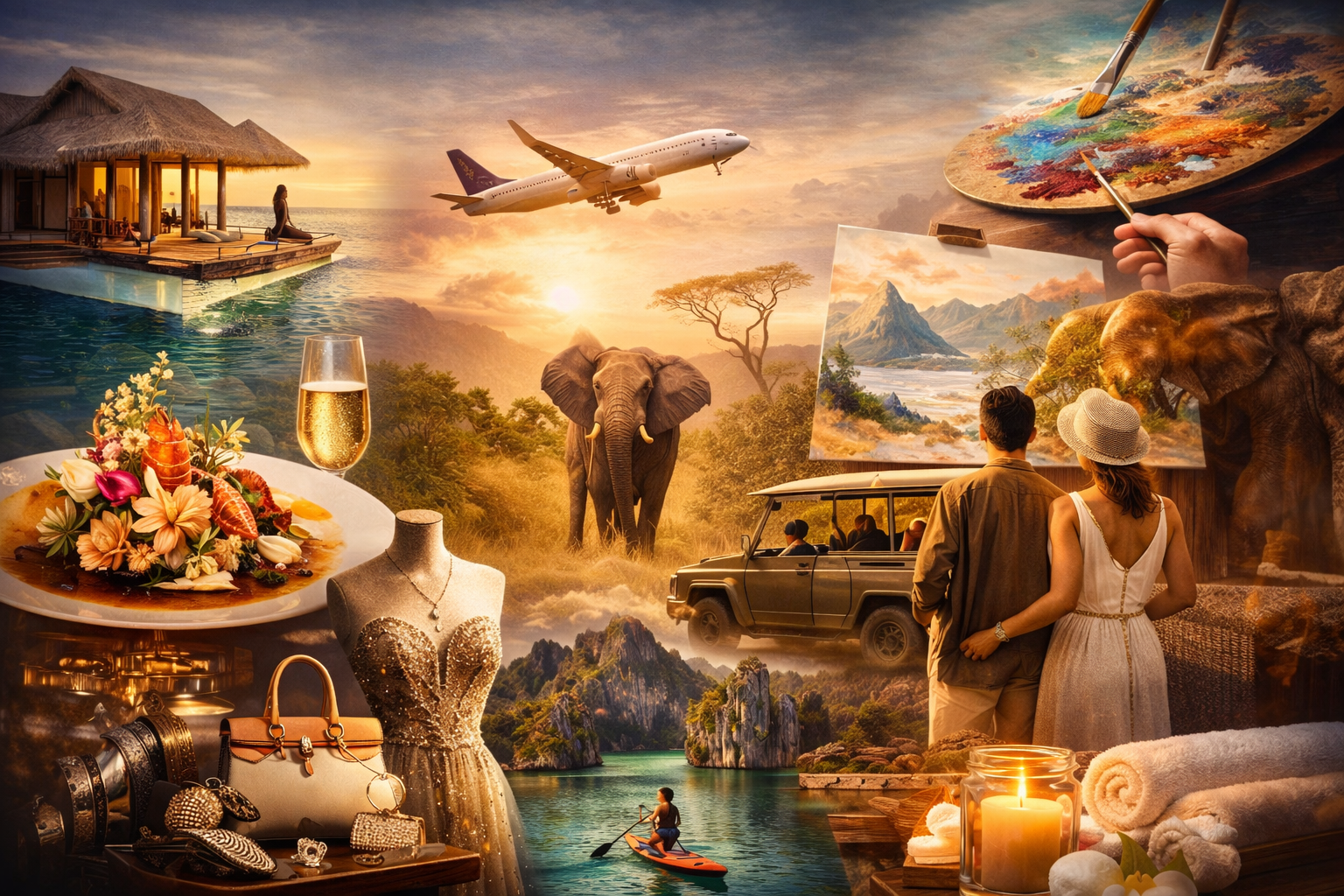

A shift is underway in luxury travel, where experience is overtaking ownership as the primary driver of value. A new white paper by Agility Research and Heavens Portfolio identifies cross-industry collaboration as a key force behind this transformation.
What was once an occasional marketing exercise is now central to how luxury brands create value, connect with consumers, and remain relevant in a crowded global market.
At the core of the findings is a structural change in consumer behavior. According to TrendLens 2025, 65% of affluent consumers expect to spend more on luxury travel and experiences than on products in the next five years. The shift signals a move away from ownership and toward participation—where meaning, memory, and emotional connection take precedence over material acquisition.
“Cross-industry collaborations have become one of the most powerful ways for luxury brands to stay relevant and emotionally connected with affluent consumers. In today’s marketplace, heritage alone is not enough—what matters is the ability to create experiences that are distinctive, authentic, and culturally resonant,” said Amrita Banta, managing director of Agility Research. “This whitepaper highlights how partnerships across hospitality, fashion, art, and lifestyle are reshaping the future of luxury travel and setting new benchmarks for brand engagement.”
This evolution is being shaped largely by younger affluent consumers. Gen Z and Millennials are digitally fluent, highly selective, and motivated less by status than by authenticity. The report notes that one in four affluent consumers reject brands they perceive as lacking exclusivity—forcing companies to rethink how they differentiate themselves.
Collaboration has emerged as a direct response. By bridging industries—hospitality with fashion, art, gastronomy, and conservation—brands are able to create multi-layered experiences that extend beyond traditional service models. A hotel becomes not just a place to stay, but a platform for immersion, where design, scent, storytelling, and culture converge.
“Luxury travel today is about much more than exceptional service or beautiful destinations; it’s about creating stories that travelers carry with them long after the journey ends. At Heavens Portfolio, we’ve seen first-hand how collaborations with fashion, art, and lifestyle brands can transform a stay into a multi-sensory experience,” said Christine Galle, founder and chief executive of Heavens Portfolio.
The white paper underscores that the effectiveness of these collaborations lies in authenticity rather than novelty. Partnerships that align with a brand’s identity create deeper engagement and what the study describes as a “halo effect”, where each partner strengthens the other’s credibility and cultural relevance.
This comes at a time when experiential luxury is accelerating globally. In 2024, travel, wellness, and events recorded the strongest growth in the luxury sector at 5%, with the global luxury travel market projected to reach US$2.36 trillion by 2030. At the same time, spending patterns show a clear generational pivot: younger consumers anticipate a 44% increase in hotel spend and 34% growth in airline spend.
Despite this transformation, the fundamentals remain unchanged. Service and flexibility continue to be the strongest drivers of satisfaction. What collaboration adds is emotional depth—through personalization, cultural storytelling, and sensory engagement. From tailor-made itineraries to conservation-led safaris and artist-designed spaces, the focus is on creating experiences that feel both exclusive and meaningful.
The report’s case studies reflect this shift in practice. Conservation partnerships are redefining safari travel, fashion collaborations are reshaping hotel environments, and artistic interventions are turning transport and accommodation into immersive cultural spaces. These are no longer isolated activations but part of a broader strategy to build long-term brand equity through experience.
A growing opportunity in the Philippines
While the report takes a global view, its findings are increasingly relevant to emerging luxury markets such as the Philippines, where both demand and infrastructure are evolving.
The country’s tourism sector continues to expand, with total contribution to the economy projected to grow significantly over the next decade. The Philippines’ travel and tourism sector contributed around US$91.8 billion to the economy in 2025—equivalent to nearly 20% of GDP—with projections pointing to further growth beyond US$100 billion.
At the same time, the country’s affluent segment is rising, with approximately 12,800 high-net-worth individuals, marking a 32% increase over the past decade. This growing base of affluent travelers is showing similar preferences to their global counterparts—prioritizing experiences, personalization, and cultural connection. Surveys indicate that Filipino travelers are increasingly seeking immersive activities, from food and culture to nature-based and wellness experiences
These trends position the Philippines as a natural environment for the type of collaborations highlighted in the white paper. The country’s strengths—rich cultural heritage, biodiversity, and strong local craftsmanship—lend themselves to partnerships that combine hospitality with design, sustainability, and storytelling.
Luxury resorts and destinations across Palawan, Siargao, and other key locations are already moving in this direction, integrating eco-tourism, community engagement, and curated experiences into their offerings. This aligns closely with the report’s conclusion that purpose-led and culturally grounded collaborations will define the next phase of luxury travel.
The future of luxury travel
Looking ahead, the trajectory is clear.
Multi-sensory experiences—spanning scent, sound, design, and narrative—are expected to become standard. Sustainability and community partnerships will move from optional to expected. Digital tools, including immersive and influencer-driven platforms, will continue to shape how travellers discover and engage with brands.
What emerges from the white paper is a redefinition of luxury itself. It is no longer anchored in possession or prestige alone, but in participation—in the ability to create experiences that are distinctive, authentic, and emotionally resonant.
In that context, collaboration is no longer a trend. It is becoming the foundation of how luxury travel is conceived, delivered, and remembered.
Stay updated—follow Philippines Today on Facebook and Instagram, and subscribe on YouTube for more stories.