

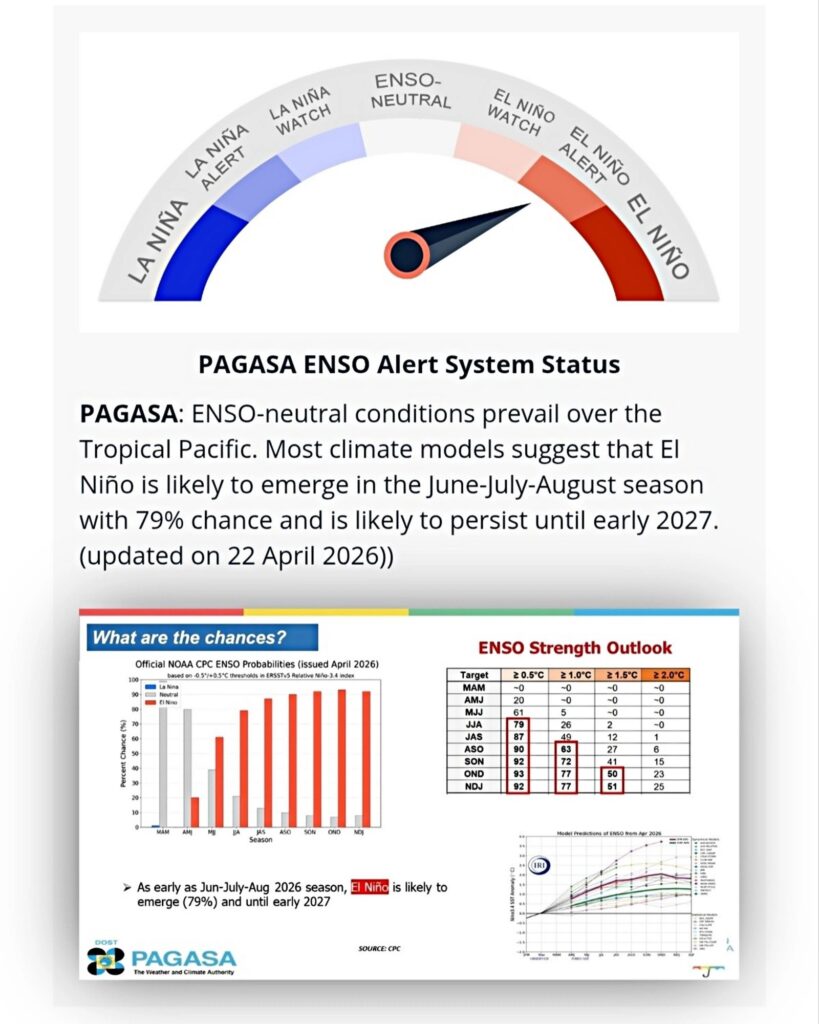
The Philippine Atmospheric, Geophysical and Astronomical Services Administration (PAGASA) has raised its El Niño Southern Oscillation (ENSO) status to an “El Niño Alert,” signaling that a warm phase of the climate system is increasingly likely to develop by mid-2026 and could persist into early 2027.
The alert, issued on Wednesday, April 22, follows a steady rise in forecast probability, with PAGASA placing the likelihood of El Niño formation at 79% for the June–July–August 2026 season. The agency said the threshold for an alert—set at 70% within a two- to three-month window—has now been exceeded, reflecting growing confidence among climate models and experts that ENSO-neutral conditions currently prevailing over the tropical Pacific will shift in the coming months.
El Niño is a naturally occurring climate pattern characterized by unusually warm sea surface temperatures in the central and eastern equatorial Pacific, which disrupts normal atmospheric circulation and weather systems. It typically occurs every two to seven years and can last for several months to over a year, influencing rainfall, temperature and storm patterns across much of the globe.
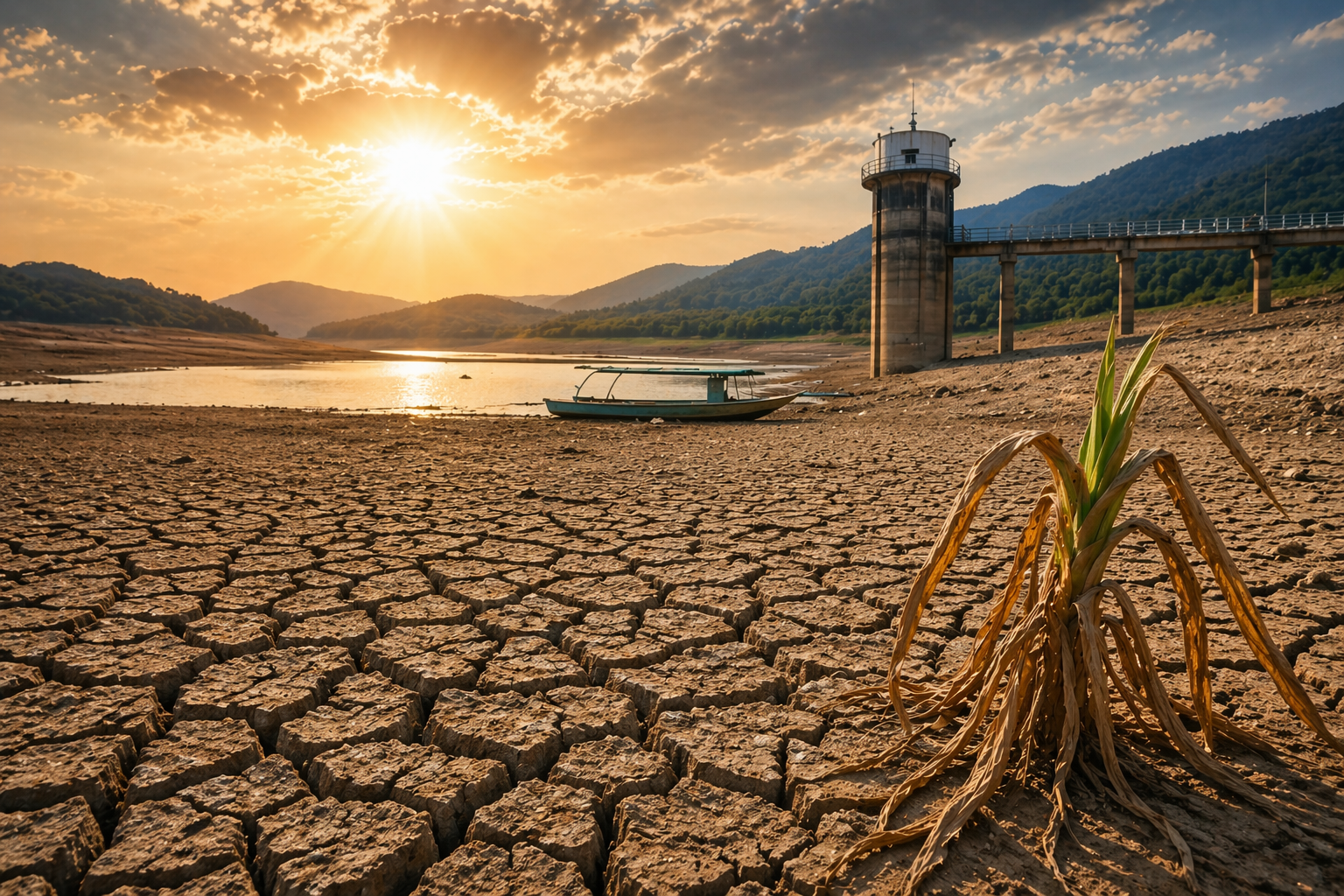
In the Philippines, El Niño is commonly associated with drier-than-usual conditions, raising the risk of dry spells and droughts in vulnerable areas. PAGASA warned that reduced rainfall could affect critical sectors such as agriculture, water supply, and energy, particularly hydropower generation. These impacts have been observed in previous episodes, including the 2023–2024 El Niño, which disrupted agricultural production in parts of the country.
“During an El Niño event, there is an increased possibility of drier-than-usual conditions, which can lead to negative impacts such as droughts and dry spells in some parts of the country,” PAGASA said in its advisory.
Despite the overall trend toward below-normal rainfall, PAGASA noted that impacts will not be uniform nationwide. The western section of the Philippines may still experience above-normal rainfall during the southwest monsoon, locally known as “habagat,” underscoring the complex and region-specific effects of the climate phenomenon.
At a press briefing, PAGASA administrator Nathaniel Servando said the agency is closely monitoring developments to ensure timely advisories and mitigation measures. He emphasized that early warning is critical to help government agencies and communities prepare for potential water shortages and agricultural losses.
Meanwhile, PAGASA Climate Monitoring and Prediction Section chief Analiza Solis said current projections suggest the El Niño event may initially develop as a weak episode but could strengthen over time. She noted that some forecasts indicate the possibility of moderate to strong conditions by the latter part of 2026, depending on how ocean and atmospheric interactions evolve.
Global climate outlooks also point to the potential for stronger warming scenarios. Some international forecasts indicate a chance—though not yet certain—of a more intense or even “super” El Niño forming, which could further amplify heat and rainfall extremes in different parts of the world.
PAGASA said it will continue to monitor ENSO indicators and issue regular updates as conditions develop. The agency urged both government institutions and the public to remain vigilant and prepare for possible impacts in the months ahead.
“PAGASA will continue to closely monitor the development of this ENSO phenomenon. All concerned government agencies and the general public are encouraged to keep on monitoring and take precautionary measures against the impacts of developing El Niño,” the state weather bureau said.
Stay updated—follow Philippines Today on Facebook and Instagram, and subscribe on YouTube for more stories.