
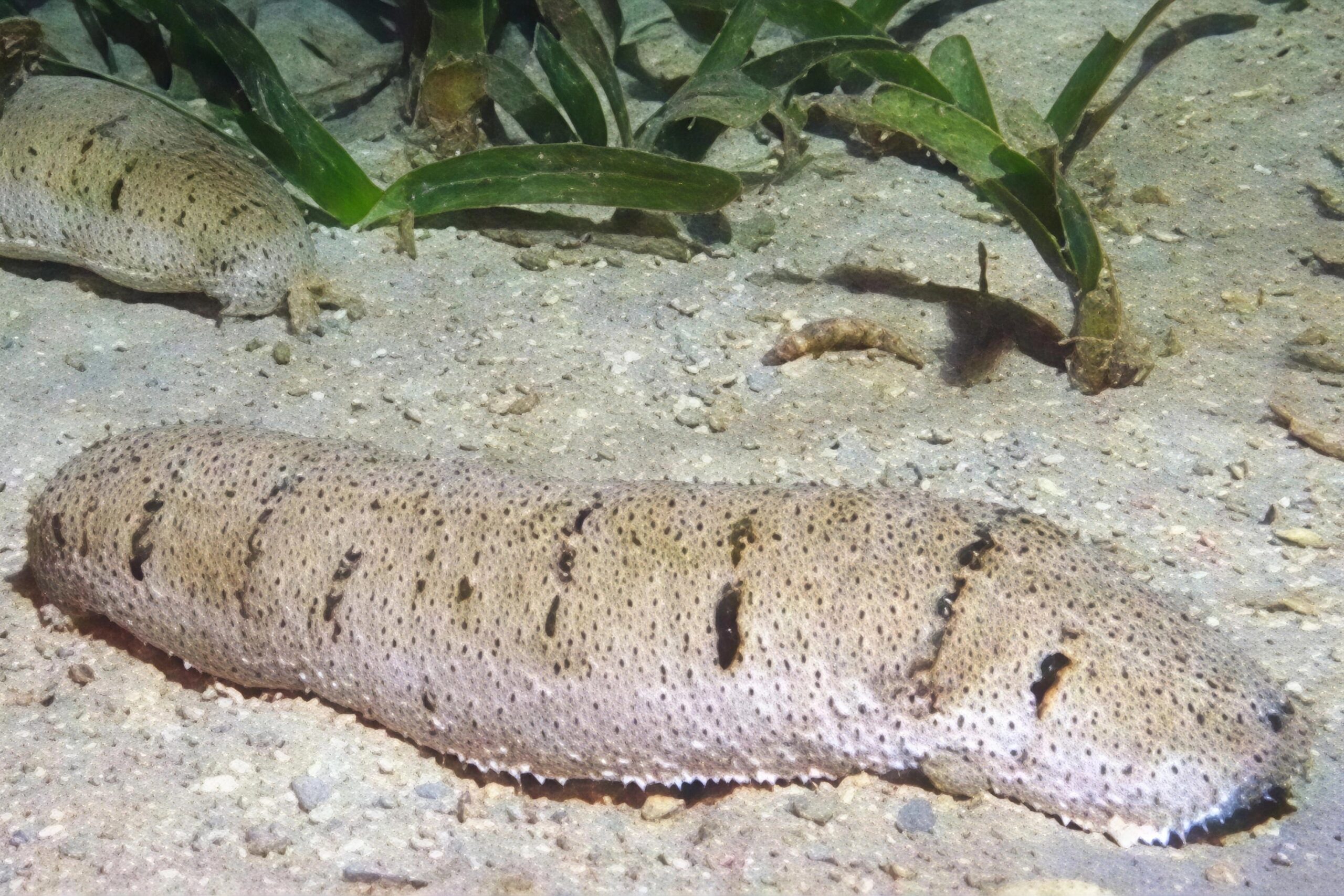

A genetic map of a humble marine species is reshaping how the Philippines could manage its coastal ecosystems—earning a national award and a ₱2 million research grant for the scientist behind it.
A study decoding the genetic diversity of the sea cucumber Holothuria scabra, commonly known as sandfish, has been named the 2026 Environmental Science Awardee by the National Academy of Science and Technology Philippines (NAST PHL), highlighting how overlooked marine organisms can anchor large-scale conservation strategies.
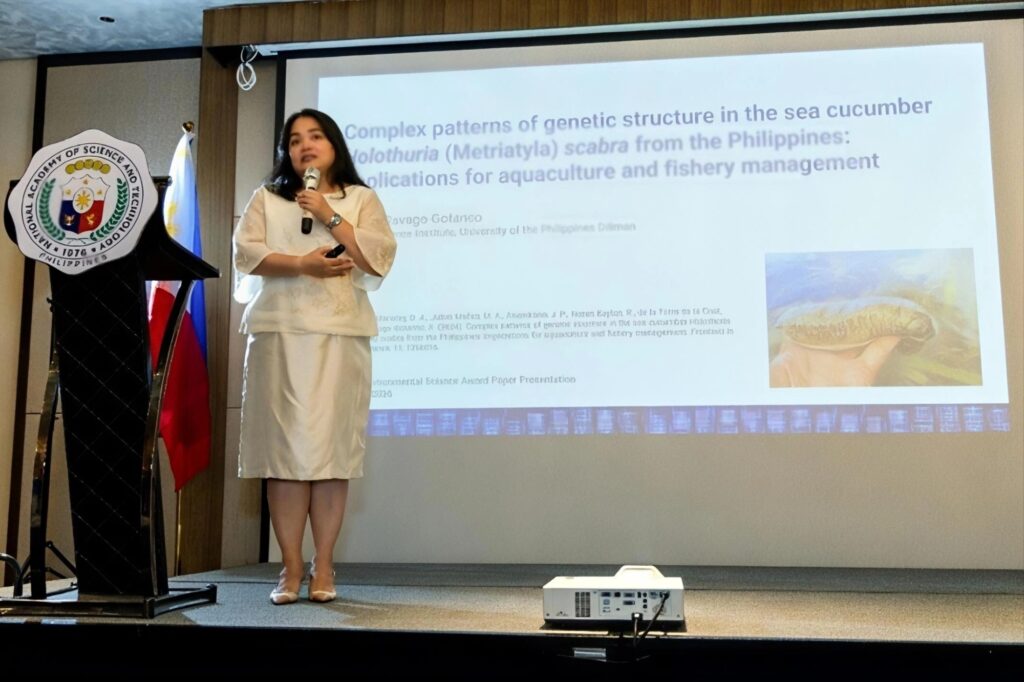
The recognition was awarded to Filipino marine scientist Rachel June Ravago-Gotanco of the University of the Philippines – Marine Science Institute. Her research traces how genetically distinct populations of sea cucumbers are distributed across the Philippine archipelago—data that could guide more precise fisheries management, aquaculture practices, and conservation planning.
Often dismissed as unremarkable, sea cucumbers play a foundational ecological role. According to the Department of Science and Technology (DOST) – Philippine Council for Agriculture and Aquatic Resources Research and Development, these high-value marine invertebrates were once abundant in the country’s coastal waters and are prized not only as food but also for their ecological and pharmaceutical importance. Their feeding behavior—ingesting and recycling sediments—earns them the nickname “earthworms of the sea,” quietly maintaining water quality and seabed health.
“Protecting the sea cucumbers—not just [the] sandfish and in general, marine organisms that have a vital role in maintaining sediment and water quality, means protecting also the environmental benefits they provide. The loss of sea cucumbers also impacts the ecosystem, services they provide,” Dr. Ravago-Gotanco said.
Her award-winning paper, “Complex patterns of genetic structure in the sea cucumber Holothuria (Metriatyla) scabra from the Philippines: implications for aquaculture and fishery management,” applies high-throughput DNA sequencing to samples collected across the archipelago.
The study reveals how genetic variation is distributed geographically, allowing researchers to identify distinct population clusters—or management units—critical for sustainable harvesting and restocking.
“In the work that we did, we used genetic data from sea cucumbers collected from all over the Philippine archipelago. We did high-throughput DNA sequencing technologies to generate that data, and we analyzed it. How populations, how that genetic variation is distributed in space across the different species of sea cucumbers. And in doing so, we were actually able to delineate different management units for genetically distinct stocks,” she explained.
These findings, she added, provide a scientific basis for evidence-driven policies—ranging from localized fishery regulations to trade controls—that could prevent overexploitation while supporting aquaculture development.
“It’s an honor to be selected as this year’s awardee for the Environmental Science Award, and this means a big deal for us working in biodiversity science. We actually do a lot of research on not just biological biodiversity, but also a lot of other research in the marine sciences. Being recognized for this award also means being recognized for the impact of the research on the environment,” Dr. Ravago-Gotanco said.
Looking ahead, her team plans to expand the research to other sea cucumber species and populations, deepening the genetic baseline needed to safeguard marine biodiversity in a country at the heart of the Coral Triangle.
The award, conferred on April 22 in time for Earth Day, included a ₱150,000 cash prize and entitles the recipient to a ₱2 million research grant under the DOST’s Secretary’s Grant for Environment, pending proposal approval.
“The NAST Environmental Science Award represents the scientific community’s contribution to the celebration of Earth Day. It underscores the importance of advancing environmental protection and conservation efforts both locally and globally,” said Jaime Montoya, president of NAST.
The Environmental Science Award is part of broader efforts by the DOST to support science-based solutions aligned with national priorities—spanning human well-being, wealth creation, wealth protection, and sustainability under its OneDOST4U program.
Stay updated—follow Philippines Today on Facebook and Instagram, and subscribe on YouTube for more stories.