

For centuries, the Pacific Ocean was not a barrier but a bridge—linking continents, cultures, and economies long before the modern idea of globalization took hold. At the center of that vast exchange stood Manila, where ships crossed between Asia and the Americas carrying not only goods, but stories, languages, and ways of life that reshaped the world.
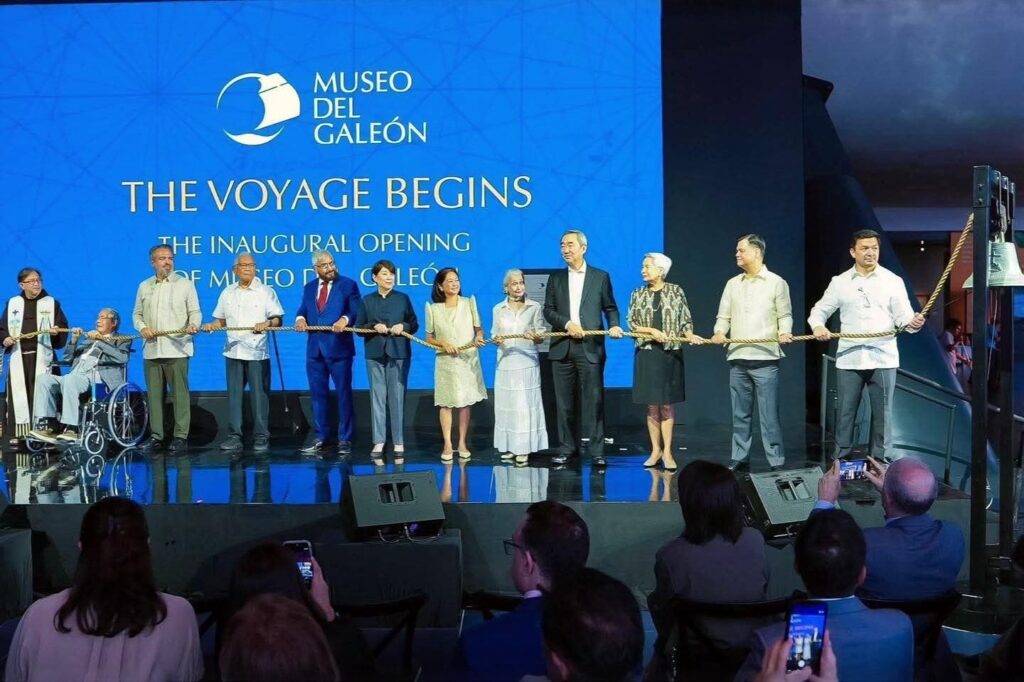
That long, interconnected history takes physical form in the Museo del Galeón, inaugurated on Thursday, April 23, at the SM Mall of Asia Complex in Pasay City. The ceremony drew national attention, with First Lady Liza Araneta-Marcos in attendance, framing the museum as a cultural milestone. Museo del Galeón will open to the public on May 1, 2026, marking the point at which its narrative—once confined to archives and scholarship—becomes accessible to a wider audience.
Housed within a four-level, dome-shaped structure spanning approximately 9,000 square meters, the museum positions the Philippines not at the margins of history, but at its crossroads. Its central focus is the Manila–Acapulco galleon trade, a transpacific route that operated from 1565 to 1815 and connected Asia, the Americas and, indirectly, Europe. Over 250 years, 181 galleons completed 798 voyages, facilitating an exchange that went far beyond commerce to include ideas, traditions, and cultural practices.
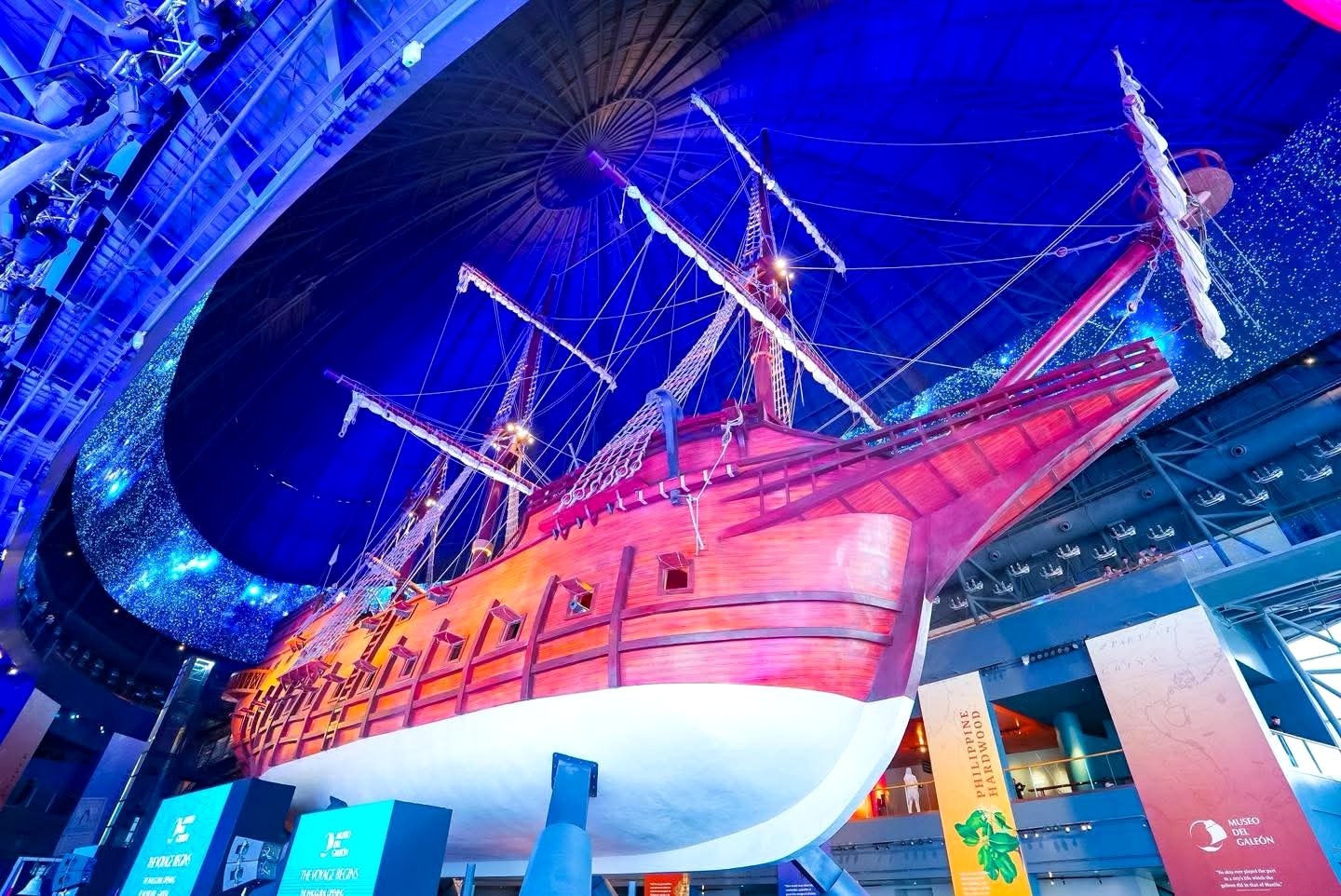
Within this broader narrative, the museum’s centerpiece emerges with quiet impact. The Galeón Espíritu Santo, a full-scale reconstruction of a 17th-century ship originally built in Cavite in 1603, anchors the experience. It once sailed between Manila and Acapulco until 1618, part of a network made possible by the return route known as El Tornaviaje, discovered by Augustinian friar and navigator Andrés de Urdaneta.
Visitors can step inside the vessel, moving through its main and gun decks where cannons, provisions, and living quarters recreate the realities of life at sea, before reaching a top deck framed by LED constellations—an echo of the skies that once guided navigation across the Pacific.
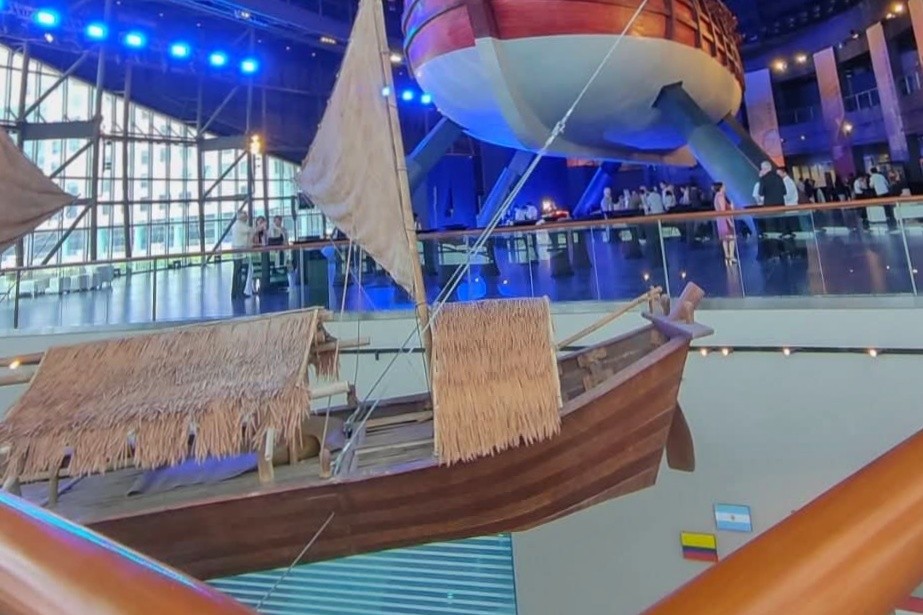
Yet the museum’s scope reaches further back. Its initial galleries—two of four opening phases, with full completion expected by October this year—trace the maritime traditions of early Filipinos long before colonial contact. Using balangay boats, they navigated inter-island waters guided by tides, currents, and stars, establishing a seafaring culture that would later underpin the galleon trade.
“It is time to tell our story,” said Doris Magsaysay Ho, the president of Museo del Galeón, in a statement on the museum’s website. “As an archipelago, our history and our people have been shaped by the waters that embrace us.”
That framing shifts the emphasis toward Filipino involvement. During the galleon trade, Filipinos served as shipbuilders and sailors, playing a central role in sustaining one of the earliest global trade systems. Today, that maritime legacy continues, with seafarers from the Philippines forming a significant part of the global maritime workforce.
Museo del Galeón chairman Carlos Salinas described the museum as “a unique beacon, illuminating the rich tapestry of the Philippines’ maritime legacy,” noting that its interactive exhibits are designed to engage learners of all ages. The institution has been working closely with government agencies, including the Department of Education, as well as tour operators supporting school visits—underscoring its focus on students as a primary audience.
Looking ahead, the museum extends its narrative into the present and future. An Ocean Learning Center within the complex will explore contemporary maritime challenges, including climate change, positioning the institution as both a historical archive and a platform for research and collaboration. Its planned inclusion in the International Congress of Maritime Museums further connects it to a global network examining humanity’s relationship with the sea.
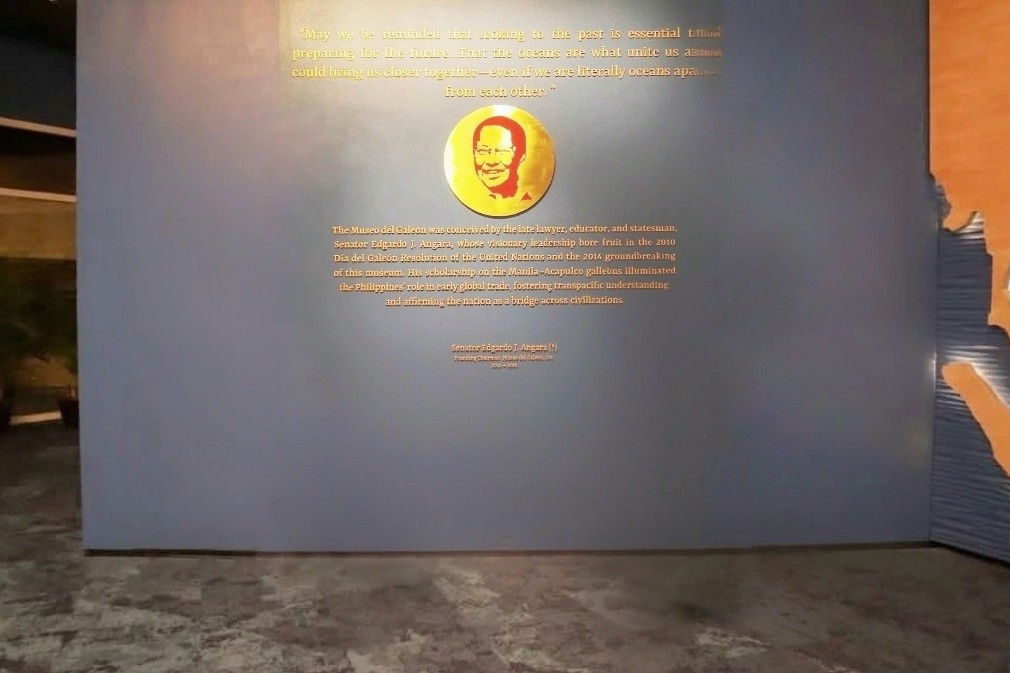
The project traces its origins to the late senator Edgardo J. Angara, whose scholarship on the Manila–Acapulco trade helped reframe the Philippines’ role in early globalization. His work contributed to international recognition, including a United Nations resolution marking Día del Galeón, and led to the museum’s groundbreaking in 2014.
For executive director Manuel Quezon III, the museum represents a continuing journey of understanding—one that connects past and present through shared experience. He points to enduring traces of maritime culture in everyday life as evidence that the sea remains central to how Filipinos navigate the world.
By linking past voyages to present realities, Museo del Galeón positions itself as more than a repository of memory. It becomes a space where history informs how the Philippines navigates its future—on oceans that remain as vital today as they were centuries ago.
Stay updated—follow Philippines Today on Facebook and Instagram, and subscribe on YouTube for more stories.