
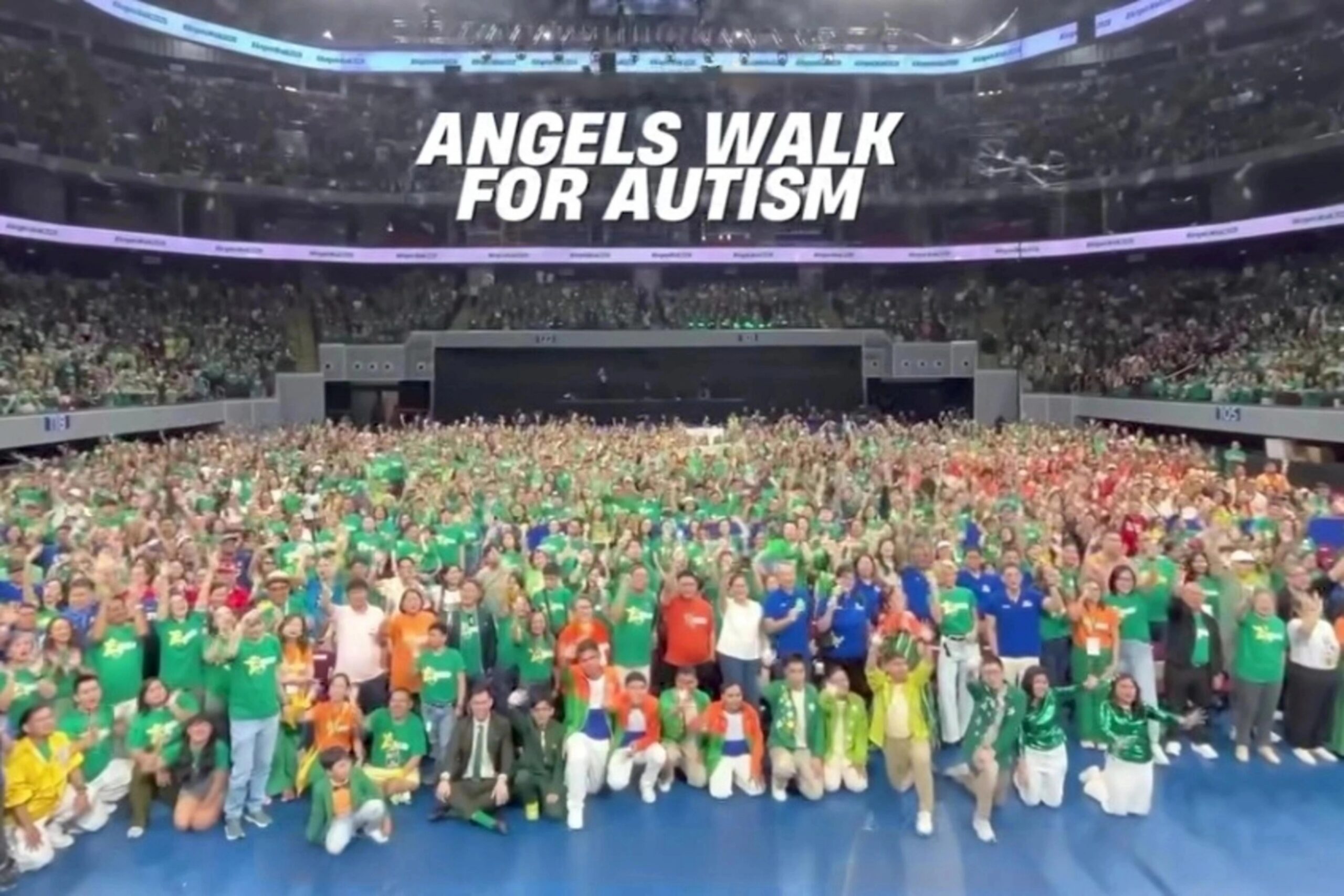

About 40,000 people joined the annual Angels Walk for Autism on Sunday, April 26, in a coordinated nationwide call for passage of the proposed National Autism Care, Support, and Inclusion Act, also known as the Autism Inclusion Bill.
Organized by the Autism Society Philippines (ASP) in partnership with SM Cares, the event underscored a shift from awareness campaigns to policy-driven inclusion. Advocates said the measure would formalize access to services, strengthen coordinated support systems, and expand lifelong opportunities for Filipinos on the autism spectrum.
Major gatherings were held simultaneously across key cities. In Metro Manila, participants assembled at the SM Mall of Asia Arena, while Cebu’s walk took place at SM Seaside City Cebu in the South Road Properties district.
The events featured performances showcasing the talents of individuals on the spectrum and highlighted partnerships between communities, government, and the private sector. Organizers said such collaborations are essential to building inclusive systems that extend beyond symbolic support.
Momentum for the legislation has grown in recent weeks. On March 9, the Senate approved Senate Bill No. 1822, or the National Autism Care, Support, and Inclusion Act, on third and final reading with a 20-0 vote. The measure now awaits counterpart action in the House of Representatives.
The ASP said policy remains central to achieving lasting inclusion, emphasizing that services, education, and employment pathways must be accessible and sustained over a person’s lifetime.
“Inclusion must translate into real opportunities—through inclusive education systems, skills development, and workplaces that adopt accessible and equitable hiring practices via strategic partnerships with the public and private sector,” the group said.
It added: “strong families ensure strong futures—but they need to be sustained with support through accessible services, community networks, and policies that ease the realities of caregiving. Therefore, compassionate, accessible human support systems must be established to empower Filipinos on the autism spectrum to achieve independence and make meaningful contributions.”
Founded in 1989 by a group of 11 mothers, the Autism Society Philippines has grown into a nationwide network with about 16,000 members across 106 chapters. The organization advocates for institutional support for neurodiverse individuals and aligns its efforts with the principles of the United Nations Convention on the Rights of Persons with Disabilities, pushing for inclusive laws, policies, and practices in both government and the private sector.
Advocates said the next phase of the campaign will focus on sustaining public pressure and engaging lawmakers to prioritize the bill’s passage in the House of Representatives, where several counterpart measures are expected to be consolidated.
Education and employment remain among the most urgent gaps. While some private institutions and companies have introduced inclusive programs, access remains uneven, particularly outside major urban centers. Families often shoulder the cost of therapy, specialized education, and caregiving, underscoring the need for government-backed systems that are both accessible and affordable.
Organizers of the walk also highlighted the importance of early intervention and community-based support. They said that without a coordinated national framework, services are fragmented, leaving many individuals on the spectrum underserved or excluded from opportunities that could enable independence.
Beyond legislation, the movement is also working to normalize neurodiversity in everyday settings—from schools and workplaces to public spaces. Advocates emphasized that inclusion is not only a matter of infrastructure or policy, but also of mindset.
Participants at the walk included self-advocates, families, educators, health professionals, and corporate partners, many of whom have been involved in the campaign for years. For them, the event serves both as a platform for visibility and a reminder of the work that remains.
The ASP said it will continue to work with stakeholders across sectors to push for reforms that ensure consistent support throughout a person’s life—from early childhood to adulthood.
With the Senate approval secured, advocates said the focus now shifts to translating momentum into law, stressing that the measure’s passage would mark a significant step toward a more inclusive and equitable society for Filipinos on the autism spectrum.
Stay updated—follow Philippines Today on Facebook and Instagram, and subscribe on YouTube for more stories.