

“The SBMA (Subic Bay Metropolitan Authority) has no right to decide on whether or not imported wastes from the United States (U.S.) can be allowed to enter the country. That authority lies within the Bureau of Customs (BOC) and Environmental Management Bureau (DENR-EMB), which are the competent authorities in handling waste trade under the Basel Convention. It is unacceptable that a Regional Trial Court ruling has allowed the SBMA to keep violating international law with impunity.”
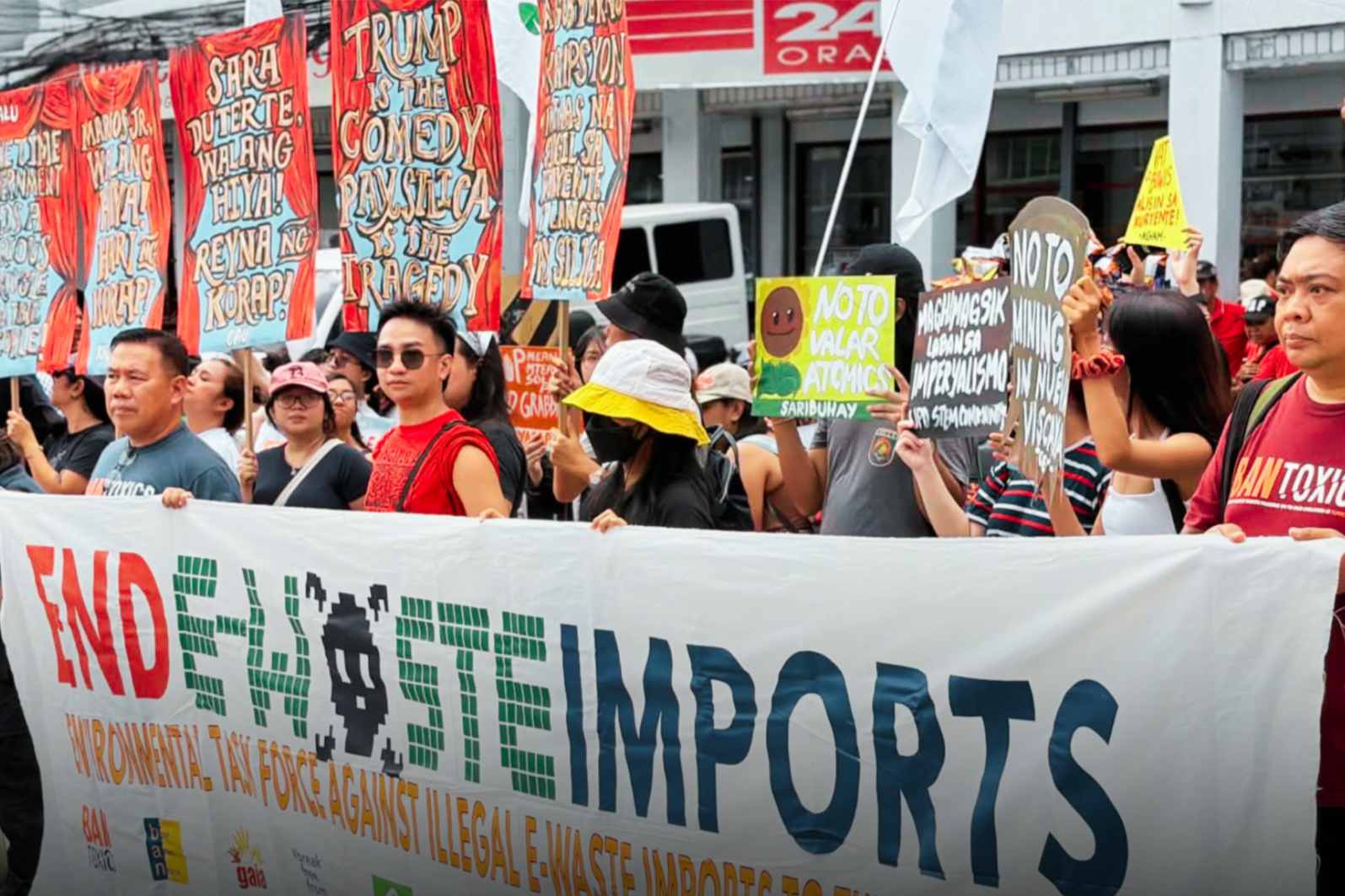
This was the statement of the Environmental Task Force Against Illegal E-Waste Imports to the Philippines (END E-Waste Imports) in response to reports that the SBMA would accept non-hazardous electronic waste (e-waste) from incoming shipments originating in the U.S. On July 31, 2026, END E-Waste Imports disclosed that 184 containers of suspected illegal e-waste from the U.S. were scheduled to arrive at the Subic Bay Freeport Zone between August 6 and September 2026.
The disclosure was based on a new Operation Can Opener (OCO) alert issued by waste trade watchdog Basel Action Network (BAN), which was sent to the BOC and the DENR-EMB on July 29.
According to Jam Lorenzo, deputy executive director of BAN Toxics and one of the task force’s conveners, accepting the shipments from the U.S. would only add to the growing number of alleged Basel Convention violations involving the SBMA.
“SBMA’s stake in this issue is questionable as they have always been on the side of protecting the private business interests of the foreign recyclers. They have no right, and they are not credible enough to decide on matters of waste trade,” Lorenzo said.
The group has maintained that all e-waste shipments from the U.S., whether hazardous or non-hazardous, are illegal and constitute a criminal act under the Basel Convention, a global environmental treaty designed to regulate the transboundary movement of hazardous waste. The Philippines is a party to the Basel Convention, while the U.S. is not. Article 4(5) of the treaty states that “A Party shall not permit hazardous wastes or other wastes to be exported to a non-Party or to be imported from a non-Party.” Article 4 also states that “illegal traffic in hazardous wastes or other wastes is criminal.”
Meanwhile, Jim Puckett, founder and chief of strategic direction of BAN, said that under the Basel Convention’s E-Waste Amendment—which the Philippines supported and helped negotiate—all e-waste is now subject to strict controls under the convention and cannot be traded with a non-party such as the U.S.
“The SBMA is still demonstrating that they do not comprehend the Basel Convention’s E-Waste Amendment. Further, everything has to be done according to the PIC (Prior Informed Consent) procedure, and none of these shipments coming into the Philippines have been consented to by the Basel Competent Authorities, which are the BOC and the DENR-EMB,” Puckett said.
“The waste which SBMA wishes to import (“non-hazardous e-waste from the United States”) is illegal traffic, making the SBMA complicit in criminal activity should they import it,” he added.
The task force also responded to reports that electronic waste recyclers operating in the Subic Bay Freeport had urged authorities to maintain the status quo by continuing to allow the importation of recyclable materials. According to the reports, the recyclers argued that the Basel Convention cannot, on its own, ban or restrict corporate entities without enabling legislation enacted by Congress.
The task force rejected the argument, saying that Republic Act (RA) No. 6969, or the Toxic Substances and Hazardous and Nuclear Wastes Control Act of 1990, already provides the legal framework for regulating hazardous wastes, even though it was enacted before the Philippines ratified the Basel Convention. It added that the convention’s requirements are implemented domestically through DENR Administrative Order No. 2013-22, the principal implementing rules and regulations of RA No. 6969, which expressly incorporates the convention’s provisions governing the import and export of hazardous wastes and recyclable materials.
“The SBMA, in collusion with the recyclers, have consistently ignored our existing laws, regulations, and international obligations regarding waste trade. How can we trust them to decide on what should be allowed to enter our country?” Lorenzo asked.
The task force also called on the BOC and the DENR-EMB to allow its representatives to participate, in the interest of transparency, in any inspection of the incoming shipments. It, likewise, renewed its appeal for Congress to act on House Resolution No. 1164, filed by the Makabayan Bloc on June 29, 2026, which seeks an investigation into the alleged illegal importation of e-waste through the SBMA.
Follow PHILIPPINES TODAY on Facebook and Instagram, and subscribe on YouTube for the latest updates.