
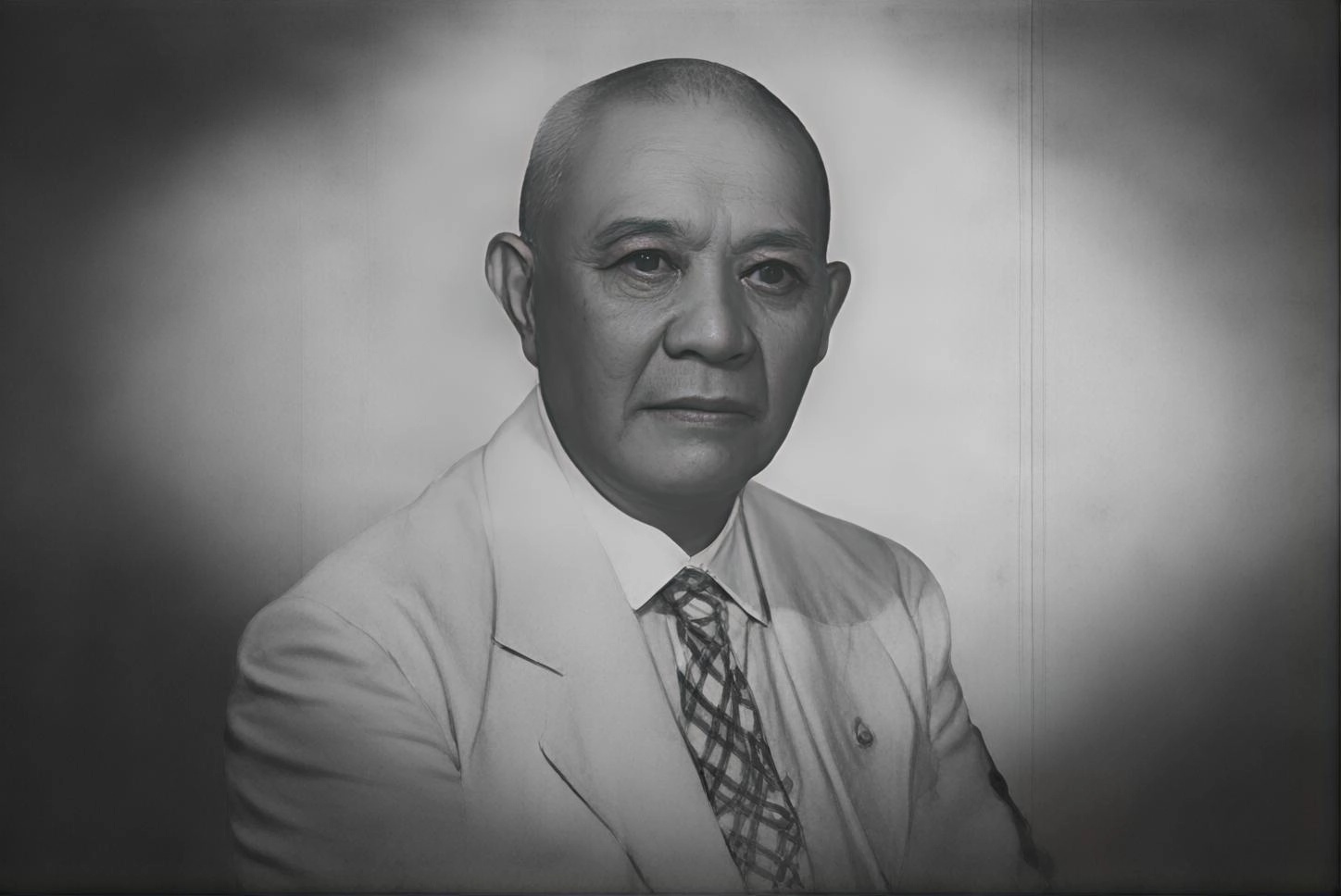

Every August, the Philippines marks Buwan ng Wikang Pambansa, a month-long celebration that underscores the role of Filipino in shaping national identity. The observance, expanded from a week to the entire month under Proclamation No. 1041 signed in 1997, often brings renewed attention to President Manuel L. Quezon, widely honored as the “Ama ng Wikang Pambansa” for championing the creation of a national language during the Commonwealth era.
Yet Quezon’s political resolve tells only part of the story.
Behind the executive order that formally adopted Tagalog as the basis of the national language stood the legal scholar and statesman who laid its institutional foundations: Associate Justice Norberto L. Romualdez Sr. If Quezon gave the national language its political mandate, Romualdez designed the framework that made it possible. His authorship of Commonwealth Act No. 184 earned him recognition as the “Father of the Law on the National Language,” while his pivotal role in building the legal and institutional framework has led many to regard him as the “Arkitekto ng Wikang Pambansa.”
Born in Burauen, Leyte, on June 6, 1875, Romualdez was the eldest son of Daniel Arcilla Romualdez, a cabeza de barangay from Pandacan, Manila, and Doña Trinidad López. He was also the paternal uncle of former First Lady Imelda Romualdez-Marcos and the great-uncle of President Ferdinand Marcos Jr., although his place in Philippine history rests on his own achievements.
A jurist, legislator, linguist, and writer, the native Waray speaker devoted much of his career to the study of Philippine languages, producing scholarly works on Waray grammar, rhetoric, and dialectology while promoting regional literature through the Sanghiran san Binisaya ha Samar ug Leyte (Academy of the Visayan Language of Samar and Leyte), an organization dedicated to advancing the language.
His deep appreciation of the country’s linguistic diversity would later shape one of the most consequential nation-building projects in Philippine history.
Romualdez served as an associate justice of the Supreme Court during the American colonial period before becoming one of the “Seven Wise Men” who drafted the 1935 Constitution. The charter called for the development of a national language based on an existing native tongue, but it did not specify how that objective should be achieved.
That task largely fell to Romualdez.
As chairman of the National Assembly’s Committee on National Language, he authored and sponsored the landmark legislation that created the National Language Institute. The body was tasked with studying the country’s major indigenous languages and recommending which should serve as the basis of the national language. It was this law that transformed the Constitution’s broad aspiration into a functioning national policy.
Only after the institute completed its work did Quezon issue Executive Order No. 134 in 1937, selecting Tagalog as the foundation of the national language.
The sequence is crucial. Quezon’s executive order gave effect to the policy, but Romualdez had already built the legal and institutional machinery that made such a decision possible. Without Commonwealth Act No. 184, there would have been no National Language Institute to conduct the study and no formal process to guide the adoption of a national language.
Romualdez’s credentials extended beyond legislation. Fluent in Waray, Cebuano, Spanish, and English, he believed that understanding the country’s many languages was essential to forging a shared national identity. His scholarship demonstrated that promoting Filipino did not require diminishing regional languages; rather, it demanded a thoughtful appreciation of the Philippines’ rich linguistic heritage.
He died in 1941, just days before the national elections, leaving behind a legacy that has often been overshadowed by the larger political figures of his era. Yet historians and language scholars continue to recognize his central role in the creation of the country’s language policy.
Stay updated—follow Philippines Today on Facebook and Instagram, and subscribe on YouTube for more stories.