


As Southeast Asian countries explore a larger role for nuclear technology, the Philippines is pushing a message that could determine whether the region can safely embrace it: preparation must come before expansion.
The issue took center stage as the Philippines hosted the 13th Annual Meeting of the ASEAN Network of Regulatory Bodies on Atomic Energy, or ASEANTOM, where regulators and government officials from across the region tackled nuclear safety, security, emergency response, and safeguards.
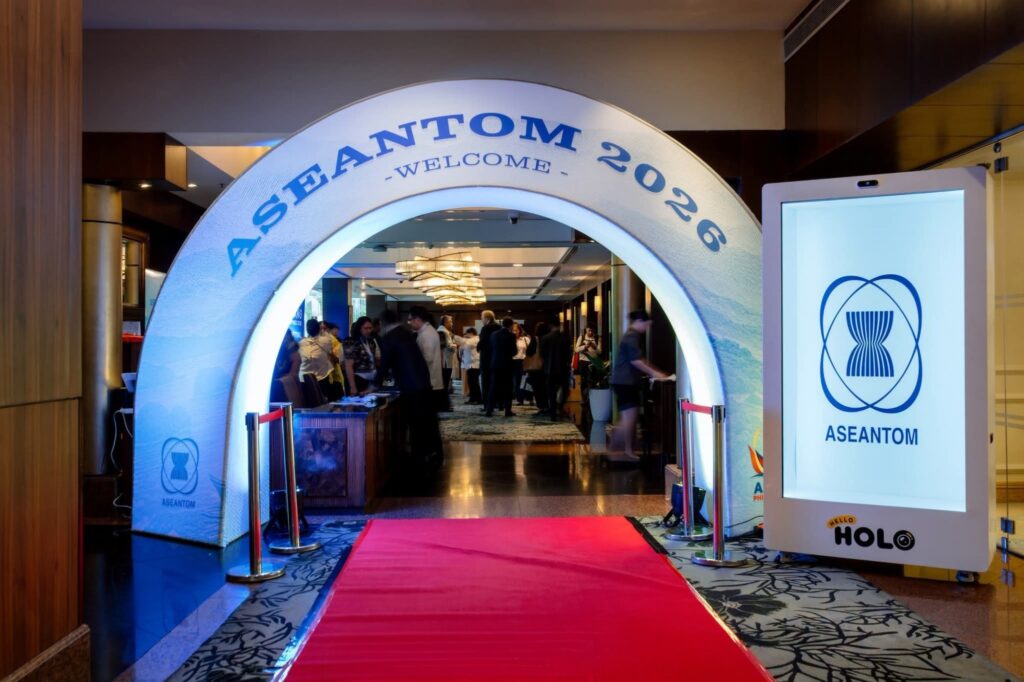
The three-day meeting, which opened on August 11 at the Diamond Hotel Manila, brought together the 10 ASEAN member states and dialogue partners including the International Atomic Energy Agency, the United States, Japan, and South Korea.
For Filipinos, the discussions carry particular weight as the country considers how nuclear technology could contribute to energy security while facing the practical questions that come with it: Who regulates nuclear facilities? How quickly can authorities respond to an accident? What happens to radioactive waste? And how would neighboring countries coordinate if an emergency crosses borders?
Pangasinan 2nd District Rep. Mark Cojuangco, chair of the House Special Committee on Nuclear Energy, called for a regional framework that would force countries to confront those questions before nuclear programs mature.
“Such a framework could consider readiness across four broad dimensions: institutional readiness (laws, regulatory independence, and clear governmental responsibilities); technical readiness (people, grid infrastructure, and technical support, safety, security); regional readiness (safeguards, emergency arrangements, monitoring, and transboundary coordination); and lifecycle readiness (financing, fuel, liability, radioactive waste, spent fuel, and decommissioning), provided from the beginning rather than left for future governments and generations to resolve,” he said.
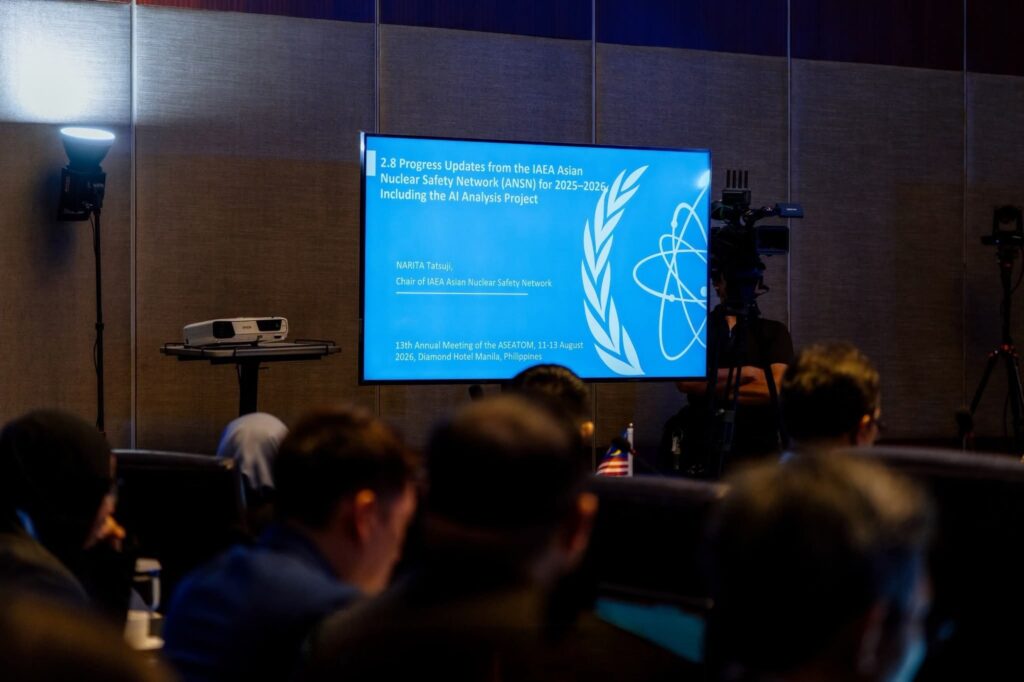
The emphasis on readiness reflects a reality that nuclear safety does not stop at national borders. Radiation emergencies can require rapid information-sharing, coordinated monitoring, and decisions that affect communities far from the site of an incident.
That regional dimension was put to the test through AR/NeX 2026, the ASEAN Nuclear Emergency Notification and Communications Exercise, the Philippines’ flagship ASEANTOM project for 2026.
The exercise simulated a radiological emergency involving regional notifications, field measurements, protective-action decisions, and public communications under pressure. It also included a live simulated news conference and, for the first time, a cross-border deployment of a neighboring response team on Philippine soil.
Such exercises may sound technical, but their purpose is straightforward: If an actual nuclear or radiological emergency happens, governments cannot afford to learn how to cooperate after the crisis begins.
Vallerie Ann Samson, officer-in-charge of the Philippine Nuclear Research Institute and chair of ASEANTOM 2026, said the meeting was an opportunity to strengthen regional preparedness as ASEAN expands its cooperation on the peaceful uses of nuclear technology.
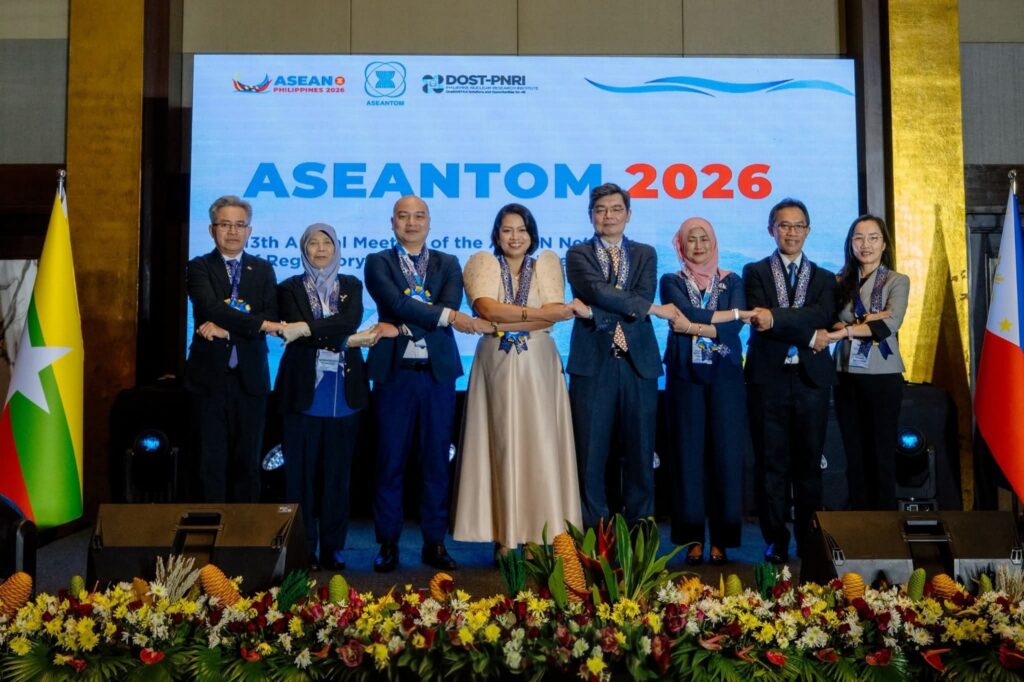
“As we gather to deliberate on the peaceful uses of nuclear technology, our shared commitment to robust nuclear safety, security, and safeguards remain paramount. This meeting provides us an opportunity to strengthen our regional cooperation, review our action plans, and advance our collective preparedness,” Samson said.
The Philippines, through the Department of Science and Technology – Philippine Nuclear Research Institute (DOST-PNRI) , is leading the meeting as this year’s chair and host. The PNRI’s Nuclear Regulatory Division serves as the country’s national regulatory authority for nuclear and radiation safety.
DOST Secretary Renato Solidum Jr. urged ASEAN countries to strengthen the network as the region’s nuclear landscape evolves.
“Guided by shared values, collective expertise, and over thirteen years of institutional trust, we are far stronger together. I urge every Member State to fully invest in this network, actively implement the ASEANTOM Work Plan 2024–2028, and ensure no nation is left behind as our regional nuclear landscape evolves,” he said.
The meeting also comes as ASEAN grows to include Timor-Leste, which Solidum welcomed as a full member and which the Philippines said it is prepared to support in building its national nuclear regulatory capacity.
“We look forward to the day Timor-Leste actively contributes within ASEANTOM. The Philippines stands ready to extend institutional and technical support to Timor-Leste in establishing its national nuclear regulatory body and ensuring its meaningful integration into ASEANTOM’s programs. This is the true essence of ASEAN solidarity,” Solidum said.
The Philippines’ role in the meeting reflects a broader regional effort to ensure that nuclear science is used not only for energy but also for medicine, industry, research, and other peaceful applications while maintaining safeguards against accidents, misuse, and illicit trafficking of nuclear and radioactive materials.
That balance is increasingly important as countries weigh the potential benefits of nuclear technology against its long-term responsibilities. Building a reactor, for example, is only one part of the equation. Governments must also prepare regulators, train specialists, establish emergency systems, secure nuclear materials, manage spent fuel and radioactive waste, and eventually address decommissioning.
For Southeast Asia, where countries are closely connected by geography, trade, and dense populations, those responsibilities are inherently shared.
The Philippines handed the ASEANTOM chairmanship to Singapore at the conclusion of the meeting on August 13, but the larger challenge would continue beyond the change in leadership: ensuring that the region’s ambitions for nuclear technology are matched by the institutions, expertise, and emergency systems needed to keep people and the environment safe.
ASEANTOM, established in 2013 under the ASEAN Political-Security Community, serves as the regional platform for cooperation among ASEAN’s nuclear regulatory authorities. Its work includes regulatory cooperation, technical capacity-building, emergency preparedness, and implementation of International Atomic Energy Agency safety standards.
Stay updated—follow Philippines Today on Facebook and Instagram, and subscribe on YouTube for more stories.