A decade after the last major find, a new offshore gas discovery east of Malampaya has revived a long-running question in Philippine energy policy: how much time can domestic gas realistically buy before imports become unavoidable?
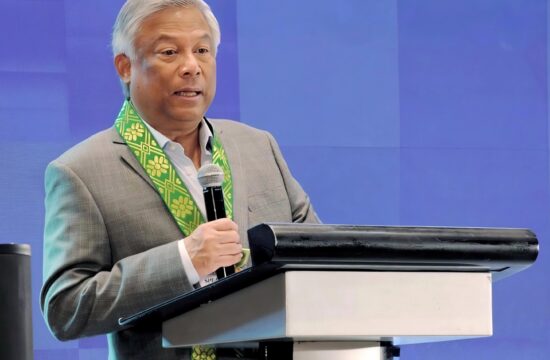
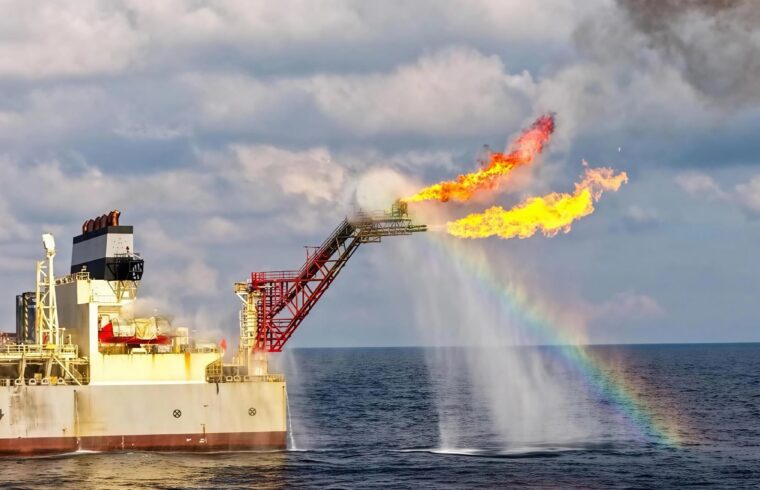
President Ferdinand Marcos Jr. announced this week that the Malampaya East-1 (MAE-1) well, drilled roughly five kilometers east of the original Malampaya complex off Palawan, holds an estimated 98 billion cubic feet (bcf) of gas in place. Initial testing showed flow rates of about 60 million cubic feet per day, alongside condensate—a higher-value hydrocarbon that improves project economics.
“Katumbas nito ang halos 14 na bilyong kilowatt-hour ng kuryente sa isang taon. Ibig sabihin, makakapag-supply ito ng kuryente sa mahigit 5.7 milyong kabahayan, 9,500 na gusali, o halos 200,000 paaralan sa loob ng isang taon,” Marcos said on social media, framing the discovery in terms of power security. He added: “This indicates that the well has the potential to produce even more, confirming it is a high-productivity resource comparable to the original Malampaya wells.”
The symbolism matters. Malampaya has been the backbone of Luzon’s gas-fired power generation for more than two decades, supplying plants with a combined capacity of about 3,200 megawatts. At its peak, the field met roughly 20% of the country’s power demand. But output has declined steadily since 2019, forcing the Philippines to accelerate liquefied natural gas (LNG) import infrastructure even as policymakers publicly champion energy independence.
MAE-1 is the first tangible outcome of the Malampaya Phase 4 drilling campaign, led by Prime Energy Resources Development in partnership with PNOC Exploration Corporation under Service Contract 38. The program aims not only to slow decline at the original field, but also to test adjacent prospects such as Camago-3 and Bagong Pag-asa. Government officials say the well was drilled without accidents or environmental incidents—an important point given rising public scrutiny of offshore energy projects.
Still, caution is warranted. “Gas in place” is not the same as recoverable reserves, and energy experts are quick to stress that commercial viability depends on further appraisal, sustained flow tests, and integration with existing offshore pipelines and onshore processing facilities. Historically, only a portion of gas in place becomes economically recoverable, particularly in mature basins.
Even so, the strategic value of MAE-1 lies less in its headline volume than in its timing. The Philippines remains one of Southeast Asia’s most coal-dependent power systems, with coal accounting for roughly 60% of electricity generation in 2023, according to the Department of Energy. Gas, by contrast, provides flexibility, lower emissions, and critical baseload support—especially as renewable capacity expands.
LNG imports, meanwhile, expose the country to global price volatility. Spot LNG prices spiked dramatically following Russia’s invasion of Ukraine, underscoring the fiscal and balance-of-payments risks of import dependence. A modest domestic gas extension can soften those shocks, even if it does not eliminate the need for foreign supply.
That is why MAE-1 should be read as a bridge, not a breakthrough. If appraisal confirms commercially recoverable volumes, the discovery could extend Malampaya’s productive life and reduce near-term LNG requirements. But it does not change the structural reality that the Philippines will remain a gas importer—unless exploration success accelerates dramatically.
The next tests will matter. Completion and evaluation of Camago-3, drilling at Bagong Pag-asa, and a clearer development plan for MAE-1 will determine whether this discovery becomes a footnote or a meaningful extension of domestic supply.
For now, Malampaya’s second wind buys authorities something increasingly scarce in energy markets: time. What they do with it—whether to lock in smarter contracts, accelerate renewables, or reform power pricing—will matter far more than any single well.
Stay updated—follow Philippines Today on Facebook and Instagram, and subscribe on YouTube for more stories.