
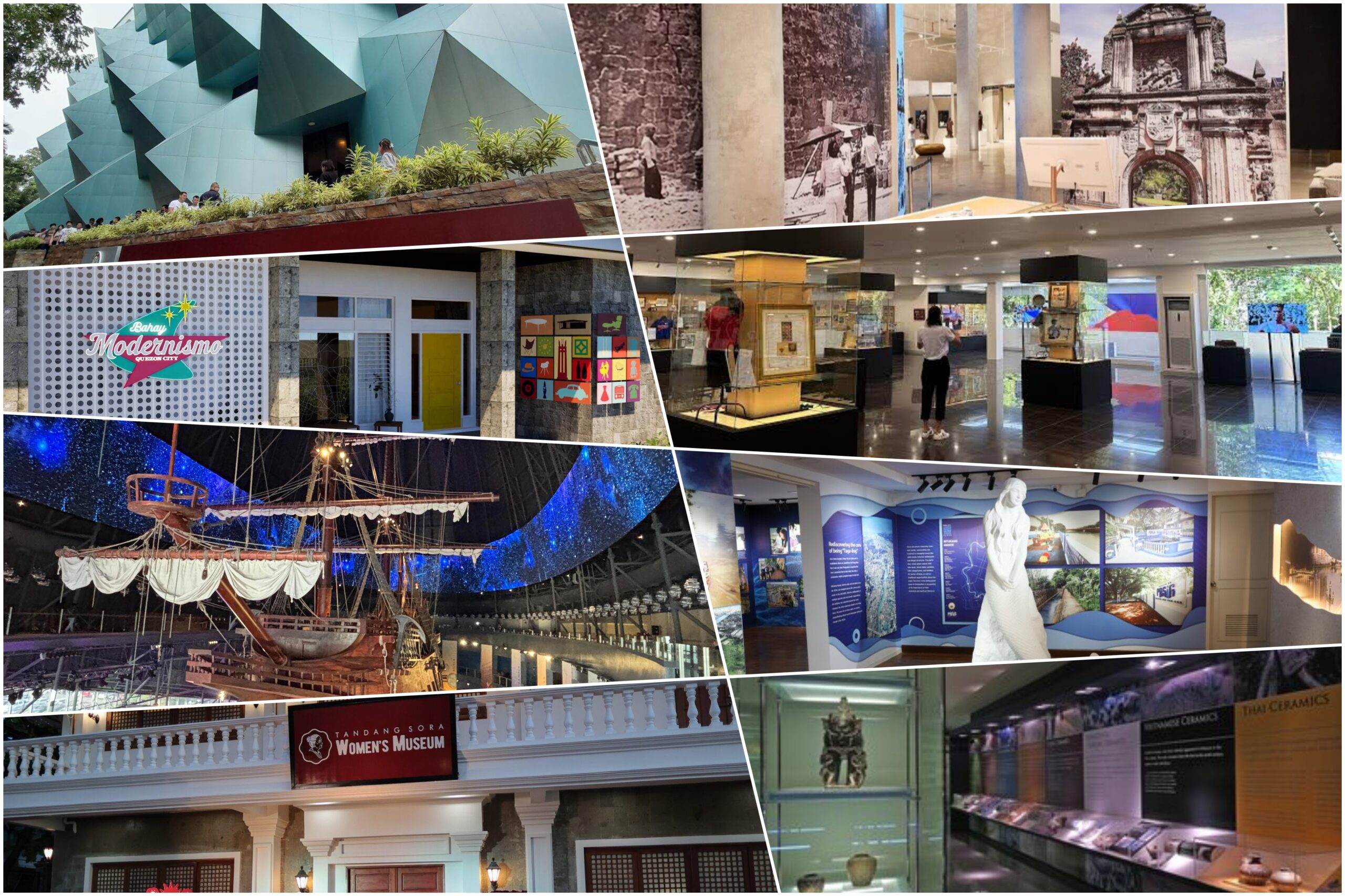

As museums around the world mark International Museum Day on May 18, the Philippines is seeing renewed momentum in cultural infrastructure, with new museums and heritage spaces opening across the country in recent years. The expansion reflects growing efforts to preserve history while presenting it through more immersive and contemporary forms of storytelling.
From maritime trade and regional identity to architecture and sports history, a wave of museum projects in the last five years is reshaping how Filipinos engage with public memory and cultural heritage. Established institutions are also modernizing galleries and adopting interactive technologies to reach younger audiences.
In May this year, Museo del Galeón in Pasay City officially opened to the public after years of development. The museum focuses on the Manila-Acapulco Galleon Trade (1565–1815), the centuries-long maritime route that connected the Philippines to the Americas and Europe. It features a full-scale replica of the Galeón Espíritu Santo alongside immersive galleries exploring navigation, migration, trade, and Filipino seafaring traditions.
In 2025, Quezon City saw the opening of thematic museums focused on social and cultural memory. The Tandang Sora Women’s Museum opened as one of the country’s few museums dedicated specifically to women’s history and representation.
Also opened in Quezon Memorial Circle was Bahay Modernismo, curated by architect and historian Gerard Lico. The museum recreates Filipino domestic life from the 1950s to the 1970s and highlights postwar architecture, furniture, and urban culture.
In Pasig City, the renovated Pasig City Museum reopened in March 2025 after eight years of closure. The restored 1937 mansion now features updated exhibits on Pasig’s history, indigenous communities, and prominent local families, alongside interactive displays aimed at younger visitors.
Philippine sports heritage also received renewed attention in 2025 with the upgraded reopening of the National Sports Museum at the PhilSports Complex, featuring expanded displays celebrating Filipino athletes and major sporting achievements.
In 2024, the National Museum of the Philippines expanded its regional network with the opening of the National Museum of the Philippines – Davao. The six-story institution became the National Museum’s 17th component museum and one of the largest cultural infrastructure projects in Mindanao in recent years. Designed with architectural elements inspired by the durian fruit, the museum houses collections on archaeology, ethnography, and Mindanao art and culture.
Also in 2024, the Centro de Turismo Intramuros opened within the reconstructed San Ignacio Church complex. The institution functions as both a tourism center and heritage interpretation space, housing thousands of ecclesiastical artifacts connected to Philippine church history and colonial-era heritage.
In January 2023, the Museum of Philippine Maritime History opened at the historic Aduana de Iloilo building along Iloilo City’s old river port district. Administered by the National Historical Commission of the Philippines, the museum features artifacts, maps, navigational instruments, and exhibits tracing the country’s seafaring traditions and maritime trade routes.
The National Museum of the Philippines – Cebu was inaugurated in August 2023 inside the restored Aduana Building, the former Cebu Customs House designed by American architect William Parsons, who was assigned as a consulting architect of the Philippine insular government from 1905-1914. The regional museum houses exhibits on Cebu’s biodiversity, maritime history, archaeological discoveries, and precolonial artifacts, including a 15th-century gold funerary mask excavated in San Remigio, Cebu.
Also during the latter part of 2023, the National Museum of the Philippines – Batanes was inaugurated in Uyugan, becoming the country’s northernmost regional component museum. The institution highlights Ivatan culture, traditional architecture, archaeological artifacts, and the natural environment of the province through ethnographic and historical collections.
The Metropolitan Museum of Manila reopened in Bonifacio Global City in 2022 before fully launching its new galleries in 2023. Relocating from its longtime home in Malate, the museum introduced a modern 3,000-square-meter space featuring expanded exhibition halls, contemporary art installations, and public programs focused on Philippine and international art.
Earlier in the decade, established institutions also underwent major modernization efforts.
In October 2022, the rehabilitated Manila Clock Tower and its museum opened to the public inside the historic Manila City Hall. The 100-foot clock tower, designed by Filipino neoclassical architect Antonio Toledo and completed in 1930, now houses an experiential museum featuring rotating historical exhibitions, art displays, and multimedia presentations, while allowing visitors access to the tower’s upper levels overlooking Manila’s historic districts.
On the other hand, Ayala Museum reopened in late 2021 following extensive renovations that introduced redesigned galleries and immersive installations. One of its flagship exhibitions, “A Millennium of Contact,” explores centuries of interaction between the Philippines, China, and Southeast Asia through ceramics excavated across the archipelago.
As International Museum Day highlights the evolving role of museums worldwide, the Philippines’ expanding cultural landscape reflects a broader effort to rethink how the nation tells its stories through institutions focused on maritime history, regional heritage, architecture, sports, and social memory.
Alongside new museum projects, existing institutions are also expanding the use of immersive galleries, digital installations, and interactive exhibitions as part of continuing efforts to widen public engagement with cultural and historical collections.
Stay updated—follow Philippines Today on Facebook and Instagram, and subscribe on YouTube for more stories.