

Recent cases involving undocumented Filipino workers and the arrest of foreign nationals for immigration violations have renewed calls to modernize the Philippines’ border security system, as lawmakers and immigration officials warn that the country’s decades-old legal framework is no longer equipped to address evolving security threats.
On June 16, authorities repatriated 11 Filipinos from Kota Kinabalu, Malaysia, after they left the Philippines through illegal “backdoor” routes to seek overseas jobs. Six of the workers bypassed legal departure procedures before taking construction, mechanical, and maritime jobs abroad. According to the Bureau of Immigration (BI), most of them said they were never paid by their employers.
BI Commissioner Joel Anthony Viado said the case illustrates the dangers faced by Filipinos who circumvent legal departure procedures in search of work overseas.
He said unscrupulous recruiters continue to exploit job seekers by promising employment abroad while persuading them to avoid legal immigration processes.
Less than two weeks later, on June 26, BI agents arrested 10 foreign nationals in General Luna, Surigao del Norte, for violating immigration laws. Those arrested included four Israelis, two Chinese nationals, a Lithuanian, an Australian, a Moroccan, and a Nigerian. Authorities said the violations included overstaying and engaging in gainful employment without the required permits.
Legislative response
The incidents have added urgency to efforts to modernize the country’s border management system, which is still primarily governed by the Philippine Immigration Act of 1940.
Lawmakers have argued that the 85-year-old law no longer addresses modern challenges such as human trafficking, terrorism, cyber-enabled crimes, and other forms of transnational criminal activity.
Sen. Francis “Kiko” Pangilinan, who filed Senate Bill No. 1867 to strengthen and modernize the BI, said the country’s immigration system must keep pace with current security risks.
“Hindi na sapat ang isang pre-war na balangkas para sa mga hamon ng makabagong panahon,” Pangilinan said.
Leyte 1st District Rep. Ferdinand Martin Romualdez has also backed the proposed BI Modernization Bill, saying it would improve both travel efficiency and national security.
“This bill’s importance cannot be overstated… It is two-pronged in that it will improve travel experience and at the same time tighten up our border security,” Romualdez said.
Meanwhile, Sen. Raffy Tulfo has focused on strengthening data integrity and addressing vulnerabilities along the country’s maritime borders.
“Public service, including our work here in the legislative, starts with data,” Tulfo said, citing gaps in cross-matching government databases and weaker monitoring at seaports compared with airports.
Tulfo has also warned that foreign nationals could illegally enter the country through dredging vessels, creating opportunities for smuggling and other illicit activities.
Technology upgrade
To address those vulnerabilities, the BI is reviewing the proposed Civil Aviation and Immigration Security Services (CAISS) project, a ₱10.74-billion public-private partnership that would modernize immigration systems across the country’s 11 operational international airports.
BI spokesperson Dana Sandoval described the proposal as a comprehensive, end-to-end border security system integrating frontline operations, data collection, processing, and assessment.
“From frontline operations to data processing, data collection, and data assessment, the entire system is integrated,” Sandoval said.
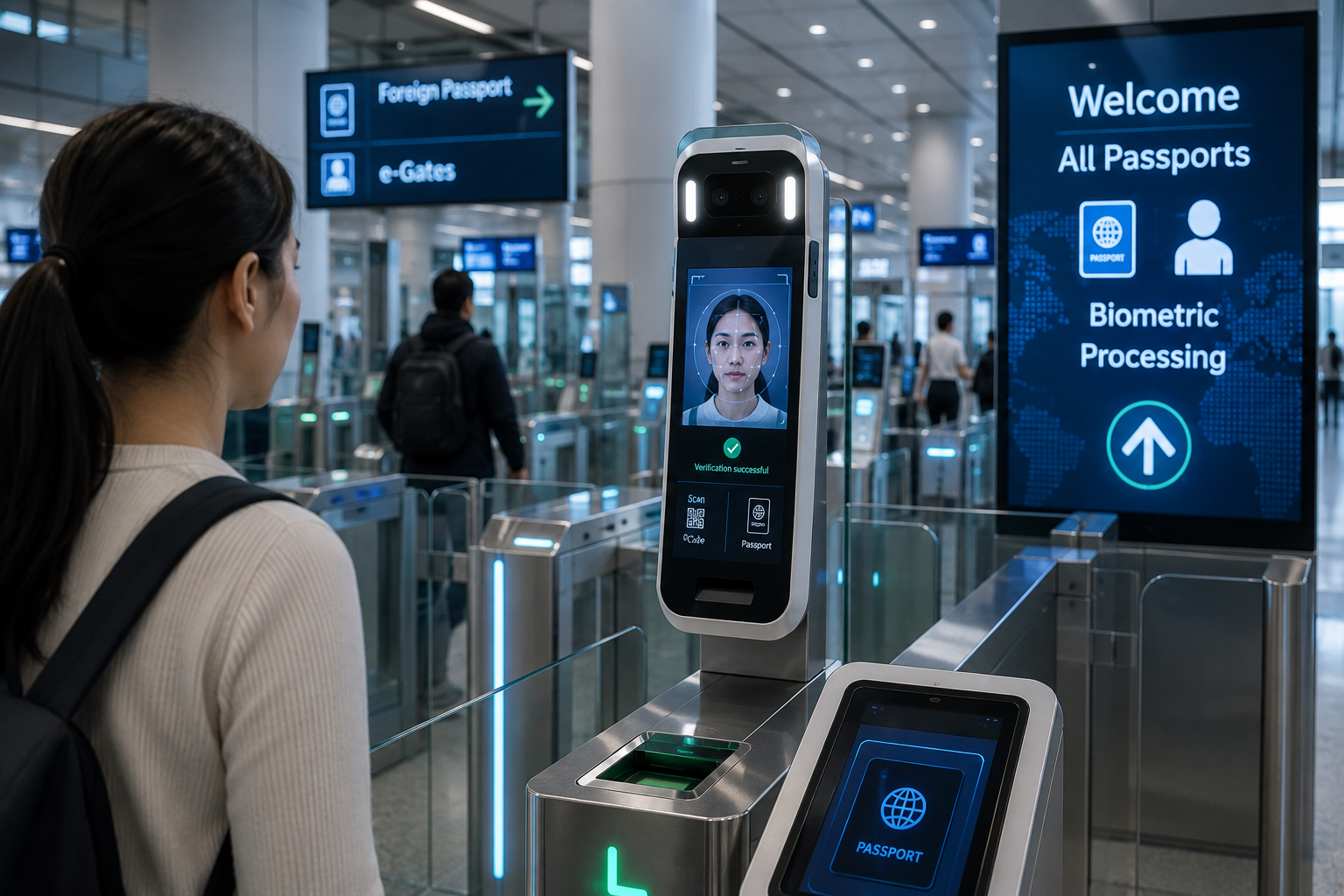
The proposed system would deploy biometric verification, automated electronic gates, advanced passenger information systems, contactless facial recognition, biometric kiosks, and artificial intelligence-powered risk analysis to identify suspected human traffickers, terrorists, and other high-risk travelers before they enter or leave the country.
The proposal has completed the Swiss challenge process without receiving competing bids. Under its user-pay financing model, travelers could pay a $4, or about ₱240, fee for each international arrival or departure, allowing the project to be funded without direct government spending.
Sandoval said the proposal also includes a mandatory technology refresh every four years to ensure the BI continues using updated systems without additional cost to taxpayers.
The user-pay mechanism is consistent with the principle that infrastructure users shoulder project costs through regulated service fees rather than relying on public funds.
Section 13 of Republic Act No. 11966, or the Public-Private Partnership (PPP) Code, authorizes the approval and regulation of tolls, fares, fees, and other charges for PPP projects, subject to the terms of the contract and oversight by the appropriate regulatory body or implementing agency.
Moreover, Viado said the BI recognizes the need to modernize border management to strengthen efforts against human trafficking, terrorism, illegal migration, and other emerging transnational threats.
With cases of illegal departures, unauthorized entries and cross-border crimes continuing to surface, lawmakers and immigration officials say the Philippines can no longer rely on an immigration system built on an 85-year-old law.
Viado said unauthorized departures and illegal entries remain serious concerns that threaten both national security and anti-human trafficking efforts.
Stay updated—follow Philippines Today on Facebook and Instagram, and subscribe on YouTube for more stories.