
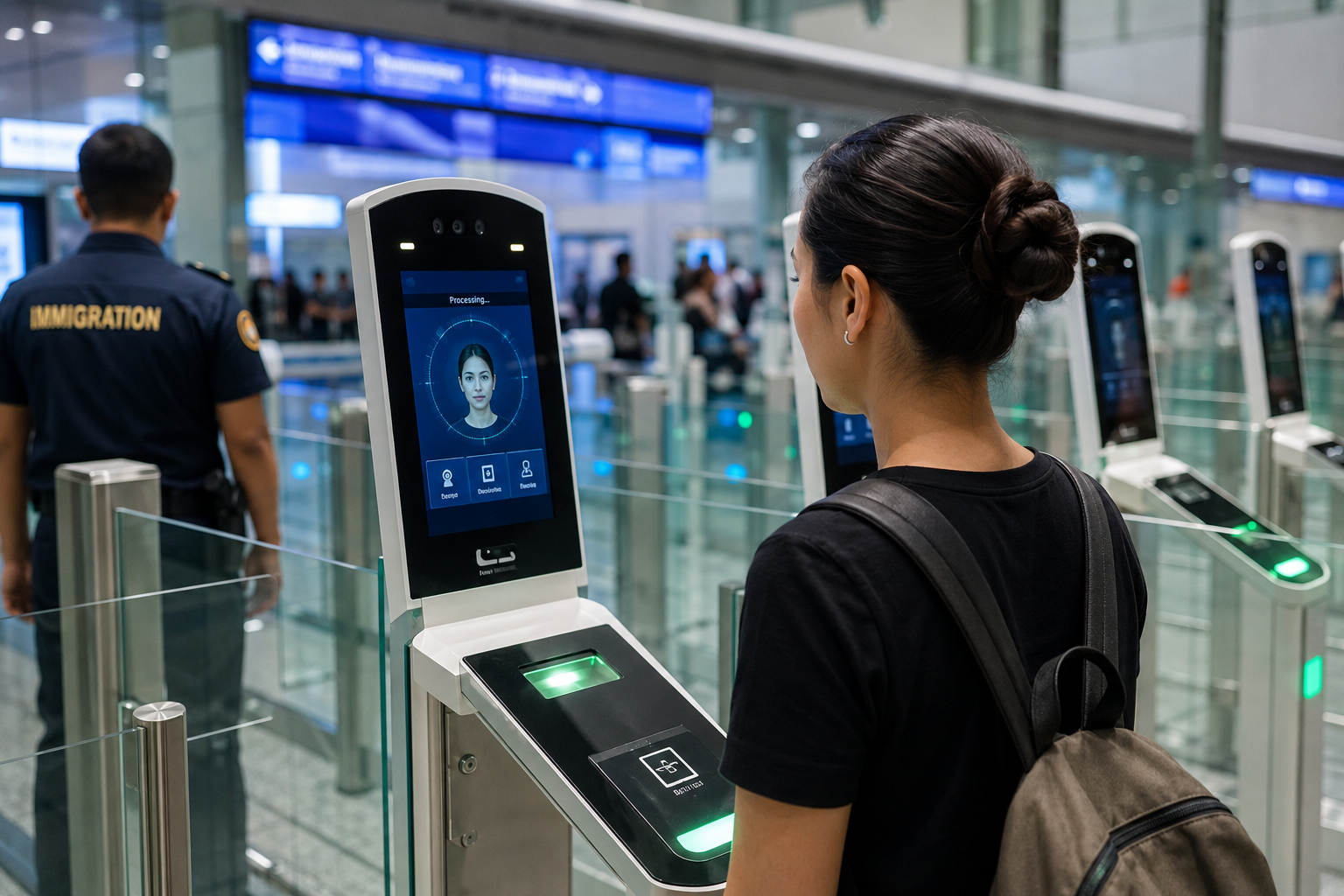

The Bureau of Immigration (BI) is advocating for what it describes as a long-overdue modernization of the Philippines’ border security infrastructure, backing a proposed ₱10.74-billion public-private partnership that would deploy artificial intelligence, biometric screening, and real-time data analysis across the country’s major international gateways.
Unlike previous upgrades concentrated at Ninoy Aquino International Airport (NAIA), the proposed Civil Aviation and Immigration Security Services (CAISS) project is designed as a nationwide system linking airports, seaports, and land-border facilities into a single technology platform aimed at strengthening security while streamlining passenger processing.
According to immigration officials, the project would be implemented without direct government spending, relying instead on a user-fee model paid only by travelers who use the service.
Speaking in a recent interview, Bureau of Immigration spokesperson Dana Sandoval said the proposal’s biggest advantage lies in its comprehensive scope.
“Ang kagandahan po nitong proyektong ito ay end-to-end. So mula frontline, data processing, data collection, data assessment, pino-provide po nitong entire system na ito,” Sandoval said. “At hindi po ito centralized lang in NAIA.”
The proposed system would extend beyond the country’s busiest airport to cover 11 operating international airports, an international seaport in Zamboanga, and six border-crossing stations.
“All international airports—so there are 11 international airports na functioning po na nakalagay dito, as well as isang international seaport which is in Zamboanga and six border crossing stations. So, lahat po yan ay mag-po-provide ng end-to-end, meaning yung mga electronic gates and the data processing, the AI processing, the biometrics capturing,” she said.
Data-driven screening
Beyond reducing processing times at ports of entry, immigration officials say the technology could significantly enhance the government’s ability to identify potential threats before they enter the country.
The system would allow authorities to sort and analyze traveler information using customizable risk indicators, helping officers focus on passengers who may warrant closer scrutiny.
“Meron din tayong pwedeng maglagay ng parameters para ma-sort yung mga data or information, and it would be able—pwede nating gamitin ‘yun para sa target approach natin when it comes to monitoring certain passengers,” Sandoval explained.
“So napakaganda po nung system, that’s why it’s being considered by the agency—it will boost us up technology-wise, ihahabol niya tayo doon sa ibang mga bansa,” she added.
Officials argue that such capabilities could strengthen efforts against transnational crimes, including human trafficking, terrorism, and other cross-border offenses, while bringing Philippine border management closer to international standards.
Built-In technology upgrades
Another feature highlighted by the Bureau of Immigration is a guaranteed technology refresh every four years, a provision intended to prevent the system from becoming outdated as security threats and digital tools evolve.
“Merong four-year refresh cycle ng technology, so ginagarantiya nito na yung BI uses the latest technology without added burden to the government,” Sandoval said.
The project’s financing structure, she added, is designed to shield taxpayers from direct costs.
“Kasi ito ay magkakaroon ng zero financial burden to the government dahil ang gagamit lang, kung sino lang ‘yung gagamit, ‘yun lang po ang magbabayad nung serbisyo na iyon,” Sandoval said.
“Iyung mga kababayan po natin na hindi naman gagamit ng serbisyong ’yun will not be burdened financially by this service,” she added.
No competing bids during Swiss challenge
The proposal has already passed through a Swiss challenge, a procurement mechanism used for unsolicited public-private partnership proposals in which competing firms are invited to submit alternative offers.
According to Sandoval, no rival proposal was submitted despite efforts to encourage participation from other technology providers.
“Nagkaroon din po ng Swiss challenge. Binuksan po ito sa lahat ng mga tao na maaaring merong counter-offer, counter-proposal, a better proposal for the Philippine government,” she said.
“The agency went as far as sending out letters to inform ‘yung mga kumpanya na gumagawa po ng mga ganitong technologies na baka meron silang other offers—at wala pong iba na nagbigay ng counter-offer.”
The project has since undergone review by the Department of Finance, the Department of Justice, and the Office of the Solicitor General.
Still, Sandoval emphasized that the proposal remains under evaluation and has not yet reached the implementation stage.
“Ngayon po, the project is not yet final. Ibig sabihin po, wala pa pong napipirmahang kontrata, hindi pa po na-finalize ang buong kasunduan. Sa ngayon po, wala pa po tayong inaasahan na sinasabi po na meron nang mga collection or sisingilin for this project,” Sandoval said.
Weighing costs against public interest
While immigration officials see the proposal as a major step toward modernization, Sandoval acknowledged that policymakers must balance security objectives against concerns about cost and public acceptance.
“It’s a delicate balance ng ano ba ang maitutulong nito sa ating bansa in general, as well as ano ba ‘yung mga cost nito. Kailangan nating balansehin ‘yun.” she said. “Mahalaga din sa atin ‘yung opinyon ng publiko, ng ating mga stakeholders, kung ano ‘yung sa tingin nila ay makakabuti.”
She added that the Bureau of Immigration ultimately follows the policy direction set by the national government when evaluating major technology acquisitions.
“Tandaan po natin, this is a proposal from a private company at ngayon po ay nag-a-undergo pa ng assessment bago natin i-finalize po ang desisyon nito,” she said.
If approved, the CAISS project would cover the country’s principal international gateways, including NAIA, Clark, Davao, Mactan-Cebu, Boracay, Iloilo, Kalibo, Laoag, Bohol-Panglao, Puerto Princesa, and Zamboanga airports, as well as the Zamboanga seaport and six border-crossing stations.
The proposed system is designed to comply with standards established by the International Civil Aviation Organization, the United Nations agency responsible for global aviation practices. Its features include advanced passenger information systems, automated border-control gates using contactless facial recognition, biometric kiosks, criminal-record search capabilities, and deception-detection tools.
For now, the proposal remains under government review. But immigration officials contend that the technology offers a rare combination of expanded security coverage, regular modernization, and private-sector financing—a package they believe could help the Philippines narrow the technological gap with its regional neighbors while strengthening oversight at its borders.
Stay updated—follow Philippines Today on Facebook and Instagram, and subscribe on YouTube for more stories.