
The Philippine economy is heading into 2026 with slowing growth and mounting structural risks, prompting the Cebu Chamber of Commerce and Industry to release a white paper calling for decisive reforms in infrastructure planning, execution, and governance.
The chamber developed the document, titled “General Economic Overview of the Philippines, with Emphasis on Cebu as an Island Province,” as a forward-looking policy framework, warning that weakening fundamentals—combined with persistent public spending bottlenecks—may erode Cebu’s competitiveness unless systemic changes are put in place. The white paper was submitted to the Infrastructure Development Committee of the Regional Development Council.
The chamber said the country’s economic trajectory requires sharper policy responses to counter emerging strains. Economic output is projected to slow to 4.5% this year from the expected 5.5%. The white paper identifies tourism, exports, business process outsourcing (BPO) services, overseas remittances, and public spending as the economy’s key pillars. It warned that tourism continues to contract, the composition of exports is shifting toward raw minerals, and manufacturing supply chains are thinning. It also noted that while the BPO sector remains relatively stable, it faces rising automation and competition pressures, while remittances—though strong—continue to mask deep structural weaknesses.
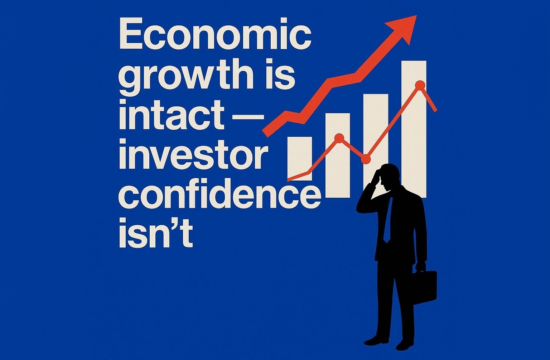
The white paper describes public spending as the economy’s stabilizing force but stresses chronic execution failures that dilute its impact. “The core problem today is not fiscal capacity, but execution and policy reliability,” the chamber wrote, adding that delays, redesigns, and politicized project selection “impose a ‘governance tax’ that depresses investor confidence and slows job creation.” The document argues that despite relatively low public debt, the country continues to struggle with infrastructure delivery gaps, from utilities and schools to transport, ports, airports, and hospitals.
For Cebu, the chamber said the policy takeaway is direct. It emphasized that world-class infrastructure, transparent governance, and disciplined project execution are essential to protect future growth.
“Cebu has the talent and capacity; what is missing is sustained technical governance,” the white paper said. It noted that only four major infrastructure projects in recent decades were delivered on time and to international standards, largely led by foreign contractors or joint ventures, underscoring the need for stronger execution systems.
To reverse course, the white paper proposes a Cebu masterplan aligned with global standards, emphasizing technical rigor, depoliticized planning, and climate-resilient development. It calls for foreign and local experts across engineering, urban planning, transport systems, environmental science, and economic strategy to conduct a full review of infrastructure priorities.
Key recommendations include expanding opportunities for foreign contractors, tightening procurement and tender oversight, issuing national infrastructure bonds, strengthening performance guarantees, and standardizing nationwide delivery benchmarks. The white paper also presents the slowdown as an opportunity to strengthen institutions rather than delay action.
“A discontinuity with the past is essential,” the chamber wrote, saying that stronger infrastructure governance could unlock “trillions of pesos in dormant or inefficiently used resources” and restore confidence by creating a predictable, rules-based construction environment.
The chamber urged policymakers, business leaders, and stakeholders to act decisively to prepare for economic uncertainties while laying foundations for long-term resilience. It framed the coming year not as a setback, but as a turning point that demands discipline, transparency, and long-horizon planning to secure sustained competitiveness for Cebu and the wider Philippine economy.
Follow PHILIPPINES TODAY on Facebook and Instagram, and subscribe on YouTube for the latest updates.