

Environmental law group ClientEarth and the National Power Corporation (NAPOCOR) signed a memorandum of understanding on March 23 to strengthen environmental governance and support sustainable energy development in watershed reservations across the Philippines.
The agreement brings together legal expertise and public sector leadership at a time of heightened global energy uncertainty. During the signing, ClientEarth chief executive Laura Clarke and NAPOCOR president Jericho Jonas Nograles underscored the urgency of coordinated action, citing pressures linked to instability in the Middle East and the need to balance energy security with environmental protection.
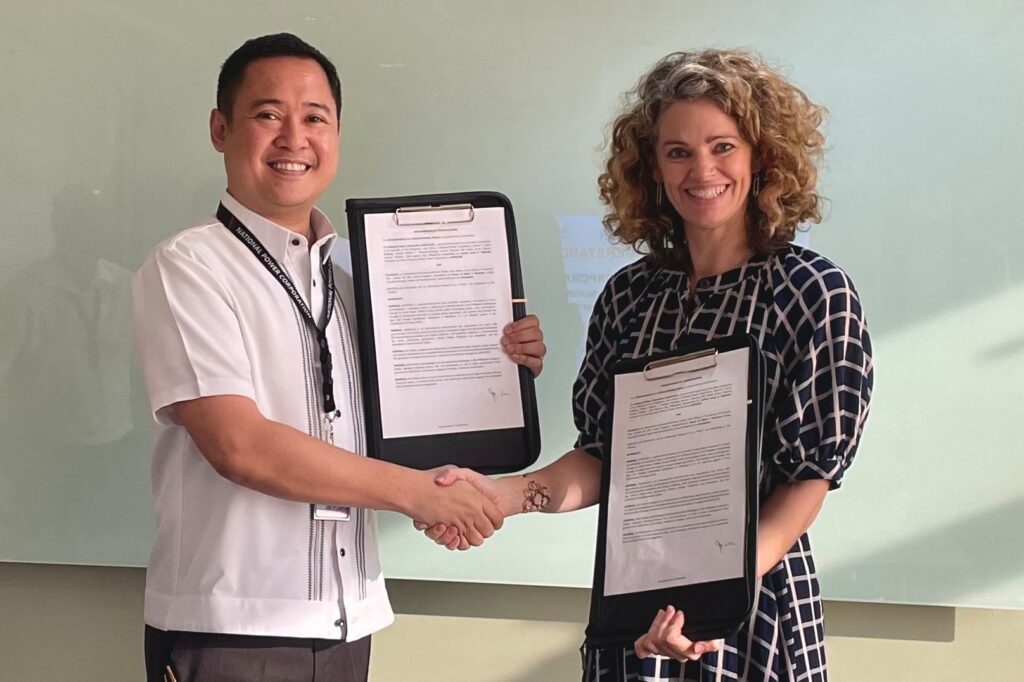
The three-year memorandum establishes a framework for collaboration that includes joint research, policy development, and regular coordination through a dedicated liaison committee. The partnership is designed to support practical, legally grounded solutions that integrate environmental sustainability into energy planning and governance.
“Amid growing global energy pressures, it is more important than ever to ensure that the transition to sustainable energy is grounded in strong environmental governance and respect for communities,” Clarke said. “This partnership with NAPOCOR reflects our commitment to working alongside governments to deliver practical, legally sound solutions that benefit both people and the planet.”
The agreement marks ClientEarth’s first formal partnership with a Philippine government agency and signals an expansion of its work in Southeast Asia. The organization has been engaging with policymakers and stakeholders in the region to advance legal frameworks that support clean energy and sustainable development.
Under the memorandum, ClientEarth will provide legal and policy expertise to assist NAPOCOR in strengthening environmental and forest governance in watershed areas under its management. The collaboration will examine reforestation and rehabilitation initiatives and assess their impacts on forest ecosystems, energy infrastructure, and renewable energy development, as well as on Indigenous Peoples and local communities.
NAPOCOR manages about 500,000 hectares of watershed reservations that are critical to hydropower generation and broader energy systems. These areas also play a key role in biodiversity conservation, water regulation, and climate resilience, making governance and stewardship essential to both environmental and national development goals.
“This partnership marks a significant step forward in strengthening our stewardship of some 500,000 hectares of watershed reservations in the Philippines. Beyond power generation, these areas are vital to ecological balance and survival of life, both our flora and fauna and human alike,” Nograles said.
The collaboration also includes capacity-building initiatives, legal research, and knowledge exchange aimed at enhancing institutional capabilities and promoting best practices in watershed management. It is expected to support more transparent and accountable governance, particularly in engagement with Indigenous Peoples and local communities.
NAPOCOR, a government-owned and controlled corporation, plays a central role in providing electricity to off-grid and missionary areas in the Philippines. Its dual mandate of energy provision and watershed management places it at the intersection of infrastructure development and environmental protection.
ClientEarth said the partnership aligns with its broader commitment to advancing a just energy transition in Southeast Asia. By working with NAPOCOR, the organization aims to promote integrated approaches to watershed management where energy development, forest protection, and community rights are addressed together.
The agreement also builds on ClientEarth’s recent activities in the Philippines, including policy dialogues such as the “The Role of the Law in Accelerating the Energy Transition in the Philippines” panel held in Manila on March 25. These efforts are part of a wider push to strengthen legal frameworks and governance systems that can support long-term sustainability and climate resilience.
Stay updated—follow Philippines Today on Facebook and Instagram, and subscribe on YouTube for more stories.