
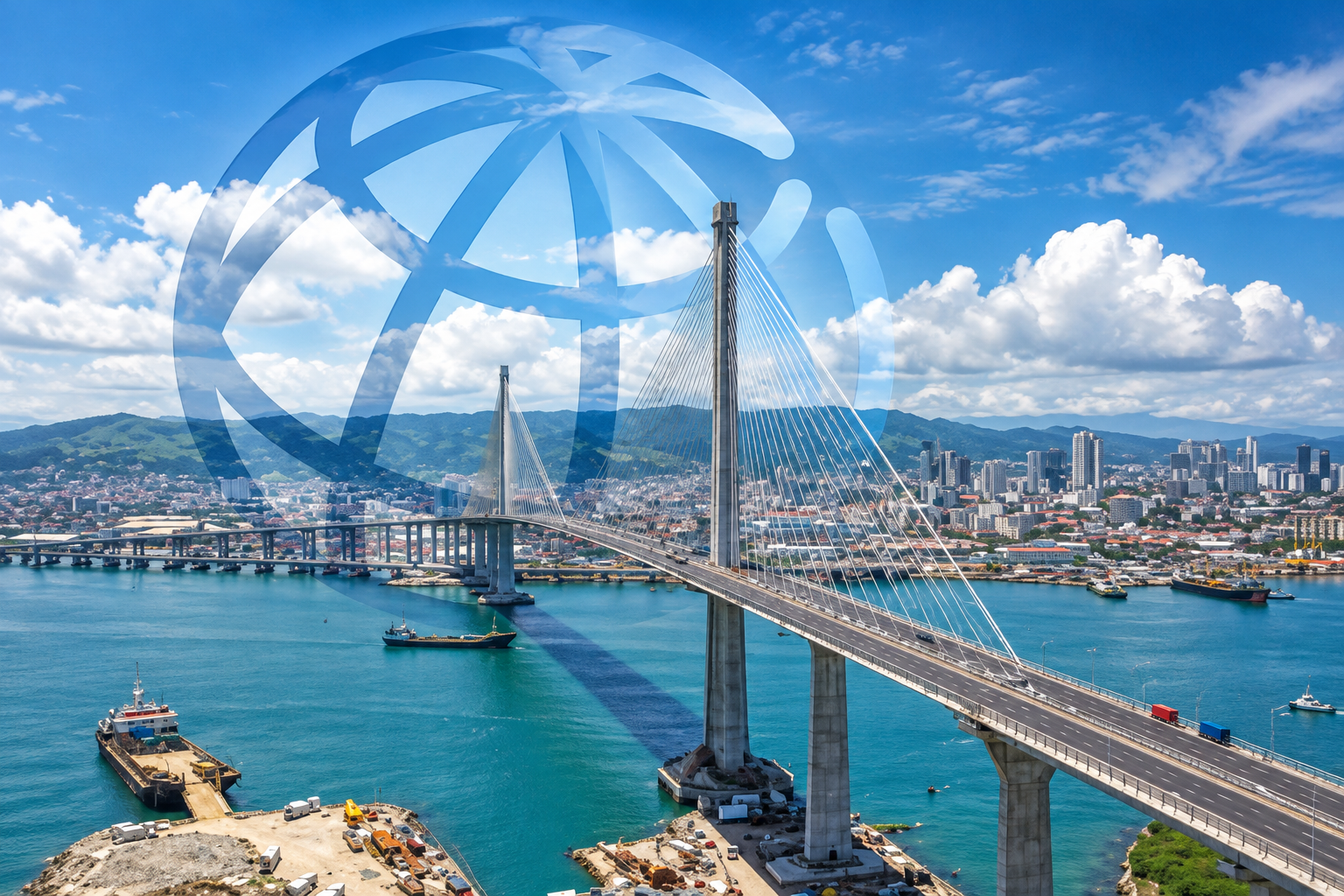

The Philippines may need to look beyond Metro Manila for its next major source of economic growth, with a new World Bank report pointing to a network of cities and surrounding municipalities as the country’s next engine for jobs and investment.
The World Bank’s From Cities to Corridors: Unlocking the Philippines’ Urban Growth Potential identifies 26 multi-local government unit (LGU) agglomerations that could form the backbone of regional growth corridors. They comprise 112 urban LGUs, including 26 urban cores and 86 urban peripheries.
The report says these connected urban economies can give firms access to larger markets, workers more job opportunities, and cities the scale needed to attract investment.
Metro Manila remains the clearest example of the productivity gains from urban concentration. The capital region accounted for more than 31% of national gross domestic product (GDP) in 2023 while representing only about 12.4% of the population. Seventeen highly urbanized cities outside the capital accounted for another 11% of GDP and about 10% of the population.
Urban areas also have a different employment profile. In 2024, 78% of urban workers held wage jobs, while 94% worked in non-primary sectors such as manufacturing and higher-productivity services, according to the report.
But the Philippines has been slower to urbanize than some of its regional peers. The share of Filipinos living in dense urban areas was 41.5% in 2020 and is projected to reach only 43.9% by 2050, according to the World Bank’s analysis of United Nations data. Malaysia and Thailand, by comparison, have moved toward urbanization rates of about 60%.
The World Bank says this leaves much of the country’s population in lower-density and lower-productivity areas, limiting the economic gains that typically come with urbanization.
Its analysis of all 1,642 Philippine cities and municipalities found that economic potential is concentrated in urban LGUs. Although only 190 LGUs are classified as urban under the report’s methodology, they account for 136 of the 244 high- and very-high-potential LGUs.
Still, urban status alone does not guarantee strong economic performance. Fifty-four of the 190 urban LGUs, or nearly 30%, fall below the report’s high-potential threshold. More than half of the country’s population also lives in medium-, low- or very-low-potential LGUs.
The difference becomes more significant when cities are viewed as part of larger economic systems.
The report finds that LGUs integrated into multi-city agglomerations tend to have stronger growth prospects than standalone local governments. Urban peripheries linked to major cores can also have better prospects than comparable places operating independently.
“Growth potential is greater when a locality is connected to a larger urban economy,” the World Bank said.
That makes infrastructure only part of the equation. Roads, internet access, ports and other connections need to be matched by local governments capable of preparing and delivering projects.
The World Bank identifies a major weakness in that area. Capital spending accounts for only about 15% of annual LGU expenditure, while capital budget execution rates range from 47% to 55%. The report says growing cash reserves suggest that some LGUs have resources available but struggle with project preparation, feasibility studies, land and permitting issues, procurement, and contract management.
The problem is compounded by the country’s fragmented local-government structure. Economic corridors often cross several jurisdictions, while planning, infrastructure, and economic development decisions remain divided among them.
“Because corridors function through networks of cities rather than individual jurisdictions, stronger multi-LGU coordination is essential,” the report said.
The World Bank points to several urban centers that could play larger regional roles, including Baguio, Cagayan de Oro, Dumaguete, Iligan, Lipa, and Tagbilaran. It also identifies high-potential urban LGUs such as Butuan, Cotabato, Davao, Dipolog, General Santos, Polomolok, and Tagum as potential nodes for stronger connections in Mindanao.
The report also sees a role for medium-potential cities and municipalities. Better infrastructure, basic services, market access, and human capital could allow them to serve as supporting nodes within wider regional economies.
The recommendations include updating the Local Government Code and planning frameworks to better reflect actual patterns of urbanization, strengthening local revenue systems, and improving the preparation and execution of public investments.
For growth corridors, the World Bank calls for stronger incentives for LGUs to coordinate on infrastructure, land use, housing, logistics, and economic development rather than pursuing projects independently.
The potential economic payoff extends beyond the cities themselves. The report notes that municipalities within 100 kilometers of a roll-on, roll-off port saw a 12% increase in the number of firms and wage jobs, illustrating how lower transport costs can expand local markets.
For the Philippines, the World Bank’s analysis ultimately shifts the focus from where cities are located to how they connect. Its proposed corridors would link urban cores with surrounding municipalities, ports, production areas, and smaller towns, creating larger labor and consumer markets across regions.
The report’s conclusion is direct: “The next phase of growth will depend on whether high-potential cities and municipalities can move beyond isolated local economies to become building blocks of connected regional growth corridors.”
Stay updated—follow Philippines Today on Facebook, Instagram, and TikTok, and subscribe on YouTube for more stories.