
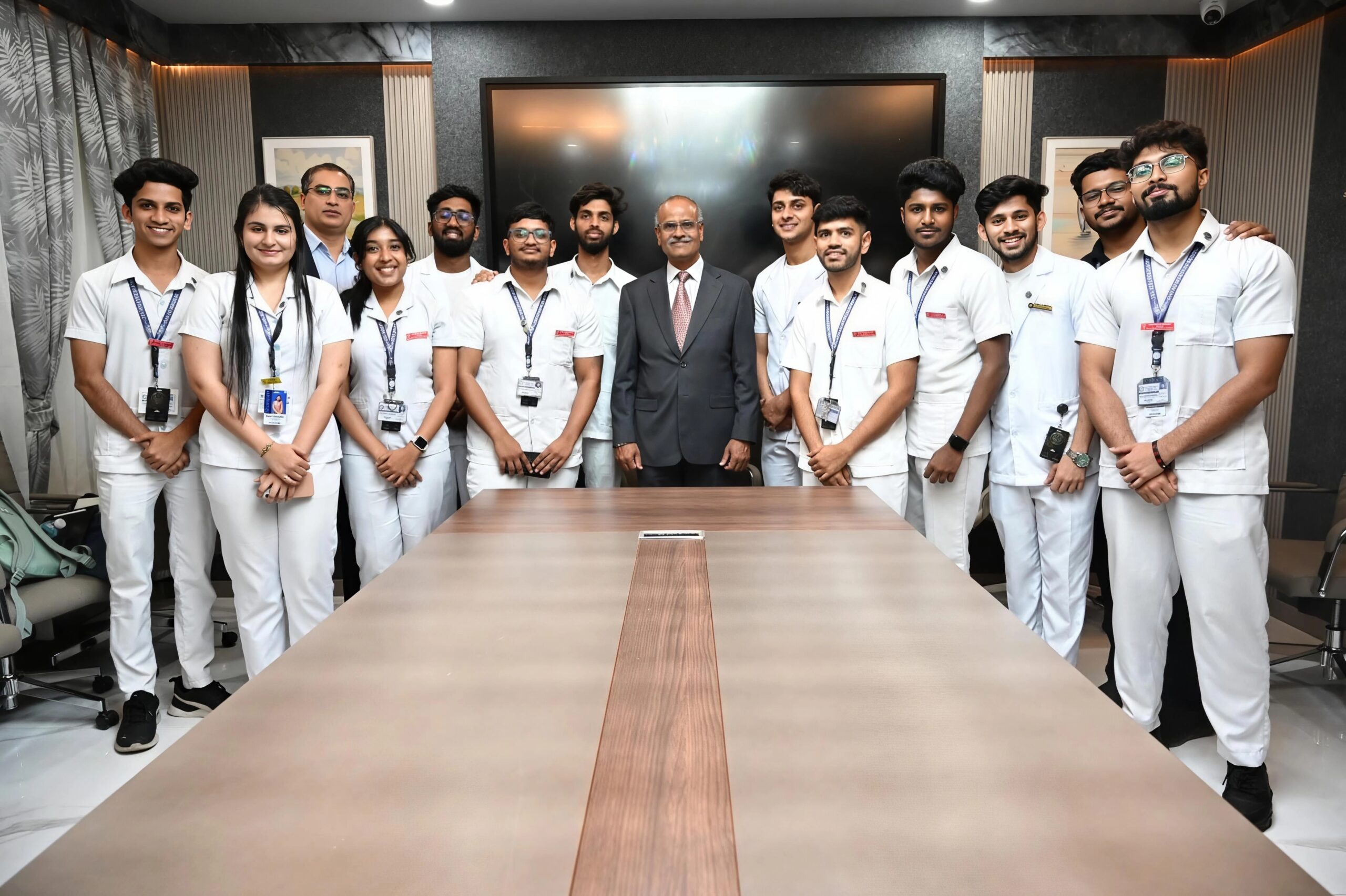

More than a thousand Indian medical students graduated from a single school in Davao City in March this year, marking a quiet but significant shift in Asian medical education.
The bigger story is not simply that Indian students are studying medicine in the Philippines. It is that Davao has quietly become one of India’s largest overseas medical classrooms, helping reshape the Philippines’ role in training the next generation of doctors.
That transformation was on full display when the Davao Medical School Foundation (DMSF) awarded Doctor of Medicine degrees to 1,015 Indian-origin students during its 25th International Medical Doctors Graduation Ceremony. Meanwhile, the school said the overall graduating class exceeded 1,050 students, the largest in its history.
The milestone reflects a broader shift. The Philippines is increasingly viewed as an established destination for Indian medical education, with Davao emerging as one of its fastest-growing hubs for aspiring doctors.
That rise begins with India’s highly competitive admissions system. Millions of students take the National Eligibility cum Entrance Test (NEET) each year, but only a fraction secure seats in Indian medical colleges. The shortage has pushed growing numbers of students to look overseas for medical degrees.
For many families, the Philippines has become one of the most practical options. English is the medium of instruction, tuition and living costs are generally lower than those of many private medical schools in India, and several Philippine medical schools follow an American-influenced curriculum that prepares students for international licensing pathways.
English is perhaps the country’s biggest academic advantage.
Indian students who completed their science education in English can move directly into lectures, textbooks, examinations, and clinical training without first learning another language. That removes one of the biggest barriers faced by students considering medical schools in non-English-speaking countries.
The curriculum is another draw. Philippine medical schools integrate basic sciences with clinical training, reflecting the country’s long-standing American influence on medical education.
Many graduates later pursue licensing examinations in India and abroad, including India’s Foreign Medical Graduate Examination (FMGE), the United States Medical Licensing Examination (USMLE), the United Kingdom’s Professional and Linguistic Assessments Board (PLAB), Australian Medical Council (AMC) examinations, and the Dubai Health Authority licensing process, according to Gulf News.
Davao’s appeal, however, extends beyond affordability and English-language instruction.
As Mindanao’s largest metropolitan area and a regional healthcare hub, the city offers affiliated teaching hospitals, laboratories, clinical rotations, and exposure to a large patient population. Those resources give international students practical clinical experience while studying in one of the country’s busiest healthcare centers.
A separate report carried by Big News Network (BNN) said the Philippines’ tropical climate and disease patterns are also similar to those in India, allowing students to train on medical conditions they are likely to encounter when they eventually practice back home.
Safety has also become part of Davao’s appeal.
According to BNN, Indian families increasingly view the city as a stable and secure destination for overseas medical education, alongside its established medical schools and expanding Indian student community. The city’s reputation has become an important consideration for parents sending children thousands of kilometers from home.
Just as important is the community that has grown around Davao’s medical schools.
Students from Tamil Nadu, Maharashtra, Karnataka, Telangana, Kerala, Gujarat, and Delhi often find classmates who speak familiar languages and share similar cultural backgrounds. DMSF also provides Indian food and accommodation services, making it easier for students to adapt to life in the Philippines.
That community has created a powerful network effect. Graduates recommend Philippine schools to relatives, friends, and younger students, while families gain confidence from alumni who have returned to India or continued postgraduate training overseas.
Indian media have reported that thousands of Indian students have graduated from DMSF over the years, reinforcing the school’s reputation among aspiring doctors.
The Philippines’ reputation among Indian students was established years before Davao’s record graduation.
One of the most frequently cited examples is Nirav Prajapati, a graduate of the University of Northern Philippines (UNP) College of Medicine. In 2017, he topped India’s Medical Council of India screening examination with 239 out of 300 points, finishing ahead of more than 4,000 candidates.
He became only the second graduate from the university to achieve the top ranking after another UNP graduate did so in 2013.
“That kind of result gave Indian students and parents an important signal: studying medicine in the Philippines did not necessarily mean sacrificing competitiveness in India’s licensing system,” Gulf News reported.
The success story helped boost confidence in Philippine medical schools. By 2017, the University of Northern Philippines already had more than 400 Indian medical students and over 300 students enrolled in pre-medicine programs, showing that demand had taken root in northern Luzon before expanding rapidly to Mindanao.
The Philippine government is also paying closer attention to the sector as Indian enrollment grows.
In June 2026, First Lady Liza Araneta-Marcos met government agencies to discuss concerns raised by Indian medical students, including visa processing and administrative requirements. The discussions were framed as part of efforts to strengthen the Philippines’ ambition of becoming an international education hub.
There is, however, an important regulatory caveat for prospective students.
A Doctor of Medicine degree from the Philippines does not automatically allow graduates to practice in India. India’s National Medical Commission requires foreign medical graduates to comply with the Foreign Medical Graduate Licentiate Regulations before they can practice medicine in the country.
The Embassy of India in the Philippines has also advised students to enroll only in institutions recognized by the Commission on Higher Education (CHED) whose Doctor of Medicine programs comply with India’s regulatory requirements.
Philippine education authorities have said the Doctor of Medicine program is designed to meet requirements communicated to the Indian Embassy, including a 54-month medical program followed by a 12-month clinical internship.
The record-breaking 2026 graduating class also reflects how the student pipeline has evolved.
It included first-generation doctors, students continuing family medical traditions, and siblings following older relatives into the same profession. For many parents who traveled from cities such as Nashik, Kanchipuram, Mysuru, and Saharanpur, the ceremony marked both their first visit to the Philippines and the culmination of years of investment in overseas medical education.
As enrollment continues to grow, Davao’s emergence suggests the city is no longer just one of the Philippines’ medical school destinations. It has become a key gateway for Indian students pursuing medical careers abroad, anchored by English-language instruction, comparatively affordable training, established clinical education, and a rapidly expanding cross-border academic community.
Stay updated—follow Philippines Today on Facebook and Instagram, and subscribe on YouTube for more stories.