

The Department of Science and Technology (DOST) is rolling out science-based agricultural technologies to help farmers adapt to the expected effects of this year’s El Niño, with innovations aimed at improving water management, boosting crop yields, and strengthening climate resilience.
The technologies were presented during the Technology to People Media Conference in Tarlac by the DOST – Philippine Council for Agriculture, Aquatic and Natural Resources Research and Development (PCAARRD), highlighting government-backed research designed to protect the agriculture, fisheries, and natural resources sectors from prolonged dry conditions.
Ana Liza Solis, chief of the Climate Monitoring and Prediction Section of the Philippine Atmospheric, Geophysical and Astronomical Services Administration (PAGASA), said farmers should prepare because every El Niño event behaves differently.
“Nagba-vary iyong impact, hindi siya pare-pareho. No two El Niños are alike in terms of intensity, duration, frequency, at iyong impact na posibleng maging epekto niya.”
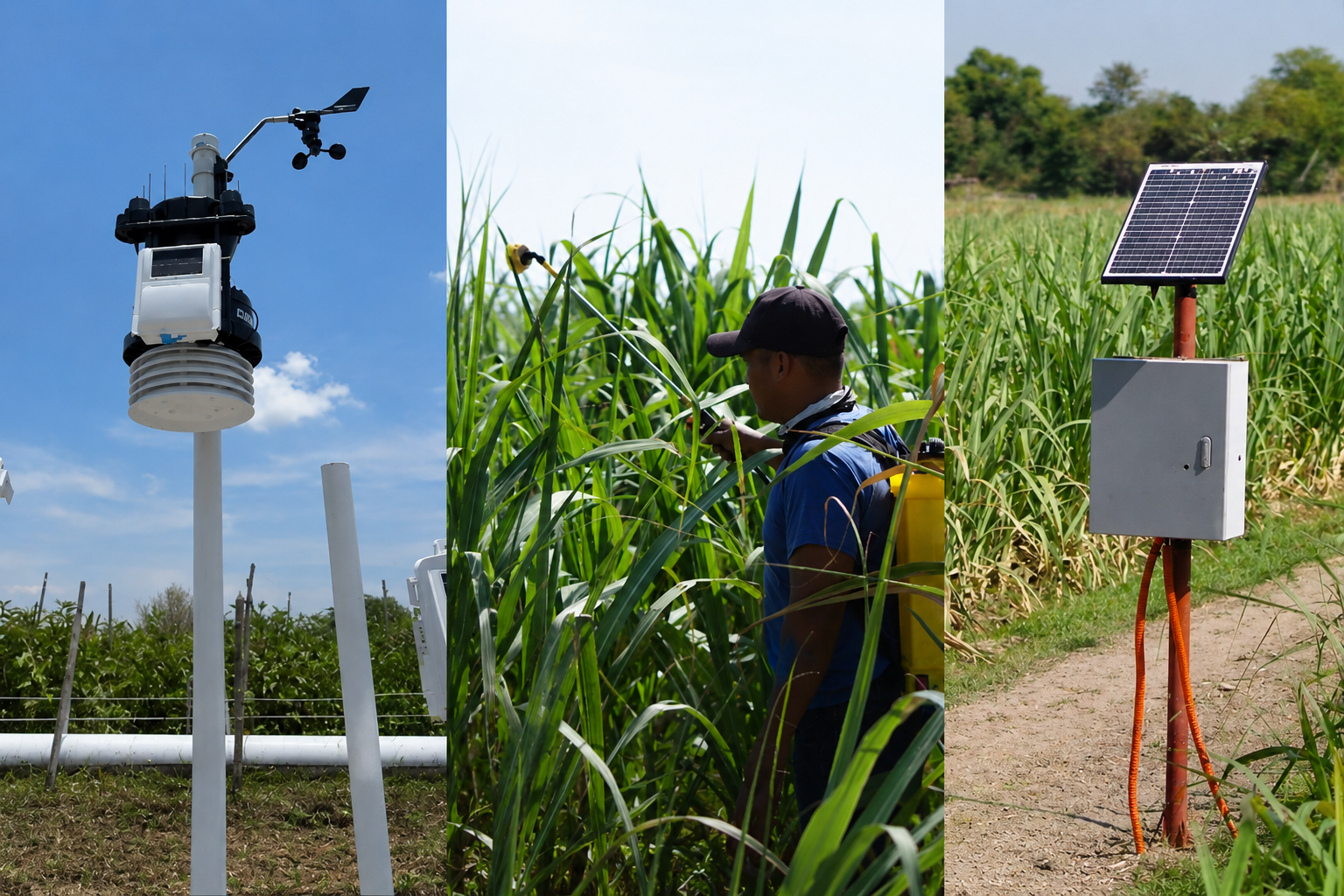
Among the featured innovations was the Automated Furrow Irrigation System (AFIS), a solar-powered irrigation technology installed at a sugarcane plantation in Paniqui, Tarlac.
Developed through DOST’s Industry Level Collaborative Research and Development to Leverage Philippine Economy (iCRADLE) Program, AFIS uses irrigation flow models, multisensors, and automated control systems to deliver the right amount of water at the right time, helping farmers conserve water while maintaining crop productivity.
DOST also showcased the Nutrio Biofertilizer, which improves sugarcane growth, increases yields, and reduces dependence on inorganic fertilizers.
North Cluster Producers Cooperative chairperson Marlon Gamboa said the technologies have significantly improved farm output and incomes.
“In terms of yield o ‘yung taas ng production, more than double actually iyong naging resulta. Siyempre kapag gano’n, iyong kita mas nadagdagan ng mas malaki sa ating mga magsasaka.”
Another technology highlighted during the conference was the Automatic Weather Station (AWS) installed in Barangay San Manuel, Tarlac City under Project Smarter Approaches to Reinvigorate Agriculture as an Industry (SARAI).
Project SARAI Centralized National Hub for Regional Operations leader Moises Dorado said the weather station has a monitoring radius of up to 20 kilometers, providing localized weather information such as rainfall, temperature, humidity, and solar radiation.
“Itong automatic weather station, magbibigay ito sa atin ‘yung tinatawag nating site-specific na information katulad ng rainfall, temperature, solar radiation, humidity na talagang angkop para dito sa nasasakupan na lugar.”
Dorado said the station transmits data in near real time and converts the information into practical advisories that farmers can use to make informed decisions on irrigation, planting schedules, and other field operations. Unlike broader weather forecasts, the AWS provides site-specific observations that better reflect actual conditions in farming communities.
DOST Undersecretary for Research and Development Leah Buendia said the technologies demonstrate how government-funded research can help farmers and fisherfolk cope with increasingly frequent extreme weather events while supporting the administration’s food security goals.
“PCAARRD delivers to our farmers and fisherfolk iyong mga science-based at smart agriculture solutions para po ma-address ang mga extreme weather conditions, katulad po ngayon ng El Niño.”
Through initiatives such as Project SARAI and the iCRADLE Program, DOST said it continues to develop and deploy science-based technologies that improve farm productivity, strengthen climate resilience, and support sustainable agricultural development.
Stay updated—follow Philippines Today on Facebook and Instagram, and subscribe on YouTube for more stories.