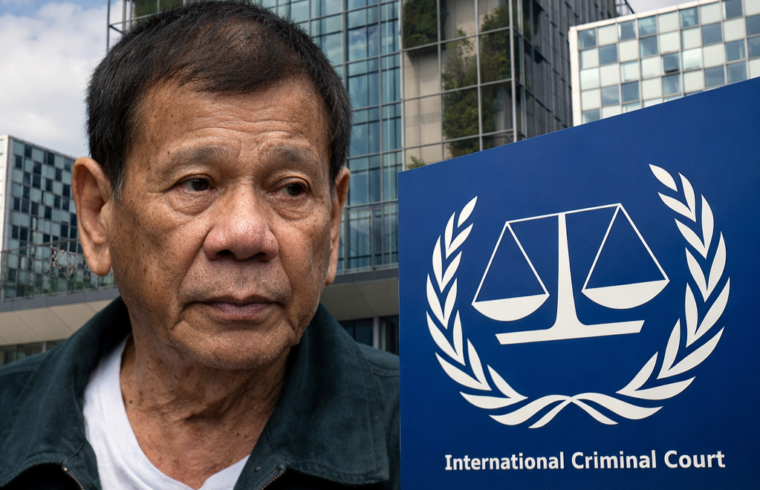
Former president Rodrigo Duterte is seeking interim release from International Criminal Court (ICC) detention, with his lawyers arguing that a sharp physical and cognitive decline now undercuts any risk he could interfere with proceedings, threaten witnesses, or commit further crimes.
His counsel, Nicholas Kaufman, submitted a joint medical report prepared by defense-hired experts to ICC Pre-Trial Chamber I as an annex to a 12-page filing dated January 9, citing what he described as materially changed circumstances since earlier assessments of Duterte’s fitness to stand trial.
“The new medical evidence is proffered in order to assist the Pre-Trial Chamber in assessing whether Mr. Duterte’s medical condition sufficiently mitigates his capacity to actualize the statutory risk factors, such that his release to the State Party that has expressed its willingness to receive him may now be contemplated,” the filing said.
The submission came more than a month after an ICC-appointed, three-member panel of experts submitted joint and individual reports on Duterte’s condition. Kaufman said the defense report shows Duterte no longer has the executive functioning, stamina, or organizational capacity needed to evade supervision, coordinate intermediaries or carry out intimidation—factors central to detention decisions.
Kaufman argued that the same impairments negate any realistic risk of continued criminal conduct, saying Duterte can no longer plan or oversee complex chains of command. He added that neither defense experts nor ICC-appointed specialists found clinical signs of aggression, disinhibition, or manipulative behavior.
“To conclude, the notion of witness intimidation does not align with Mr. Duterte’s functional abilities or with the realities of an environment where his liberty is restricted and strictly supervised,” Kaufman said.
The filing asks the chamber to order Duterte’s interim release under the same terms previously proposed, noting that judges must review detention at least every 120 days and reconsider when circumstances materially change. Kaufman said Duterte is under round-the-clock video surveillance not because of flight risk, but out of concern for his safety, and described him as physically frail, with unexplained weight loss and increasing dependence on others for basic care.
“When he is finally invited to attend a hearing on his detention, as the statutory framework requires, Mr. Duterte’s demeanor will be assessed and his purported propensity to flee, threaten, or commit crime will be exposed to the world for what it is—a wholly unreasonable and fanciful assertion,” Kaufman said.
Addressing observations of “underperformance” noted by court-appointed neuropsychological and neurological experts, Kaufman said none concluded the findings were deliberate or the result of malingering, and no underlying cause was identified. He accused prosecutors of baselessly suggesting Duterte was feigning illness or manipulating his appearance.
The ICC-appointed panel submitted its reports on December 5, 2025, after examining Duterte’s medical condition and fitness to stand trial. While the court has yet to rule on the defense’s latest request, the ICC Office of the Prosecutor has said Duterte was found able to fully engage and participate in proceedings.
Earlier on January 9, the court rejected a defense request to appeal a separate ruling denying access to communications between the ICC registry and the expert panel that assessed Duterte’s fitness to stand trial.
Stay updated—follow Philippines Today on Facebook and Instagram, and subscribe on YouTube for more stories.