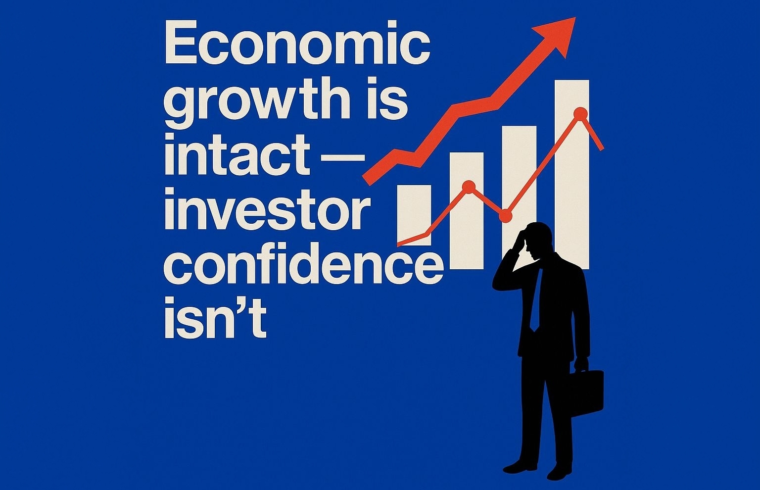
The Philippine economy is no longer overheating—but it is not stalling either. Instead, it is settling into something more uncomfortable: a slower, uneven expansion that exposes long-standing weaknesses just as global conditions turn less forgiving.
The World Bank’s December 2025 Philippines Economic Update delivers that verdict with characteristic restraint, cutting its growth forecast to 5.1% for 2025 before penciling in only modest improvements through 2027.
The numbers still look respectable in a region grappling with China’s slowdown and tighter financial conditions. But paired with the Philippine government’s own latest data, the message is unmistakable: growth is increasingly consumption-heavy, investment-light, and vulnerable to policy missteps.
Official figures show GDP growth cooling to about 4% in the third quarter of 2025, a sharp deceleration from earlier in the year. Economic managers describe this as a temporary pause, citing delayed public spending, weather-related disruptions, and project bottlenecks that are expected to unwind in 2026. The Department of Finance remains confident that infrastructure acceleration, easing inflation, and lower interest rates will restore momentum.
The World Bank is more cautious—and arguably more diagnostic. Its assessment points less to cyclical noise and more to structural drag. Investment has softened, business confidence remains fragile, and foreign direct investment has fallen well short of what liberalization reforms promised. Services exports, long a bright spot, have slowed alongside weaker global demand and uneven tourism recovery. The result is an economy growing, but not compounding its strengths.
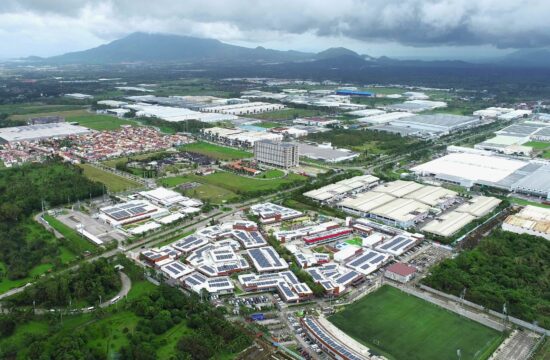
This divergence matters because recent Philippine growth has leaned heavily toward non-tradables such as construction, retail, and domestic services. These sectors absorb labor and support consumption, but they do not anchor productivity gains or export competitiveness. Manufacturing job creation has stagnated, the number of exporting firms has declined, and logistics and energy costs remain stubbornly high compared with regional peers. The World Bank’s warning is blunt: without reviving the tradables sector, growth will struggle to accelerate—or even sustain itself—over the medium term.
The government does not dispute the diagnosis, but execution has lagged ambition. Investment liberalization in telecoms, transport, logistics, and renewable energy has improved the policy framework, yet capital has been slow to follow.
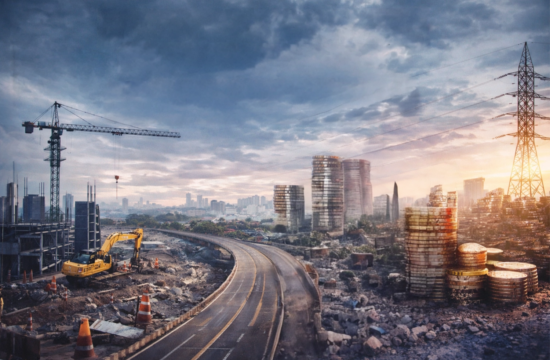
Part of the hesitation reflects global uncertainty. Part of it is domestic. Delays in public investment, compounded by governance concerns and high-profile infrastructure controversies, have dented investor confidence precisely when the economy needed counter-cyclical support.
Monetary policy has done what it can. With inflation easing into target range, the central bank has pivoted toward rate cuts to stimulate borrowing and spending. That has helped keep consumption resilient, supported further by steady employment and remittance inflows. But cheap money cannot compensate for regulatory friction, project delays, or weak institutional capacity. Nor can it transform a consumption-led expansion into a productivity-driven one.
Where the World Bank’s analysis becomes most consequential is at the subnational level. More than 60% of urban local governments sit within high-potential corridors across Luzon, Visayas, and Mindanao—areas where wage employment, firm density, and infrastructure already intersect.
These corridors could become engines of inclusive growth, easing pressure on Metro Manila while lifting lagging regions. Yet local governments manage roughly a quarter of public spending, and capacity constraints remain severe. Without better coordination, connectivity, and service delivery, these corridors risk becoming missed opportunities rather than growth multipliers.
The contrast between forecasts underscores a deeper policy challenge. The government projects a rebound driven by resumed infrastructure spending and private investment recovery. The World Bank agrees growth will pick up, but only modestly—and only if reforms move from legislation to implementation. Independent forecasters sit closer to the World Bank’s view, reflecting skepticism that structural constraints can be unwound quickly.
None of this suggests imminent crisis. The Philippines retains strong fundamentals: a young workforce, a large domestic market, manageable inflation, and a financial system that remains broadly stable. Compared with many emerging markets, its growth outlook is still enviable. But the current trajectory points toward a middle-income plateau—steady expansion without the productivity surge needed to close the gap with faster-moving neighbors.
The policy window is narrowing. As global growth slows and capital becomes more selective, countries that fail to translate reform narratives into credible execution risk being bypassed. For the Philippines, sustaining growth will require more than resilience. It will require disciplined public investment, credible fiscal consolidation, tougher competition policy, and a serious effort to lower the cost of doing business—especially for exporters and manufacturers.
The World Bank’s update and the government’s latest data do not contradict each other. They complete the same picture. Growth has not disappeared, but its composition has shifted in ways that are harder to defend.
The question now is whether policymakers can turn a period of moderation into a platform for reform—or whether the economy settles into a comfortable, costly equilibrium of growth that is good enough, but never quite enough.
Follow PHILIPPINES TODAY on Facebook and Instagram, and subscribe on YouTube for the latest updates.