
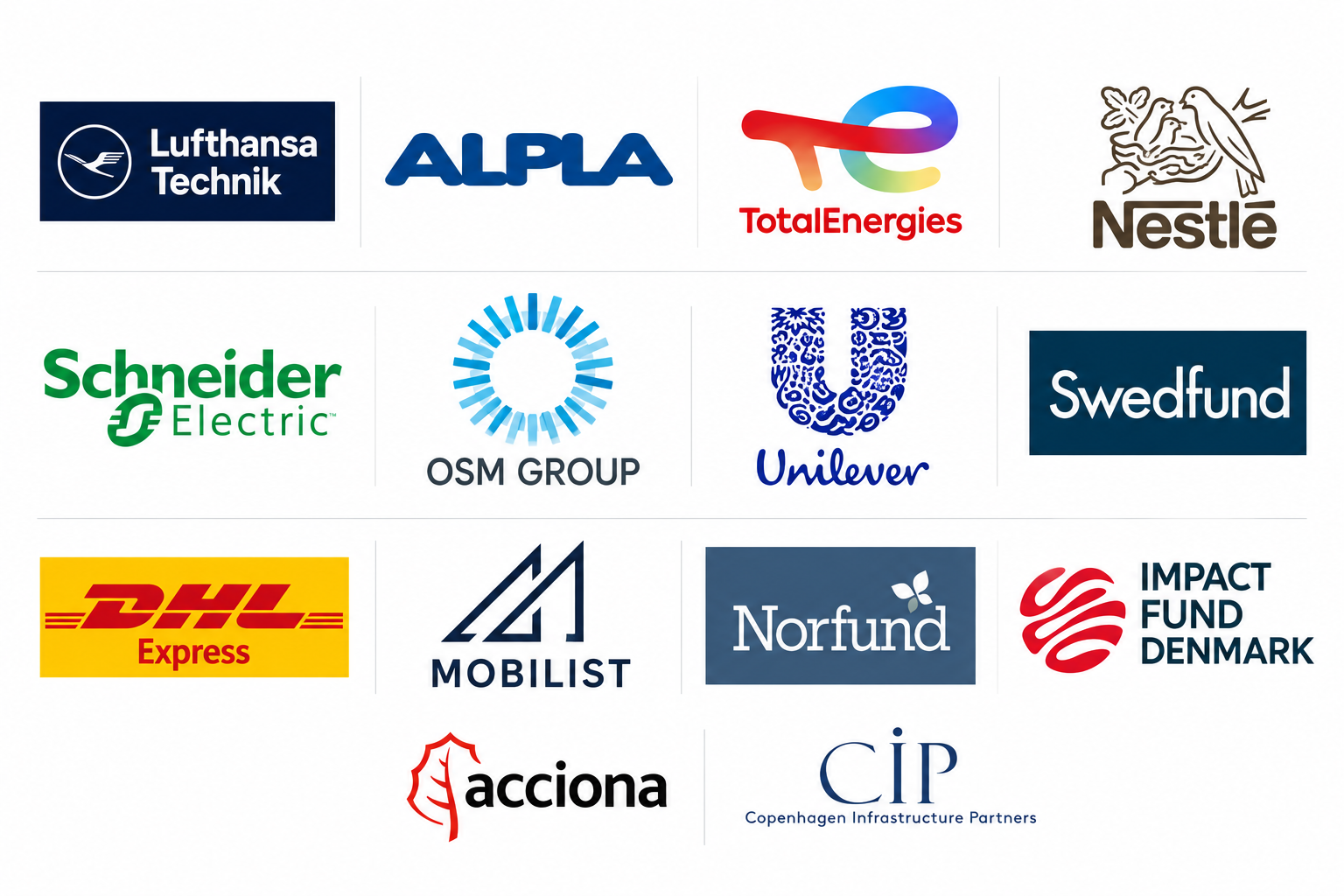

European firms are stepping up investments in the Philippines, pouring capital into factories, aviation, renewable energy, and infrastructure as the country competes for a larger share of shifting Southeast Asian supply chains.
The expansion is already visible in the numbers. The Philippine Economic Zone Authority (PEZA) said it hosted more than 190 companies with European Union (EU) equity as of February 2026, representing over ₱400 billion in cumulative European investment and more than 430,000 jobs.
The Board of Investments, meanwhile, approved ₱461.8 billion in projects in the first half of 2026, up 21% from a year earlier.
Trade and investment ties are also substantial. EU-Philippine goods trade reached €17.6 billion in 2025, while the EU’s stock of foreign direct investment in the Philippines stood at €15.4 billion in 2024.
That economic relationship is increasingly translating into projects on the ground. Some of Europe’s biggest companies are expanding their Philippine operations. They are now making increasingly visible commitments.
Lufthansa Technik — Germany
Lufthansa Technik broke ground in August on a new aircraft maintenance facility at Clark International Airport, marking one of the largest recent European investments in Philippine aviation.
The three-digit-million-dollar project will cover 157,000 square meters, accommodate as many as nine widebody aircraft and create about 1,200 skilled jobs when operations begin in 2028.
ALPLA — Austria
Austrian packaging company ALPLA opened its first Philippine plant in Calamba, Laguna, in March.
The 4,800-square-meter facility began production in 2025 and initially operates four production lines, with capacity for five more. It makes bottles, containers, and closures for beverage and other industries.
TotalEnergies — France
French energy giant TotalEnergies and Philippine developer Nextnorth began construction of a 440-megawatt-peak solar project in Isabela in April.
The project costs about $300 million and is scheduled to start operations by the end of 2027. TotalEnergies owns 65% of the venture.
Nestlé — Switzerland
Swiss food giant Nestlé has earmarked ₱6 billion for factory expansion and efficiency improvements as part of an ₱18.1 billion investment program covering 2019 to 2027.
The company has been investing about ₱2 billion annually to expand capacity, upgrade technology, and improve factory efficiency.
Schneider Electric — France
Industrial technology company Schneider Electric is expanding its manufacturing and distribution footprint in the Philippines.
It invested ₱86.5 million to upgrade its Cavite Smart Distribution Center. Its Cavite Smart Factory has also become part of the company’s East Asia supply chain.
OSM Group — Sweden
Swedish manufacturer OSM Group expanded its Clark facility in March after beginning the latest expansion in 2025.
The company makes engineered soft goods, portable audio products, and electronics-integrated products, adding specialized manufacturing capacity to the country’s industrial base.
Unilever — UK/Netherlands
Unilever opened a 1,600-square-meter collaborative manufacturing facility in Mandaue City, Cebu, in March.
It is the company’s first manufacturing facility outside Luzon and produces home-care products for the Visayas and Mindanao markets.
Beyond factories
European investment extends beyond factories, reflecting a broader and increasingly diversified business presence in the Philippines.
Copenhagen Infrastructure Partners — Denmark
Danish investment firm Copenhagen Infrastructure Partners is developing the proposed 1-gigawatt San Miguel Bay offshore wind project in Camarines Sur with ACEN.
The project was valued at about $3 billion in January, making it one of the country’s largest proposed offshore wind developments.
Acciona — Spain
Spanish infrastructure company Acciona is already part of the country’s transport network.
Its consortium with First Balfour and D.M. Consunji built the 8.5-kilometer Cebu-Cordova Link Expressway, including its 650-meter cable-stayed bridge.
Swedfund — Sweden
Swedish development financier Swedfund has supported work on the proposed Subic-Clark-Manila-Batangas Railway, a planned freight corridor linking major ports through the country’s principal economic centers.
The project reflects growing European interest in logistics infrastructure as well as traditional manufacturing.
Mobilist — UK
Britain’s role is also expanding through infrastructure finance.
In November 2025, the UK’s Mobilist program invested $10 million as a cornerstone investor in Maynilad Water Services’ initial public offering (IPO). The utility raised about $590 million to fund water-system upgrades and expansion in Metro Manila.
Impact Fund Denmark and Norfund — Denmark/Norway
In October, Denmark’s Impact Fund Denmark and Norway’s Norfund agreed to take a combined 49% stake in the 500-Megawatt-peak Ixus Bugallon Solar Power Project in Pangasinan.
The transaction remains subject to regulatory approval, with the project expected to begin operations in 2027.
DHL Express — Germany
Logistics is another growing part of the European footprint.
DHL Express invested €9 million in a new Manila Gateway in Parañaque, which opened in May. The facility can process as many as 2,400 import parcels and 2,000 export parcels per hour.
A broader European footprint
Taken together, the projects point to a broader shift in how European companies are positioning themselves in the Philippines. Rather than concentrating capital in a single industry, firms are building operations and partnerships across the economy.
That gives the Philippines an opportunity to capture a wider range of European investment as companies diversify supply chains and look for additional production and services locations in Asia.
The strategy is different from the strengths of some of the country’s closest competitors. Vietnam has become a major electronics and export-manufacturing hub, Malaysia has established deep semiconductor capabilities, Thailand remains a regional automotive center, while Indonesia offers scale, natural resources, and a huge domestic market.
The Philippines is competing from a different base. Its advantages include an English-speaking workforce, a large domestic market, and established capabilities in services and skilled labor, while new investments are adding capacity in areas such as aerospace, advanced manufacturing, renewable energy, and logistics.
The opportunity, however, is to turn individual projects into a deeper investment ecosystem. New factories and infrastructure can have a bigger economic impact if they attract suppliers, develop local skills, and encourage companies to expand further.
Trade policy could give that investment momentum another lift. The EU and Philippines announced a substantial agreement in September toward a free-trade deal that would liberalize more than 94% of tariff lines covering over 97% of bilateral trade, subject to the remaining legal and approval processes.
Infrastructure cooperation is moving in parallel. The EU and Spain joined the Luzon Economic Corridor in September, aligning €60 million in Global Gateway funding and a €20 million digital-economy package with projects involving renewable energy, digital connectivity, and skills.
The next challenge is to translate these individual projects into broader industrial activity, including stronger supplier networks and local capacity.
That will depend in part on addressing persistent constraints. Power costs remain high, infrastructure gaps persist, and regulatory delays can affect project timelines.
As new projects move forward, European investment is adding to the Philippines’ manufacturing, services, and infrastructure base, while closer trade ties create additional avenues for companies on both sides.
Stay updated—follow Philippines Today on Facebook, Instagram, and TikTok, and subscribe on YouTube for more stories.