
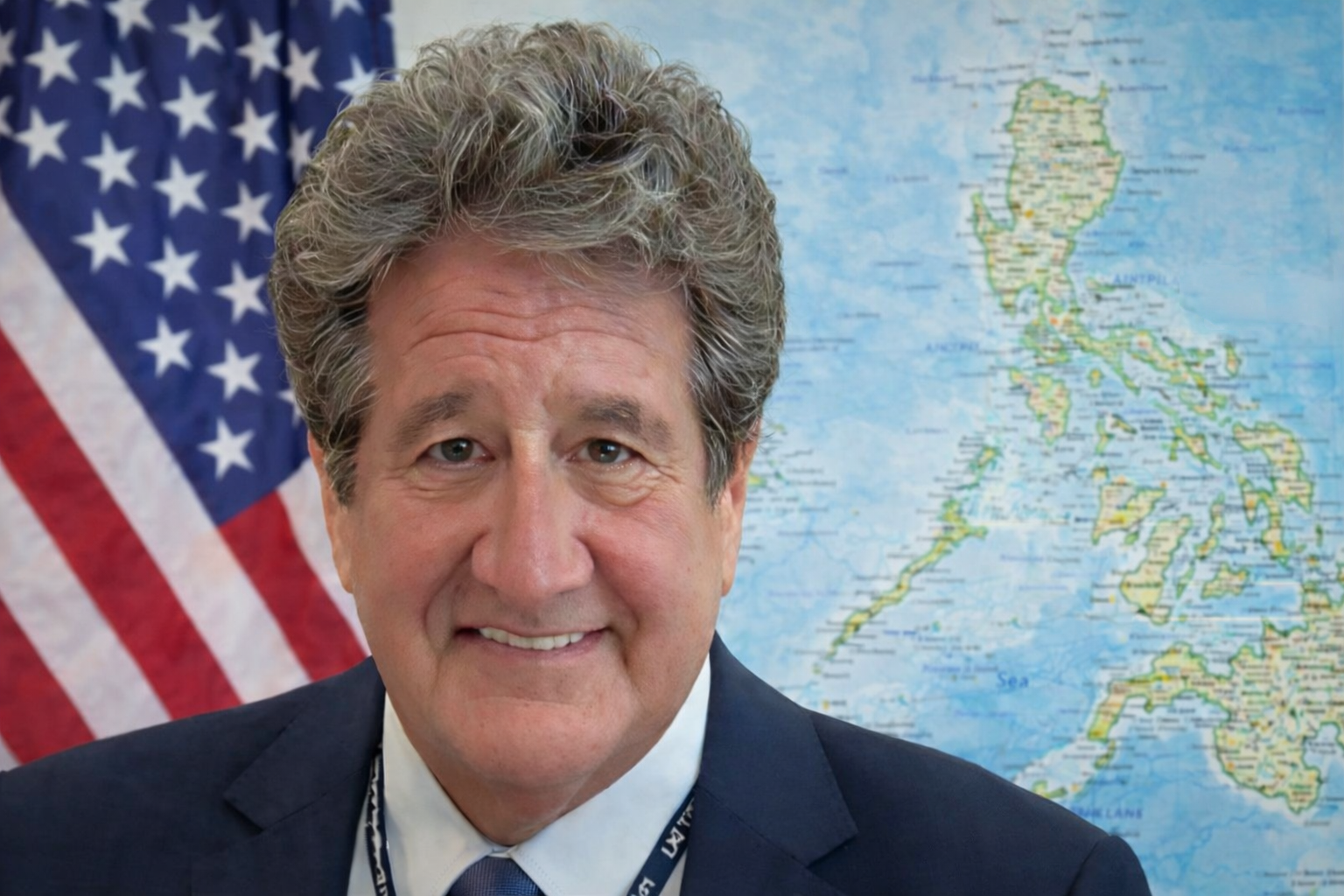

Washington has approved a new envoy to Manila as the United States seeks to reinforce ties with one of its oldest allies in Asia. The Senate confirmed Florida businessman Lee Lipton as the next U.S. ambassador to the Philippines, replacing career diplomat MaryKay Carlson.
Lipton, a longtime ally of U.S. President Donald Trump, brings decades of private-sector experience to the diplomatic post. He was nominated in October 2025 to replace Carlson, whose three-year posting began in July 2022 and concluded last year, and was confirmed by the Senate this month.
The U.S. State Department earlier indicated the appointment would take effect in January this year, though the date of his arrival in Manila has not been announced.
Before the ambassadorship, Lipton served at the U.S. Mission to the Organization of American States, including as interim permanent representative and chief of staff, working with diplomats from across the Western Hemisphere. His professional career spans about 50 years in business, with leadership roles across aviation, hospitality, and apparel, including work with airlines and airport operators in Europe and the Americas.
Lipton told senators that earlier visits to the Philippines during his career left a strong impression, citing the Filipino people’s “energy, resilience, and strong sense of family and community.”
He highlighted the depth of ties between the two countries, invoking the Filipino concept of bayanihan, or collective cooperation. “With more than $27 billion in bilateral trade in 2025, roughly 375,000 Americans residing in the Philippines, and approximately 5 million Filipinos and Filipino-Americans contributing to communities across the United States, our countries are linked in ways that extend far beyond security cooperation and veterans affairs,” he said during his confirmation hearing.
Filipino Americans also have a notable presence in the U.S. military, with around 15,000 active-duty service members serving across various branches, Lipton added.
During the hearing, he told lawmakers he would seek to expand cooperation in sectors including healthcare, education, semiconductors, critical minerals, energy, and infrastructure, as well as humanitarian assistance and disaster response, while ensuring a “fair and reciprocal” economic relationship between the two countries.
He also pointed to the Philippines’ growing regional role as it prepares to chair the Association of Southeast Asian Nations (ASEAN), placing Manila at the center of regional diplomacy. “My goal will be to deepen U.S.-Philippine security cooperation, strengthen supply chains, advance the Luzon Economic Corridor initiative, and promote fair and transparent trade,” Lipton said.
Lipton also underscored the broader historical connections between the two countries, describing the Philippines as a bridge between regions shaped by long-standing exchanges with the United States. “Present-day partnerships in commerce, defense, education, entertainment, and cuisine demonstrate how longstanding exchanges have matured into the multifaceted power and cooperation we enjoy today,” he said.
Lipton added that he would work to uphold the countries’ “ironclad alliance,” including commitments under the 1951 Mutual Defense Treaty, amid rising geopolitical tensions in the Indo-Pacific.
Stay updated—follow Philippines Today on Facebook and Instagram, and subscribe on YouTube for more stories.