
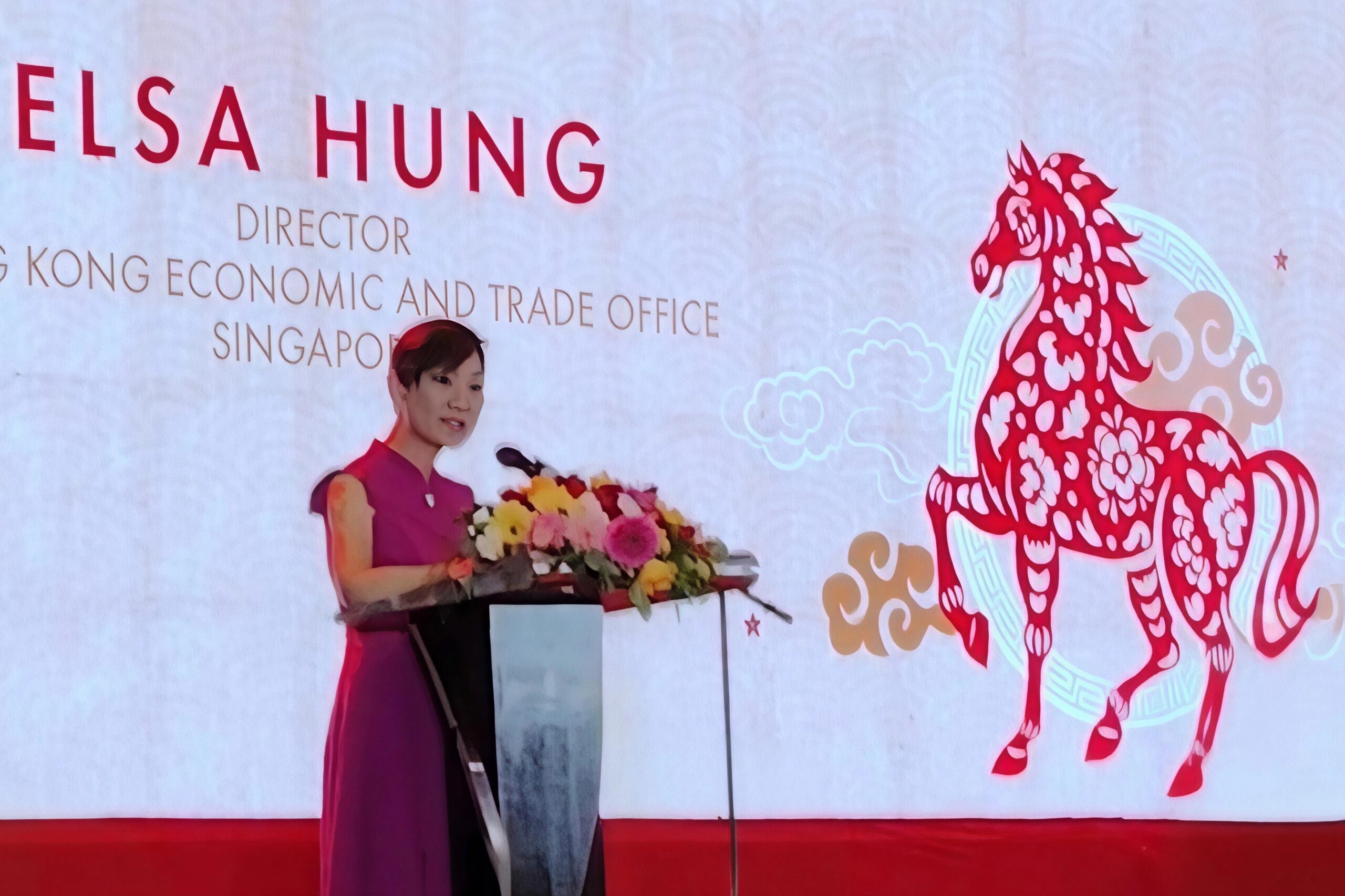

Hong Kong is seeking closer economic and cultural engagement with the Philippines as both economies navigate a rapidly changing global landscape. At a Chinese New Year gathering in Taguig City, a Hong Kong official highlighted expanding trade, tourism, and education links that continue to bind the two economies.
Speaking at the Chinese New Year dinner co-hosted by the Hong Kong Economic and Trade Office (HKETO) in Singapore and the Hong Kong Trade Development Council (HKTDC) at the Grand Hyatt Manila on February 27, HKETO Singapore director Elsa Hung underscored the Philippines’ growing role in Hong Kong’s regional outlook.
“As we usher in the Year of the Horse, may I first of all wish you good health, abundant joy, and gathering triumph in all endeavors in the year ahead,” Hung said in welcoming guests from government, business, and cultural sectors.
The gathering also marked Hung’s first Chinese New Year celebration in the Philippines since assuming her post in January, and the expanding engagement of the Hong Kong Economic and Trade Office with the country following adjustments in its regional coverage.
“For me, it marks my first Chinese New Year celebration in the Philippines since joining the office in January,” she said.
Hung pointed to strong economic ties between Hong Kong and the Philippines, noting that Hong Kong ranked as the Philippines’ fourth-largest trading partner in 2025. Bilateral merchandise trade reached US$15.7 billion during the year, reflecting the two economies’ continued commercial integration.
Hong Kong also remains an important logistics hub for trade involving the Philippines and mainland China. According to Hung, about 12% of goods traded between the Chinese mainland and the Philippines in 2025—worth nearly US$1 billion—were handled or transshipped through Hong Kong.
The relationship extends beyond commerce. Tourism and mobility between the two places reached new levels last year, with Hong Kong welcoming 1.35 million visitors from the Philippines in 2025, making the country its top overseas source market.
Air connectivity has also expanded, with Hong Kong International Airport now linked to five Philippine destinations through roughly 175 weekly flights.
Hung said Hong Kong intends to build on these ties while leveraging its role as a bridge between mainland China and the rest of the world under the “One Country, Two Systems” framework.
“Hong Kong will continue to leverage our unique advantage of being the only city in the globe connecting both Chinese mainland and the rest of the world under the ‘One Country, Two Systems’ framework and serving the dual role of super-connector and super-value-adder to actively explore new growth areas and promote high-quality economic developments,” she said.
The Hong Kong government’s economic strategy, she added, aligns with efforts to deepen cooperation with emerging Southeast Asian markets, including the Philippines.
“The Philippines is an important economy in the region with significant growth potential, particularly given its young population and strong demand for infrastructure and consumption,” Hung said.
Beyond trade and finance, Hong Kong plans to expand collaboration in education and cultural exchanges, including promoting its “Study in Hong Kong” initiative to Filipino students.
“HKETO will continue to align with Hong Kong’s strategic direction by supporting initiatives that bring the communities of Hong Kong and the Philippines closer and deepen collaborative partnerships,” Hung said.
Despite global uncertainties, Hung expressed confidence that both Hong Kong and the Philippines can adapt and strengthen their partnership.
“Ladies and gentlemen, the world is not only changing, but changing rapidly and unpredictably,” she said. “Yet, both Hong Kong and the Philippines have never shied away from the change and challenges.”
Stay updated—follow Philippines Today on Facebook and Instagram, and subscribe on YouTube for more stories.