
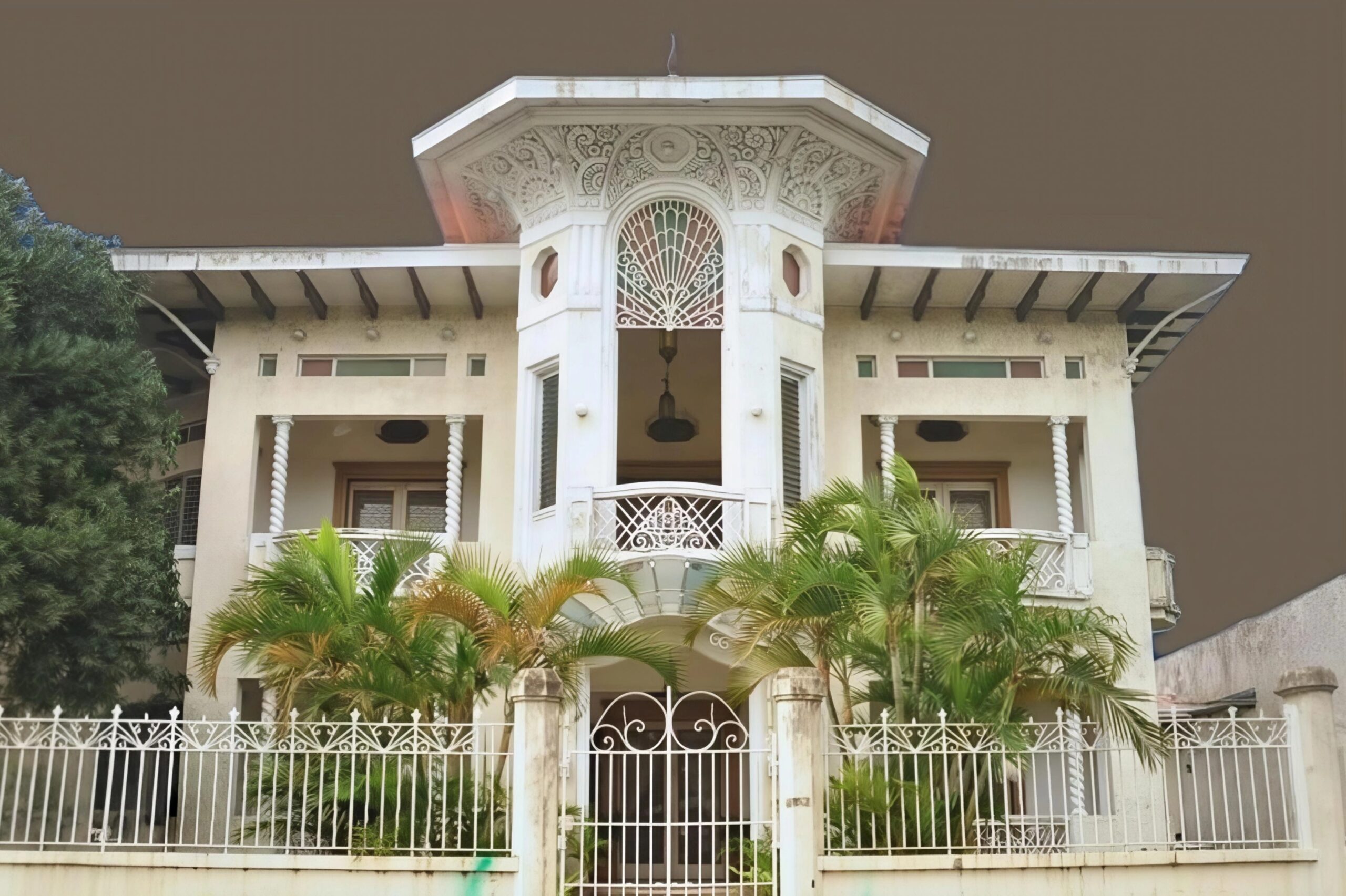

National Heritage Month celebration in the Philippines often turns attention to churches, ancestral houses, and historical monuments; but this year, one exhibition at the National Museum of Fine Arts is revisiting a different chapter of the country’s cultural memory—the sleek, glamorous, and distinctly modern world of Art Deco, the design movement that reshaped Philippine architecture, fashion, and everyday life in the early 20th century.
Mounted by the National Museum of the Philippines through its Architectural Arts and Built Heritage Division, “Art Deco: Modernity and Design in the Philippines 1925-1950” gathers more than 300 objects from over 40 collections, ranging from furniture and jewelry to fashion, architecture, and industrial design. The exhibition, which opened last November and runs through May 31, coincides with the centennial of the 1925 Paris exposition that introduced Art Deco to the world.
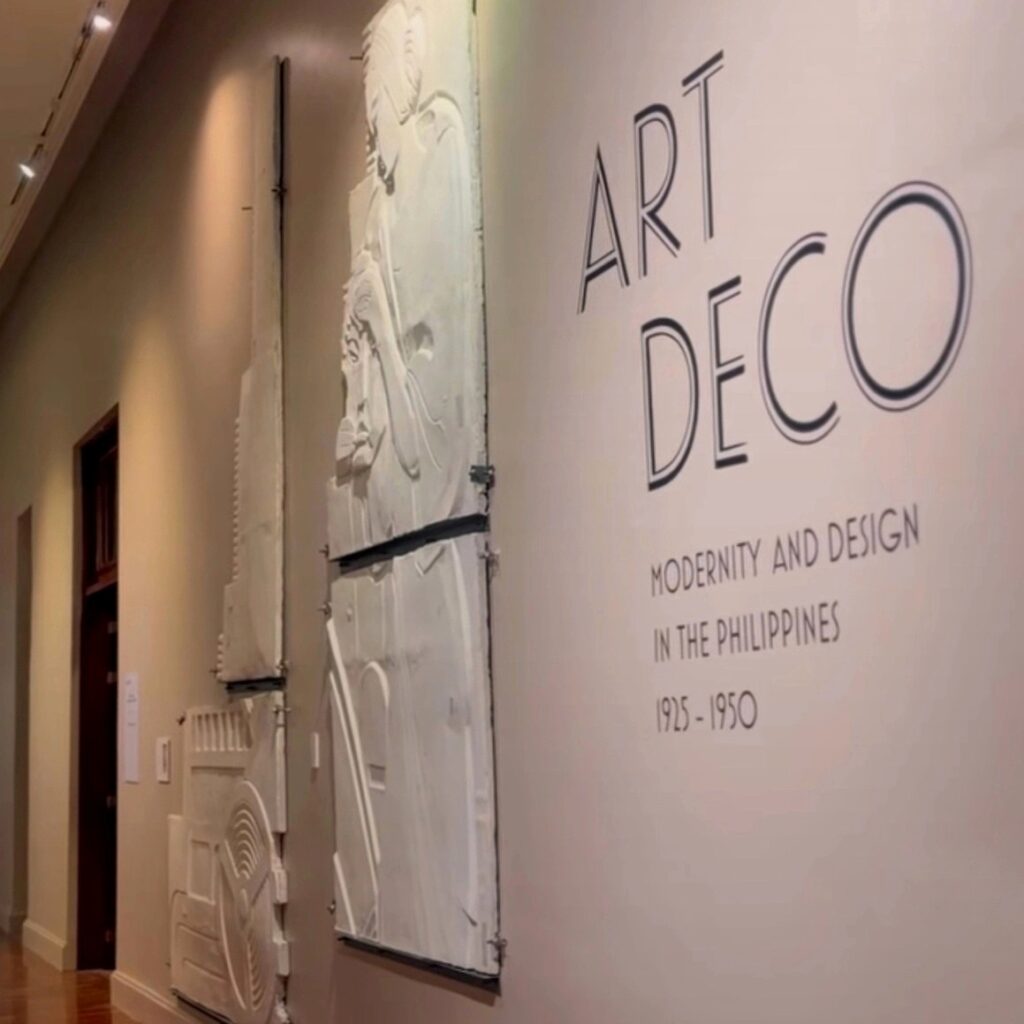
What began as a French declaration of design supremacy would eventually spread across continents, reaching the Philippines through Filipino architects educated in the United States.
“Art Deco was the design sensation of the 20th century. The French government wanted to cement their status as the forefront of design in the world at the time,” said Ivan Man Dy, heritage advocate, author of “Deco Filipino: Art Deco Heritage in the Philippines,” and guest curator of the exhibition.
“They had this big exposition in Paris which opened in 1925 and it attracted around six million people. And eventually, that design from that exposition spread to the world,” he noted in an interview posted on YouTube.
The 1925 Exposition Internationale des Arts Décoratifs et Industriels Modernes (International Exhibition of Modern Decorative and Industrial Arts) in Paris, France became the defining showcase of the movement, drawing millions of visitors, and accelerating Art Deco’s spread across Europe, the Americas, and Asia.
In the Philippines, Art Deco arrived at a pivotal historical moment. American colonial rule was reshaping urban planning, public institutions, and ideas of modern living. The 1903 Pensionado Act sent Filipino students to American universities, helping produce a generation of architects who returned home with new design philosophies that contrasted sharply with the ornate styles associated with Spanish colonial structures.
“So, Art Deco was introduced here by Western-educated Filipino architects who studied architecture in North America, in the U.S. in particular, like Juan Arellano, you had Tomas Mapua,” Dy said. “So, they became the ones who introduced this modern style as they saw it at the time in the U.S. here in the Philippines.”
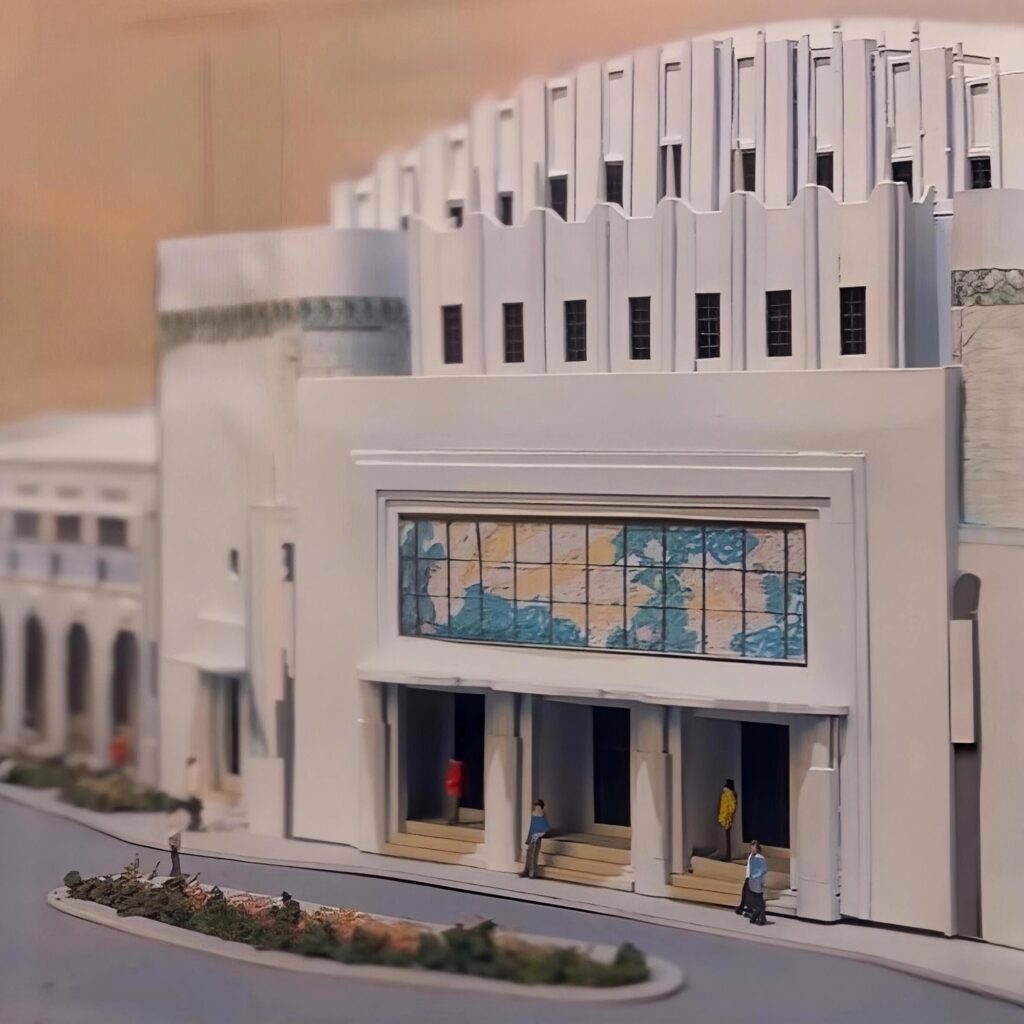
Architects such as Juan Arellano and Tomas Mapua would go on to redefine Manila’s visual identity. Buildings like the Metropolitan Theater, the Capitol Theater, the Rizal Memorial Stadium, and the Quezon Bridge introduced streamlined forms, geometric motifs, and stylized ornamentation that projected optimism, modernity, and sophistication.
“Manila became their canvas for this new architectural language, which today we call as Art Deco,” Dy said.
By the late 1920s and early 1930s, Art Deco was reshaping Manila’s commercial and cultural landscape. Early landmarks such as the Edificio Perez-Samanillo, now known as the First United Building in Escolta, reflected the emergence of a new architectural language defined by geometry, vertical lines, and stylized ornamentation. The opening of the Metropolitan Theater in 1931 further cemented Art Deco’s place at the center of Manila’s cultural life.
But Art Deco was not confined to landmark buildings. The exhibition shows how the movement permeated Filipino urban life, shaping everything from fashion and jewelry to furniture and household objects as tastes shifted toward contemporary design and modern living.
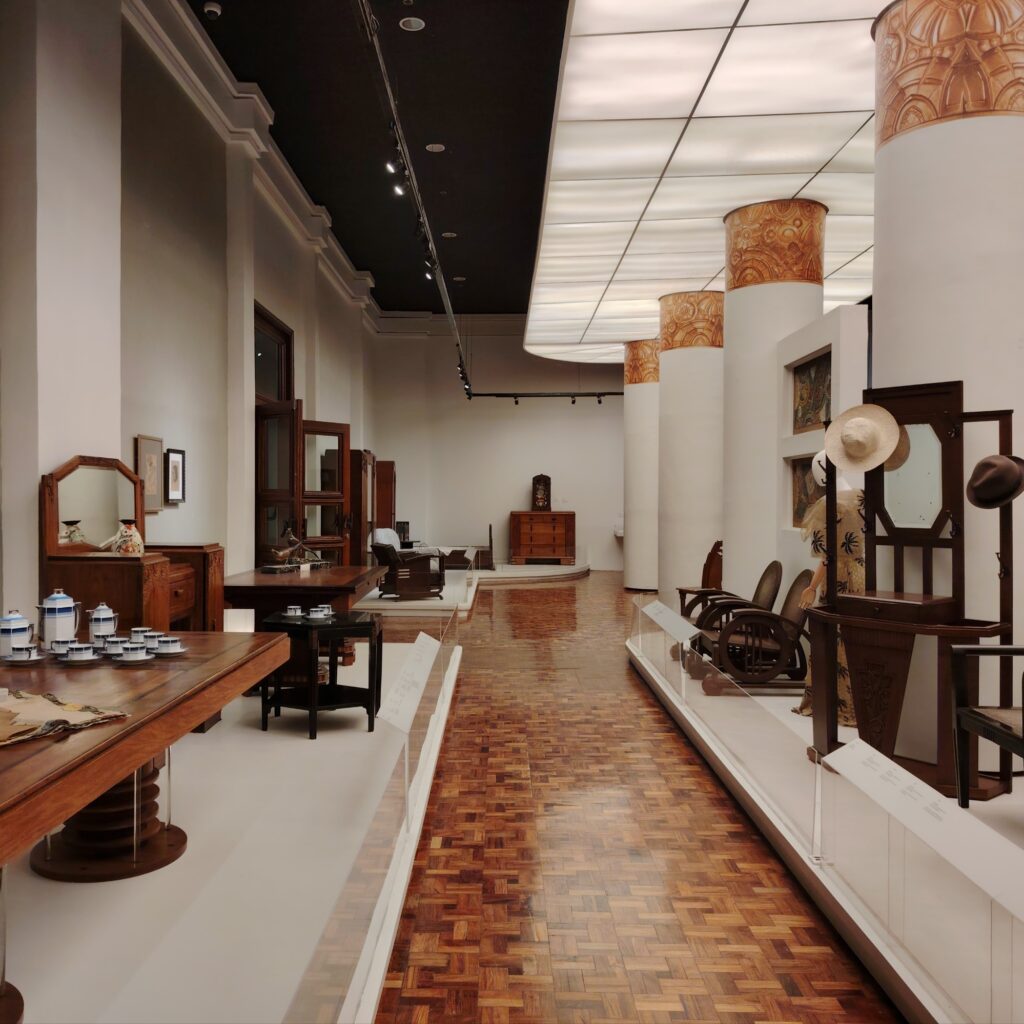
In its early years, Filipino ateliers adopted the classical language of French Art Deco, incorporating stylized floral patterns, sunbursts, zigzags, and geometric forms into furniture, often blended with lingering Art Nouveau and Neoclassical influences. By the mid-1930s, the style evolved into the sleeker Streamline Moderne, emphasizing curved lines and nautical detailing inspired by automobiles, ocean liners, and the aesthetics of speed.
Manila workshops produced bespoke and mass-market furniture in local hardwoods, while the so-called “Ambassador Style”—low-slung formal seating with solihiya woven rattan—became a fixture of affluent homes. Aparadores, dressers, and display cabinets were marketed as “modernistic,” “Parisian,” “Egyptian,” and “radio-inspired,” reflecting how Art Deco became synonymous with sophistication and urbane living.
The movement, however, extended far beyond the capital. The exhibition highlights how Art Deco flourished in provincial centers such as Bacolod and Iloilo, where booming sugar economies created wealthy haciendero classes eager to embrace cosmopolitan tastes and symbols of progress.
“Art Deco wasn’t for everyone. It was really related to economy. It was related to urban culture,” Dy noted.
That relationship between design and economic power is one of the exhibition’s most striking narratives. Scale models of mansions from Negros stand alongside photographs, furniture, and decorative objects that reveal how deeply Art Deco penetrated everyday life among the country’s elite during the 1920s to 1950s.
The exhibition also argues that Art Deco in the Philippines was never simply imported wholesale from Europe or the United States. Filipino designers adapted the movement into something distinctly local. Indigenous motifs, tropical sensibilities, and Filipino imagery found their way into buildings, interiors, and even fashion.
“If you look closely at the reliefs, they depict stylized representations of Filipino women,” Dy said of the famed Capitol Theater façade featured in the exhibition. “It was very modern, but they put in women with baro’t saya, which again evokes a very Filipino feel to it.”
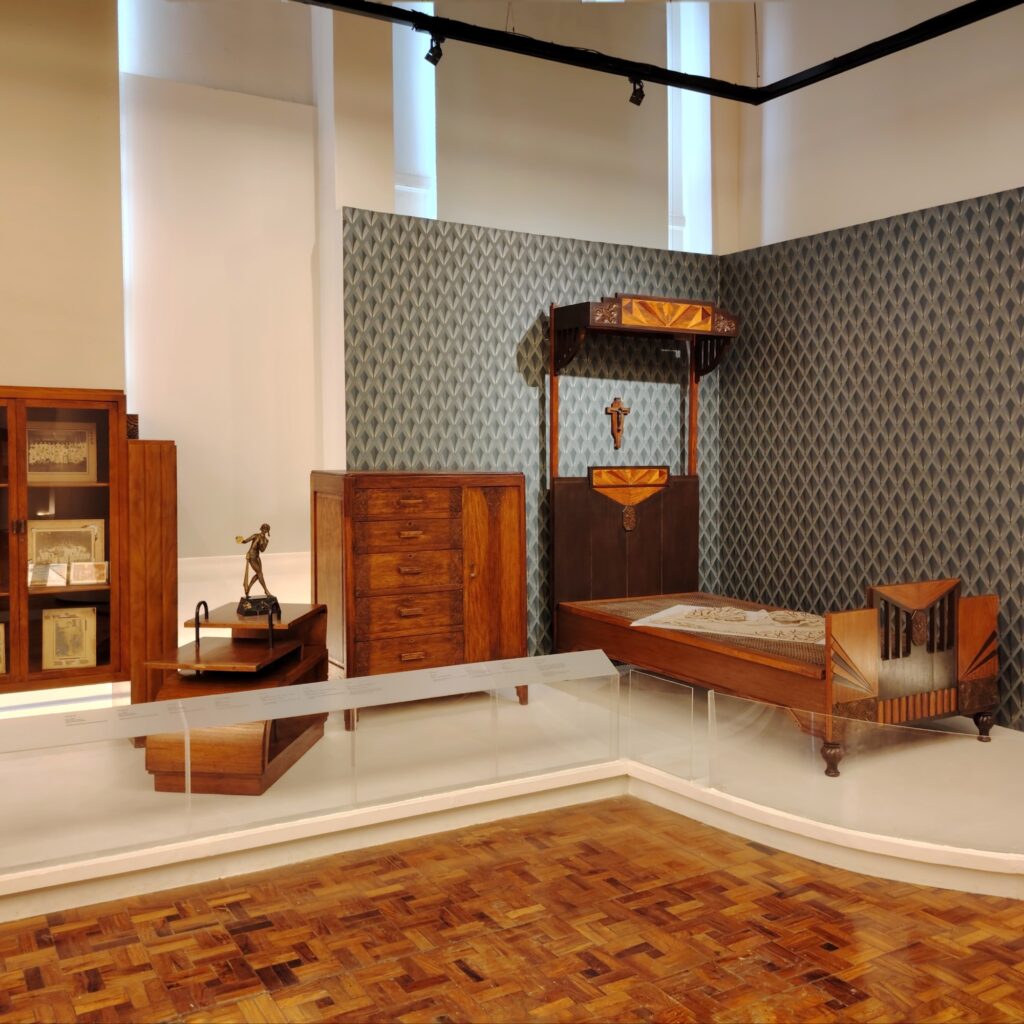
That fusion is visible throughout the exhibition. Original ternos from the 1930s carry geometric patterns echoing architectural reliefs. Furniture pieces reveal Egyptian-inspired motifs reinterpreted through Filipino craftsmanship. Decorative wall tiles produced by the House of Precast in the late 1940s blend floral ornamentation with streamlined modern forms.
The exhibition also traces how the movement evolved alongside global events. The 1929 Wall Street crash and the Great Depression hastened Art Deco’s transition from ornamented luxury toward a more refined and aerodynamic aesthetic—i.e., Streamline Moderne. The shift coincided with the rise of aviation, cinema, and commercial expansion in the Philippines, from the opening of the Crystal Arcade in Escolta to the launch of Philippine Aerial Taxi Company (PATCO) flights in the early 1930s.
For Dy, the exhibition is ultimately less about nostalgia than about understanding history through objects and design.
“There are different ways of learning history. There’s the social part; there’s cultural history; there’s architectural history. But something that we don’t really talk much about is design and history,” he said.
“Design is very much part of the narrative of storytelling of our people’s experiences,” Dy continued.
That perspective gives the exhibition unusual contemporary resonance. In a rapidly urbanizing Philippines where heritage structures continue to disappear under redevelopment pressures, Art Deco has increasingly become a battleground between conservation and commercial expansion.
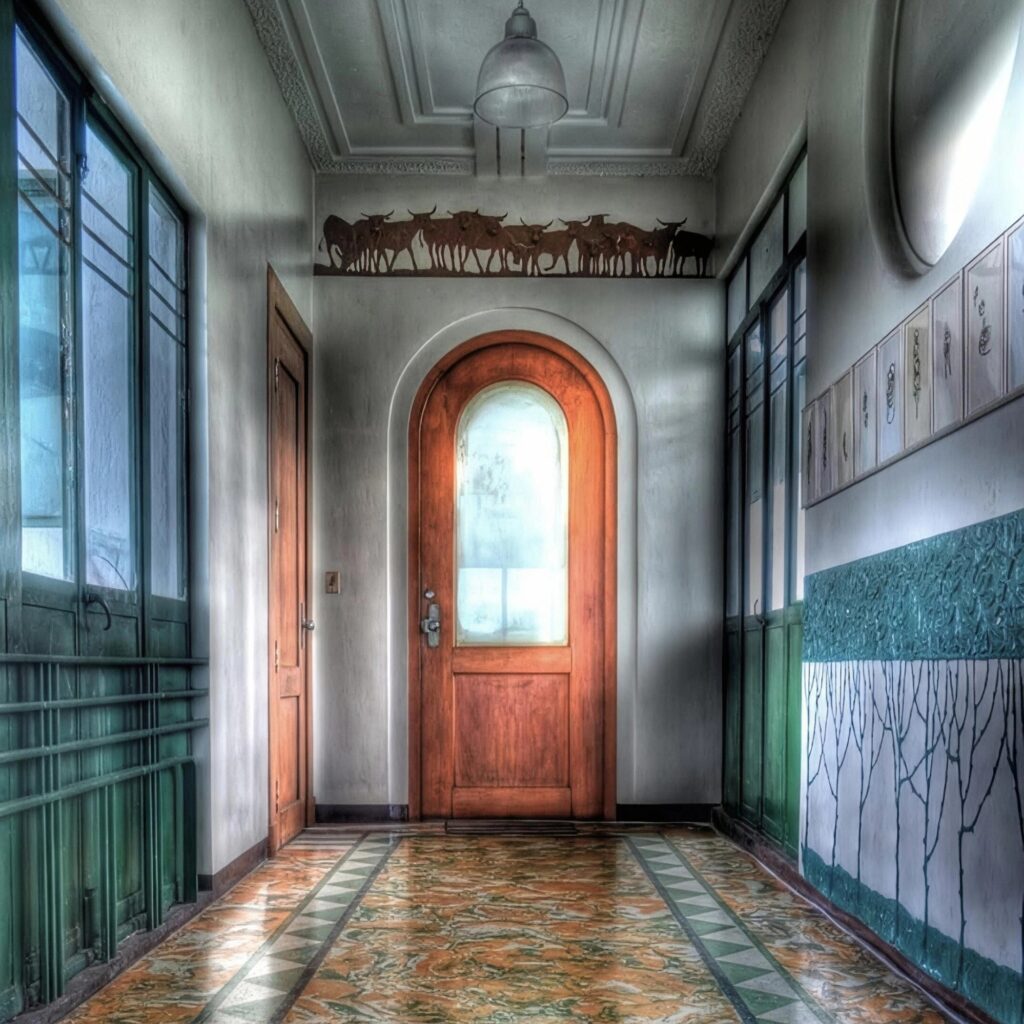
Many of the structures celebrated today narrowly escaped demolition. Others were destroyed during World War II. Yet surviving buildings continue to function as living parts of the urban landscape.
“In such a short period of 25 years, Art Deco produced a plethora of architectural works that are still relevant to us today,” Dy said. “We still watch the show at the Metropolitan Theater. We still cross the Quezon Bridge every day, right? We still use the Rizal Memorial Stadium as a sports facility.”
The exhibition itself took nearly two years to mount, involving the transport of hundreds of objects from across the country. Designed to resemble a 1920s and 1930s emporium, the galleries use subdued lighting and theatrical staging to immerse visitors in the period’s atmosphere.
“You know, when you put all of these items together, they kind of like speak to each other,” Dy said. “It tells you the history of how Art Deco evolved in different localities around the country.”
As National Heritage Month places focus on preserving the past while imagining the future, the exhibition offers a reminder that heritage is not merely about safeguarding old buildings or objects. It is also about understanding the hopes, uncertainties, and aspirations that shaped an era.
Stay updated—follow Philippines Today on Facebook and Instagram, and subscribe on YouTube for more stories.