

April in the Philippines is not only the peak of summer—it is also Filipino Food Month, a nationwide tribute to the country’s culinary heritage that this year carries a distinctly regional flavor. With the 2026 theme “Connected by Taste: The Filipino Food in the Flavors of ASEAN,” the celebration underscores how Filipino cuisine—long shaped by trade, migration, and colonial encounters—is now asserting itself not just on dining tables, but in the language of the world itself.
That shift is most visible in the latest update of the Oxford English Dictionary (OED), where Filipino food terms have secured a place alongside global vocabulary. Words once confined to kitchens, markets, and family gatherings are now part of everyday English, reflecting both their cultural weight and their growing international familiarity.
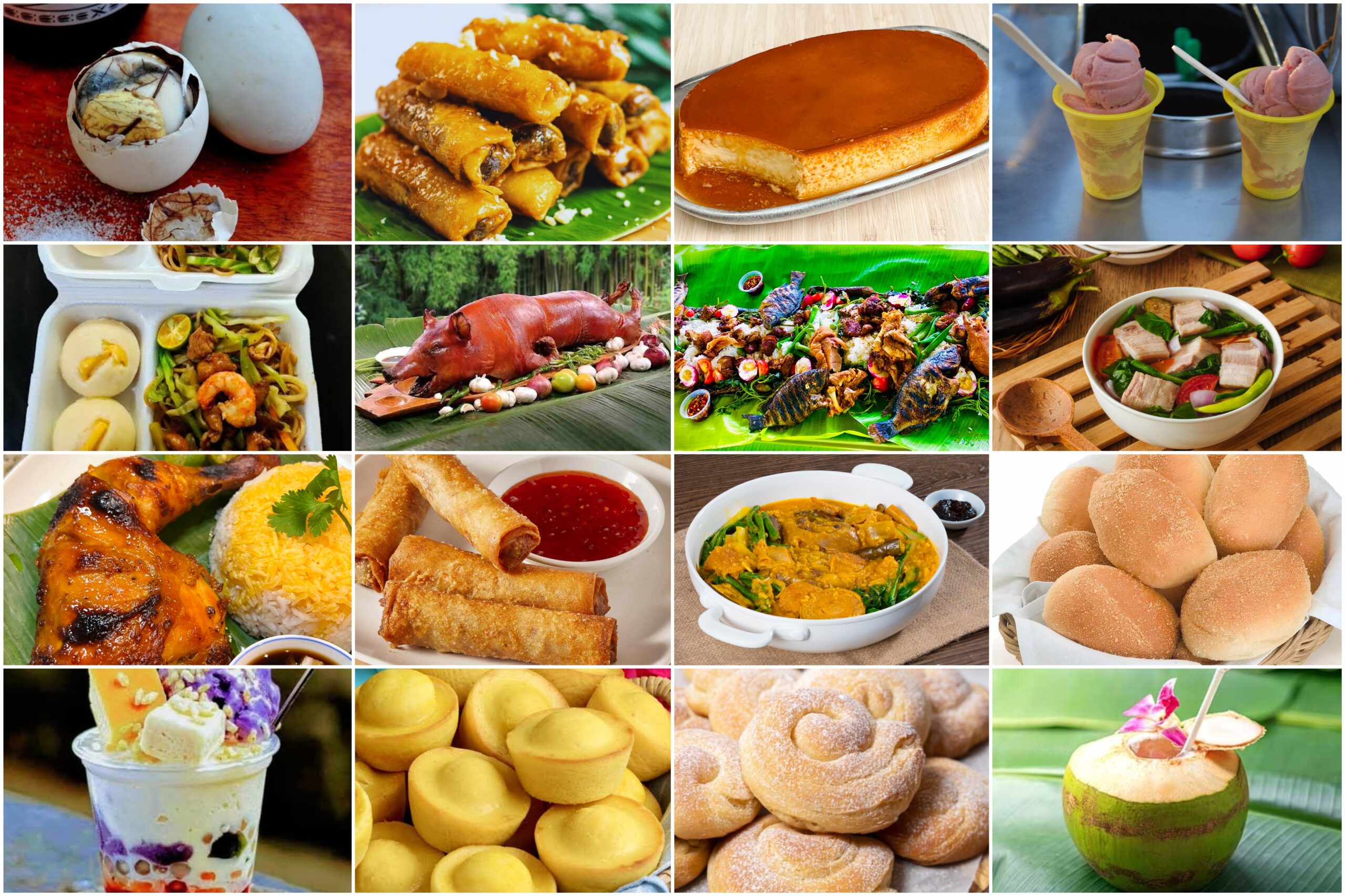
Among the newest entries are terms deeply rooted in Filipino foodways. “Boodle fight,” for instance, captures a style of communal dining that resists neat translation. As the OED explains: “If you ever find yourself being asked by a Filipino to a boodle fight (1991), do not feel threatened, but be glad, as they are simply inviting you to partake of a communal meal at which different kinds of food are laid out on banana leaves, and eaten with the hand.” What reads like a definition barely contains the experience—hands reaching across banana leaves, rice piled high, grilled meats shared without hierarchy—an edible expression of Filipino egalitarianism.
Equally evocative is “inasal,” the smoky, citrus-bright grilled chicken that traces linguistic and culinary routes across history. The word reflects the Tagalog prefix in- and the Visayan asal, itself derived from the Spanish asar, meaning “to grill or roast.” Its inclusion in the dictionary signals more than popularity; it encodes centuries of exchange, from precolonial cooking methods to Iberian influence, all crystallized in a single dish associated with Bacolod and Iloilo.
Even the everyday “palengke,” now formally recognized, carries cultural specificity that resists flattening into “market.” In the Philippines, a palengke is not merely a place of commerce but a sensory ecosystem—wet floors, bargaining voices, the scent of fish, and the smell of ripe fruit—anchoring food traditions at their most immediate source.
These additions form part of a broader linguistic pattern. In the OED’s March 2026 update, nearly half of the new entries for Philippine English are food-related, mirroring trends across Asia. In previous updates, food accounted for three-quarters of new entries from Singapore and Malaysia, and two-thirds from Hong Kong. The implication is clear: cuisine is among the most durable carriers of culture, and its vocabulary travels with unusual resilience.
To understand how this moment was reached, the Philippines’ culinary presence in the dictionary has built steadily over time. As early as 2015, the OED included Filipino food terms such as halo-halo, pan de sal, buko (including buko juice and buko water), dirty kitchen, and sinigang, alongside everyday food customs like baon, pulutan, pasalubong, sari-sari store, and KKB—“kaniya-kaniyang bayad,” or each person paying their share of the meal—marking early recognition of Filipino food culture in global English. A more defined wave followed in September 2016, with entries such as balut, kare-kare, leche flan, lechon, pancit, and puto, firmly establishing Filipino dishes in the lexicon.
By 2018, entries reflected the cuisine’s layered influences: bagoong (Tagalog); bihon (Hokkien); turon, sorbetes, and calamansi (Spanish); and ensaimada (Catalan), alongside hybrid terms like carinderia and panciteria. Even colloquial expressions such as dirty ice cream, referring to sorbetes sold by street vendors, captured the humor embedded in Filipino food culture.
That momentum expanded in 2025 with entries such as lumpia—described as spring rolls common in Southeast Asia and typically filled with minced meat, vegetables, or seafood—and kababayan, a small, yellow muffin-like cake shaped like a salakot, collectively reflecting food not just as cuisine, but as lived culture.
There is a practical reason for this. Food words often refuse translation. To describe bagoong as “fermented shrimp paste” or kare-kare as “peanut stew” strips away context, memory, and identity. The original terms persist because they carry meanings that extend beyond ingredients—signifiers of region, ritual, and belonging.
This linguistic migration is not uniquely Filipino, but the Philippine case is particularly layered. Its food lexicon reflects Austronesian roots, centuries of Spanish rule, American military presence, and contemporary diaspora. “Boodle fight,” for example, evolved from U.S. military slang before being reimagined within Philippine military academies and eventually embraced by the wider public. In contrast, words like “lumpia” and “pancit” trace Chinese influences that have long been localized into Filipino cuisine.
Yet the Philippines is not alone in shaping global English through food. Across Southeast Asia, culinary terms are entering the lexicon with similar momentum. Hong Kong’s daan tat (egg tart) preserves its hybrid lineage—Cantonese structure with an English-derived “tart.” Malaysia and Singapore’s ice kachang reflects a linguistic loop, with “ice” borrowed into Malay as ais before returning to English in a new form. Even cooking practices find expression, as in agak-agak, a Malay term describing intuitive, approximate measurement in the kitchen.
These parallels lend weight to this year’s Filipino Food Month theme. “Connected by Taste” is not merely rhetorical; it reflects a shared regional story in which food binds Southeast Asia through overlapping histories, ingredients, and linguistic exchange. From hawker centers in Singapore to street-side eateries or carinderia in Manila, culinary traditions operate as both local identity markers and regional connectors.
As Filipino food gains ground globally—from restaurant menus to dictionary entries—it does so not in isolation but as part of this wider ASEAN narrative. The recognition of terms like “boodle fight” and “inasal” signals a shift in how English absorbs and reflects cultural diversity: not by flattening it, but by making space for specificity.
The evolution of language, like cuisine, is cumulative. It records encounters, adaptations, and the persistence of identity across borders. In that sense, the journey of Filipino food into global English is less about novelty than about recognition—an acknowledgment that what has long been central to Filipino life now resonates far beyond it.
And as April’s celebrations unfold—from food fairs to chef showcases, culminating in a turnover ceremony on May 2—the Philippines is not only honoring its culinary past. It is, quite literally, adding its voice to the world’s vocabulary—one dish, one word, one shared table at a time.
Stay updated—follow Philippines Today on Facebook and Instagram, and subscribe on YouTube for more stories.