
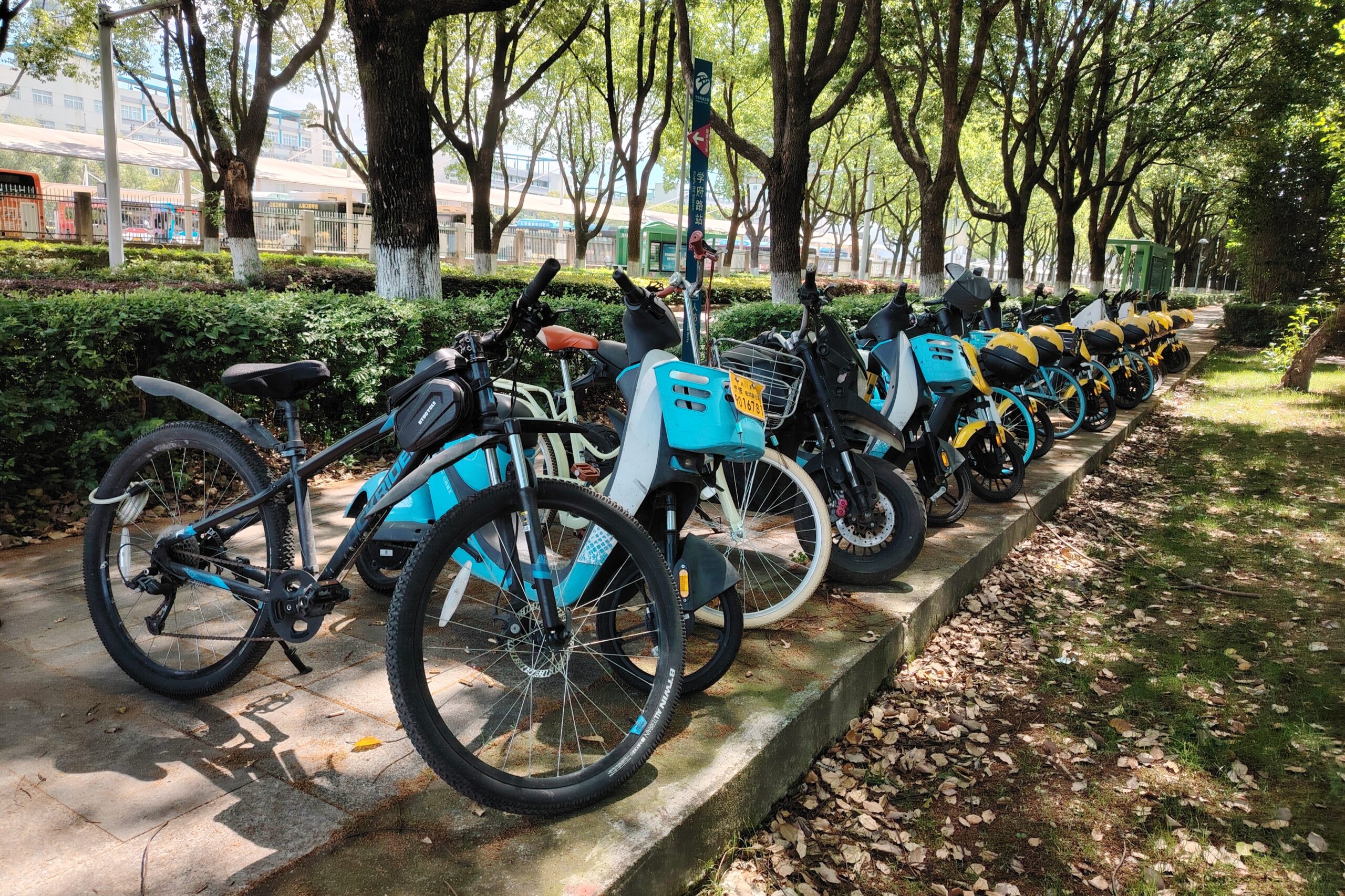

China was once known as the “Kingdom of Bicycles”, a title earned during the 1950s to early 1990s when bicycles dominated the country’s streets and became the primary mode of transport for hundreds of millions of people. Although bicycles later gave way to private cars as China’s economy expanded from the late 1970s onward, cycling has made a strong comeback in recent years through app-based bike-sharing systems now found across major Chinese cities.
In Ningbo, a major sub-provincial port and industrial hub in northeastern Zhejiang Province, shared bicycles have become part of everyday urban life. Outside subway stations, shopping centers, and university campuses, rows of dockless bikes from operators such as Hellobike, Meituan Bike, and Qingju (Didi) wait to be unlocked with a quick smartphone scan. For many Filipino tourists visiting China, the system stands out for its simplicity, affordability, and almost entirely cashless setup.

“It’s very convenient because you don’t have to line up or look for cash,” said Filipino tourist Eddie, who visited Ningbo recently. “You just scan and ride. I wish we had more systems like this in busy Philippine cities.”
Renting a bike in Ningbo typically costs between 1.5 yuan and 2 yuan for around 30 minutes, or less than ₱20 for short rides. Users only need a smartphone with WeChat or Alipay, both of which are widely used digital payment platforms in China.
To use the service, riders first need to download the app of the bike-sharing operator or open its mini-program through WeChat or Alipay. Registration usually requires a passport or identification card, alongside a linked bank card or digital wallet. After registration, users can open the app’s map to locate nearby bicycles, scan the QR code attached to the bike, and unlock it instantly. Once the ride is finished, the bicycle can be parked in designated areas before ending the trip through the app, which automatically deducts the payment.

For visitors unfamiliar with China’s digital ecosystem, the process can initially feel intimidating. But many Filipino travelers say the learning curve is surprisingly short.
“At first I thought it would be difficult because everything is digital,” said Manila-based tourist Mario. “But after one ride, I realized how organized the system is. The app tells you where to park, how much you’re paying, and where the bikes are located.”
The city also maintains a municipal public bicycle network connected to docking stations accessible through WeChat mini-programs. In some cases, the first hour is free. Around scenic destinations, visitors can rent mountain bikes and tandem bicycles for longer rides around parks and lakeside paths.
The experience may feel familiar to some Filipinos. In Metro Manila, platforms such as Moovr have introduced app-based bicycle and e-scooter rentals in parts of Makati and Bonifacio Global City, while groups such as Bambike Ecotours promote cycling tourism within Intramuros. But in Ningbo, the system operates on a broader urban scale, with bicycles integrated into public transport links, mobile payment systems, and dedicated cycling infrastructure.

Much of the system in China relies on the country’s broader digital infrastructure, including mobile payments and the BeiDou Navigation Satellite System, China’s home-grown alternative to the U.S.-operated GPS network. Named after the Chinese term for the Big Dipper constellation, BeiDou helps operators track bicycles in real time and monitor where they are parked or returned.
“Anywhere, you can return the bike. It will just charge you according to kilometers. Kilometers at the time. Payment is through WeChat,” Yin-Chang Chen, a professor at Zhejiang University, said, while explaining how the bike-sharing system works during a conversation. When asked how operators know whether a bicycle has already been returned, Chen pointed to the role of BeiDou. “It’s a GPS system in China,” he said.
George Chua-Cham, a director of the Federation of Filipino Chinese Chambers of Commerce and Industry Inc., added that the rides remain remarkably affordable even by Philippine standards. “Wala pang 10 pesos,” he said. “15 minutes is 9 pesos.”
According to Chen, affordability was one reason bike-sharing remained widely used among residents and students. “Maybe only less than 50 yuan one day,” he said, referring to the maximum daily rental charge for extended use. “It’s cheap. It’s friendly to people.”

For many tourists, the bicycles offer more than convenience. Riding through Ningbo provides a closer look at daily life in the city, from riverside walkways and residential districts to cafés and university campuses connected by dedicated cycling lanes.
“You get to see parts of the city you normally miss inside a tour bus,” said Filipino traveler Louie . “It feels relaxed and safe, especially around the bike lanes.”
Cycling in China still comes with challenges familiar to many Asian cities. Helmets are rarely included with standard shared bicycles, meaning riders usually bring their own, while cyclists often share lanes with electric scooters, delivery riders, and pedestrians. In busy areas, riders traveling against traffic are not uncommon.
Even so, for many Filipino tourists, Ningbo’s bike-sharing culture offers a glimpse into how technology, low-cost transport, and urban planning can work together to make moving around a city simpler and more accessible.
Stay updated—follow Philippines Today on Facebook and Instagram, and subscribe on YouTube for more stories.