
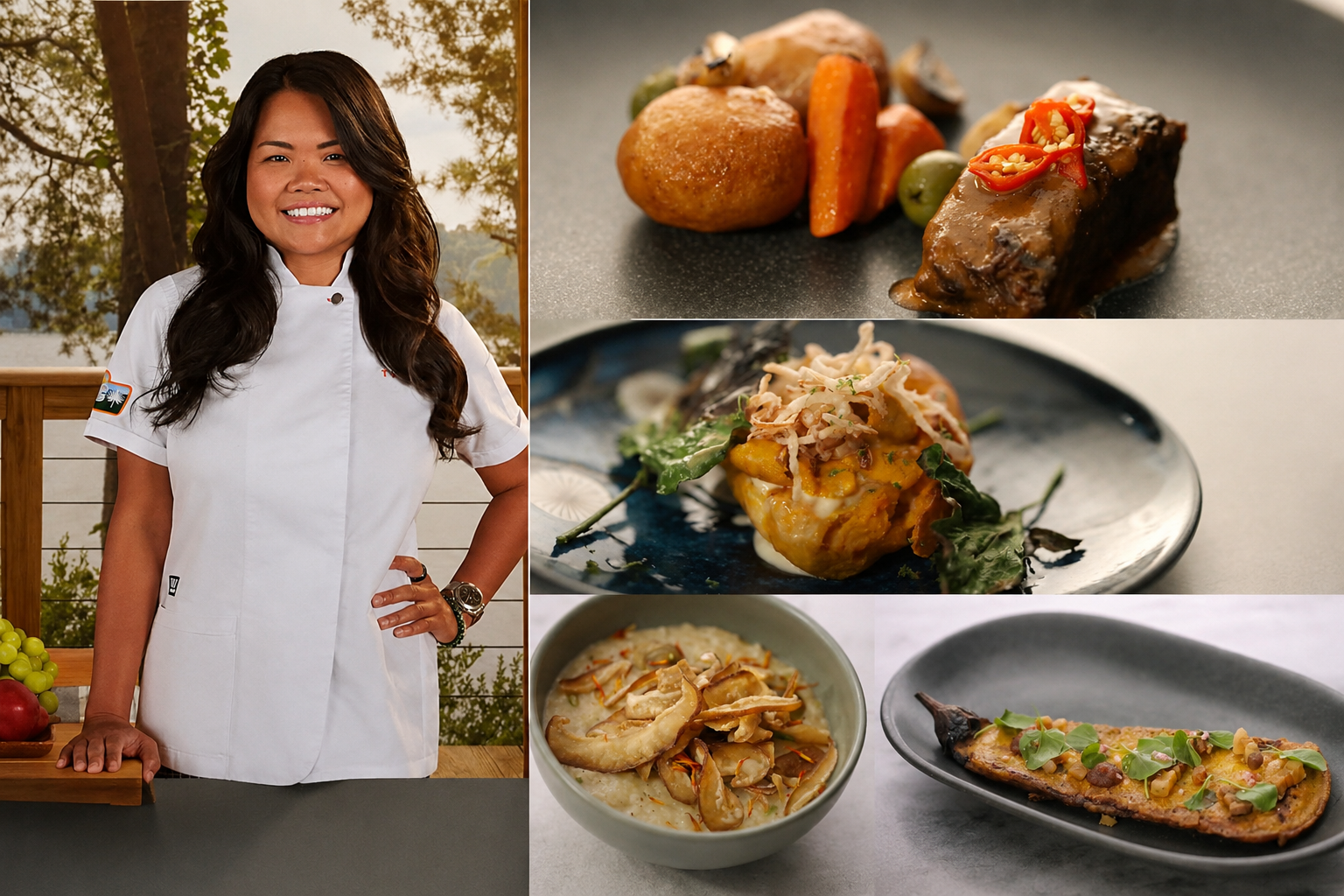

For most Filipinos, lugaw is what you eat when you are sick, tortang talong is a weekday staple, and kaldereta belongs on a family table during celebrations. On the finale of Top Chef: Carolinas, those familiar dishes became the centerpiece of a championship-winning menu.
Filipina chef Rhoda Magbitang was crowned the winner of Season 23 of the long-running culinary competition, taking home the US$250,000 grand prize and becoming only the second chef of Filipino heritage to win the title after Paul Qui. She is also the first winner representing Hawaii.
What made the victory especially striking was that Filipino cuisine has not been the foundation of Magbitang’s professional career. While she grew up eating Filipino food, most of her culinary training and restaurant experience were shaped elsewhere. Yet when the competition reached its defining moment, she returned to the flavors and memories that first connected her to food.
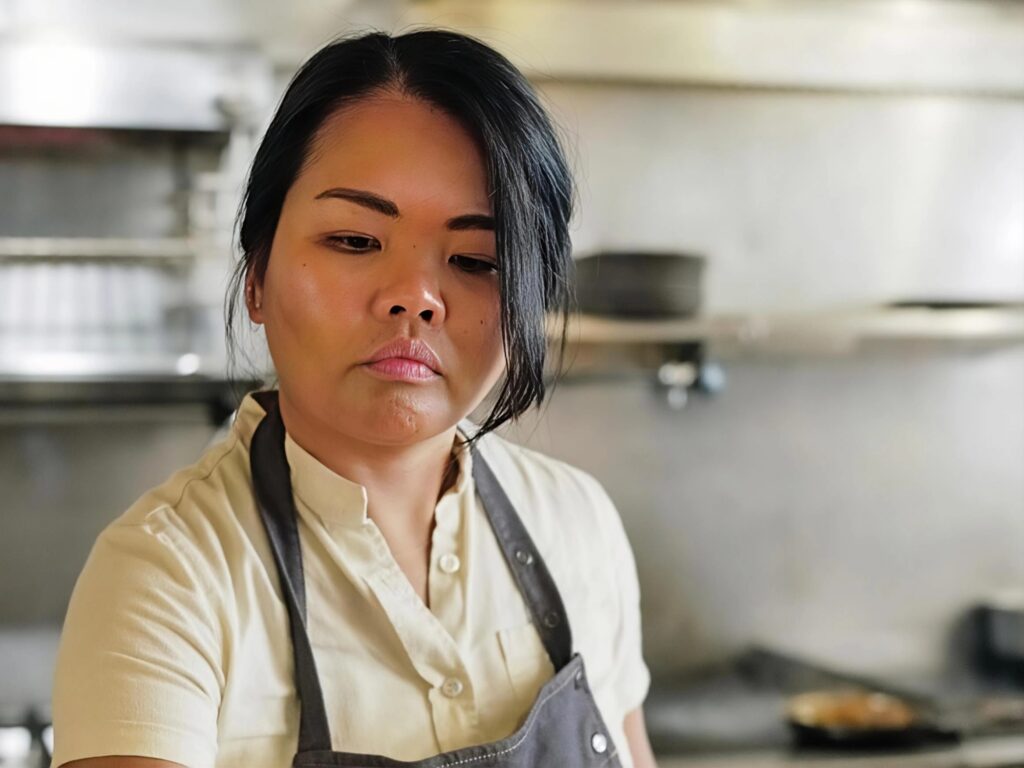
Born and raised in Antipolo City, Magbitang discovered cooking in her family kitchen, where meals were closely tied to community and care. Inspired by her grandmother’s food stall and family traditions, she developed an early appreciation for the role food plays in bringing people together.
She moved to California at 17, initially intending to become a teacher before finding her way into professional kitchens. After studying at Le Cordon Bleu, she built her résumé at some of Los Angeles’ most influential restaurants, including Mélisse, A.O.C., République, The Bazaar by José Andrés, Chateau Marmont, and The Inn at Mattei’s Tavern. In 2024, she relocated to Hawaii, where she became executive chef of CanoeHouse at the Mauna Lani resort.
The road to the Top Chef crown was years in the making. A longtime fan of the series, Magbitang had often imagined herself competing on the show while watching past seasons. The opportunity eventually came after a casting agent encouraged her to apply. She joined a field of 15 chefs for the Carolinas season, entering a competition known for testing not only cooking ability but also resilience, adaptability, and creativity under intense pressure.
Her journey on Top Chef was anything but straightforward.
Magbitang arrived as an early favorite, making history by becoming the first contestant to win the season’s first two elimination challenges. The strong start immediately established her as one of the chefs to beat and suggested she had both the technical skills and composure required to go deep into the competition.
Then came an abrupt setback. She was eliminated in Episode 5 after judges criticized the execution of a monkfish dish. For many contestants, that would have marked the end of the competition.
Instead, Magbitang fought her way through Last Chance Kitchen, the show’s separate redemption series where eliminated chefs compete for a return to the main contest. The comeback became one of the season’s defining storylines. Once reinstated, she quickly regained momentum, adding more challenge wins and securing a place in the finale.
Her return underscored a quality that judges and viewers repeatedly saw throughout the season: persistence. Rather than allowing elimination to define her run, she treated it as a detour. By the time she reached the final episodes, she had transformed one of the season’s biggest disappointments into one of its most compelling comeback stories.
The final challenge asked contestants to create the best progressive menu of their lives, with each course honoring people, places and memories that shaped them. For Magbitang, the answer was deeply personal.
“What’s amazing about Top Chef is that it conjures up feelings, emotions, and food memories that you didn’t even know you had,” she told Food & Wine.
“In the finale, when they asked us to dedicate each dish to someplace or someone that has had an impact on your life and career, it only made sense to go all in on Filipino.”
Her four-course menu began with roasted sweet potato with miso butter and uni before moving into dishes rooted in family memory. She served abalone lugaw inspired by the porridge her mother made when she was ill, followed by tortang talong, a dish she grew up eating as a child.
The final course was kaldereta, a tribute to her father.
“This is a toast to my dad, kaldereta braised in liver and vegetables,” Rhoda said on the show.
She chose not to serve dessert, explaining that the menu was intended as a tribute to her parents.
The judges ultimately rewarded what Food & Wine described as her consistency, technical execution and storytelling. More than a showcase of skill, the menu demonstrated how personal history can become a culinary language powerful enough to resonate across cultures.
That may be the broader significance of Magbitang’s win. Throughout much of her professional career, she worked in kitchens where Filipino food was not the central focus. Yet on the biggest stage of her career, it was Filipino flavors and memories that carried her to victory. Rather than presenting the cuisine as a novelty, she treated it as something worthy of refinement, interpretation, and celebration.
The achievement also arrives at a moment when Filipino cuisine is gaining greater international visibility. Chefs around the world have increasingly spotlighted Filipino ingredients, traditions, and techniques, but mainstream recognition in global food media and competitions remains relatively rare. Magbitang’s victory places Filipino food in front of an audience far beyond the Philippines and demonstrates how its stories can resonate with diners regardless of cultural background.
For viewers in the Philippines, there was something quietly remarkable about seeing foods associated with everyday family meals take center stage before some of the culinary world’s most respected judges. Lugaw, tortang talong and kaldereta are dishes many Filipinos grow up taking for granted. On Top Chef, they became vehicles for memory, identity, and craftsmanship.
In Magbitang’s hands, those familiar dishes did not need reinvention to be celebrated. They simply needed a stage. By drawing from the foods that shaped her childhood and pairing them with the skills she developed over years in professional kitchens, she delivered a menu that was both intensely personal and universally understood. It was a fitting finale for a chef whose journey had come full circle—from a family kitchen in Antipolo to one of the most coveted titles in American food television.
Stay updated—follow Philippines Today on Facebook and Instagram, and subscribe on YouTube for more stories.