


“Sanwits” is simply how many Filipinos say “sandwich”—an English word softened by decades of everyday use until it feels almost native. The name is fitting. Like the borrowed word itself, the sandwich came to the Philippines from elsewhere, only to be reshaped by local tastes into something unmistakably Filipino.
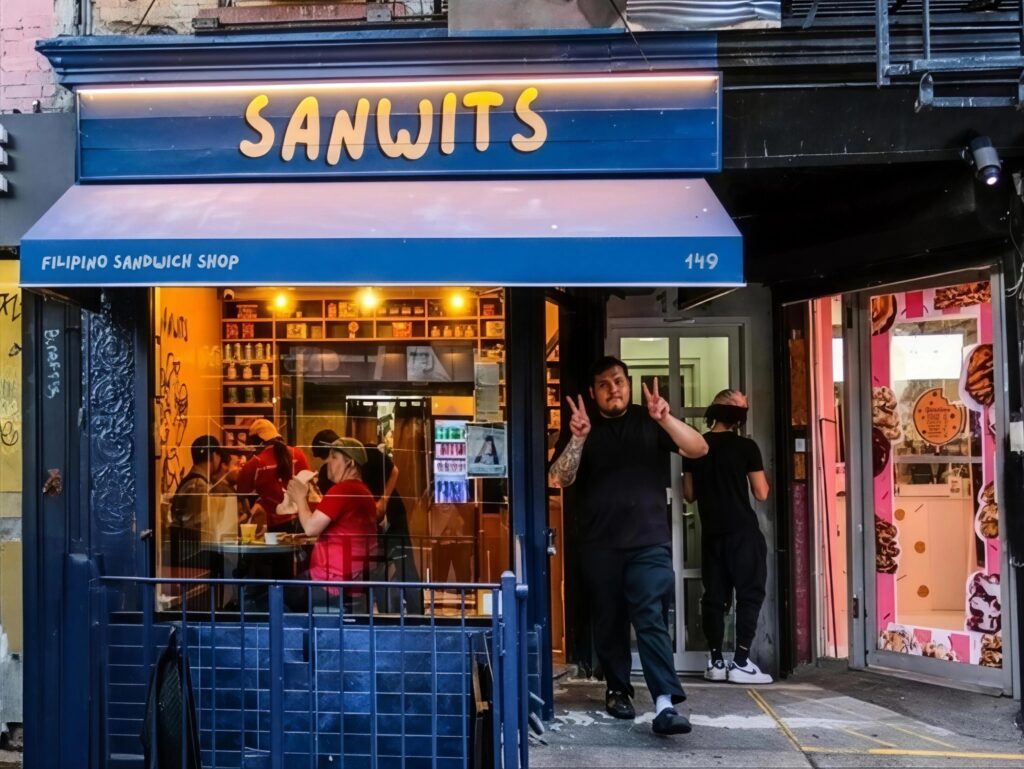
That idea lies at the heart of Sanwits, the East Village takeaway shop opened in New York City by Filipino chef Eric Valdez in partnership with Unapologetic Foods. Rather than introducing Americans to another menu of Filipino rice dishes, Valdez has chosen a more familiar vehicle: sandwiches built around the flavors Filipinos have known for generations.
It is an idea that sounds obvious in hindsight.
After all, Filipinos have long eaten sandwiches. Warm pandesal filled with corned beef or Spam has anchored countless breakfasts. White bread spread with cheese or peanut butter has been packed into school lunch boxes for decades. Leftover adobo tucked into bread has rescued many hurried mornings, while toasted “flying saucers” filled with ham, corned beef, or chicken became fixtures at birthday parties, family gatherings, and school canteens.
Yet despite this enduring familiarity, the Philippines never developed a sandwich tradition comparable to Vietnam’s bánh mì or Japan’s katsu sando. Sandwiches remained everyday fare—quick breakfasts before work, baon packed for school, or merienda assembled from whatever happened to be in the kitchen. They belonged to homes and neighborhood bakeries rather than destination restaurants.
The sandwich traces its name to John Montagu, the 4th Earl of Sandwich, who is said to have ordered meat tucked between slices of bread in 1762 so he could continue gambling without leaving the card table. Whether the story is entirely true matters less than the legacy it left behind. As Britain expanded its influence and the United States developed its own sandwich traditions, the meal spread across the world, adapting to local ingredients and tastes.

In the Philippines, sandwiches became part of everyday life during the American colonial period. Alongside a new public school system came sliced bread, mayonnaise, canned meats, processed cheese, and other pantry staples that gradually found their way into Filipino kitchens.
Filipinos embraced these ingredients but rarely copied American sandwiches outright.
Instead, they adapted them to local habits.
Fresh pandesal became one of the most common breakfast breads, filled with fried eggs, kesong puti, sardines, corned beef, Spam, longganisa, or whatever leftovers remained from the previous night’s dinner. In homes across the country, practicality shaped the meal as much as taste. Yesterday’s adobo became today’s breakfast. A spoonful of menudo or giniling was just as likely to find its way into bread as onto a plate of rice.
Another variation became equally familiar.
The toasted “flying saucer,” made by sealing slices of white bread in a circular sandwich press, turned leftovers into crisp pockets for afternoon snacks. Ham and cheese were common fillings, but so were chicken adobo, corned beef guisado, and other home-cooked dishes. It became a staple of birthday parties and school canteens, remembered as much for its novelty as for its comforting familiarity.
These were sandwiches unmistakably shaped by Filipino kitchens.
Perhaps that is why they escaped the country’s culinary imagination.
Filipinos never called them Filipino sandwiches. They were simply pandesal with palaman, flying saucers from the sandwich press, or white bread wrapped around leftovers. They were so ordinary that they hardly seemed worth noticing.
Eric Valdez noticed.
Raised in New York by Filipino parents, Valdez grew up with the same flavors found in many Filipino households: Spam, longganisa, adobo, caldereta, and lechon shared around family tables. As his culinary career progressed, he began asking a simple question: if Japan has the katsu sando and Vietnam has the bánh mì, why shouldn’t the Philippines have a sandwich tradition of its own?
That question became the foundation for Sanwits.
Opened in May, the shop is the latest venture from Unapologetic Foods, the New York hospitality group behind acclaimed restaurants including Semma and the Filipino restaurant Naks. Rather than treating sandwiches as a novelty, Valdez presents them as a natural extension of Filipino cooking—a way of introducing the cuisine through a format Americans already understand while remaining faithful to the flavors themselves.
More than a century after sandwiches became part of everyday Filipino life, Valdez is betting they deserve more than a supporting role.
At Sanwits, the familiar becomes the main attraction.
That philosophy is evident from the moment diners scan the menu.
Rather than recreating Filipino dishes exactly as they are served with rice, Valdez distills their defining flavors into sandwiches that feel familiar to New Yorkers while remaining unmistakably Filipino. The result is neither traditional nor fusion in the conventional sense. Instead, Sanwits translates Filipino cooking into a language Americans already know: bread.
Take the Ribeye Caldereta.
Caldereta, the hearty tomato-based beef stew often reserved for fiestas and family celebrations, is transformed into a hero sandwich layered with peppers, onions, and creamy Eden cheese. The flavors remain intact—the richness of the beef, the slight sweetness of the sauce, and the unmistakable presence of processed cheese that generations of Filipinos have come to associate with the dish—but the format is entirely different.
The Lechon Dip follows the same philosophy.
Inspired by one of the Philippines’ most celebrated festive dishes, it combines roasted pork, grilled pineapple relish, bok choy, and a side of pork jus for dipping. Rather than reproducing the spectacle of a whole roasted pig, the sandwich captures the essence of lechon in a form meant to be eaten with one hand.
Breakfast, too, receives a Filipino reinterpretation.
The Spam Sanwits pays homage to a pantry staple that has occupied an enduring place in Filipino kitchens since the American colonial era. House-made luncheon meat is paired with egg, marinated onions, and a signature sauce, recalling the familiar breakfast of Spam, rice, and eggs while presenting it in a distinctly different way.
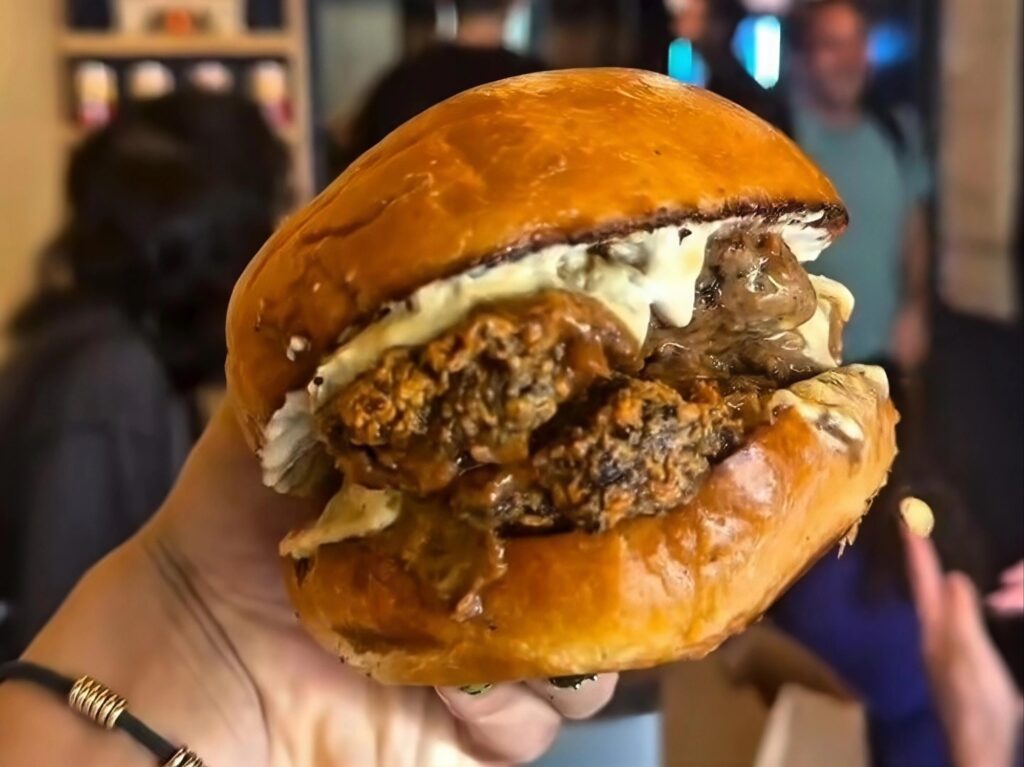
Elsewhere on the menu, fried chicken meets roasted eggplant aioli and bagoong in the Chicken Bagoong sandwich, while the Makati BEC reimagines the classic American bacon, egg, and cheese with wagyu brisket and burong mustasa, or fermented mustard greens. It is a reminder that humble pantry staples can be every bit as evocative as celebratory dishes.
The side dishes continue the conversation.
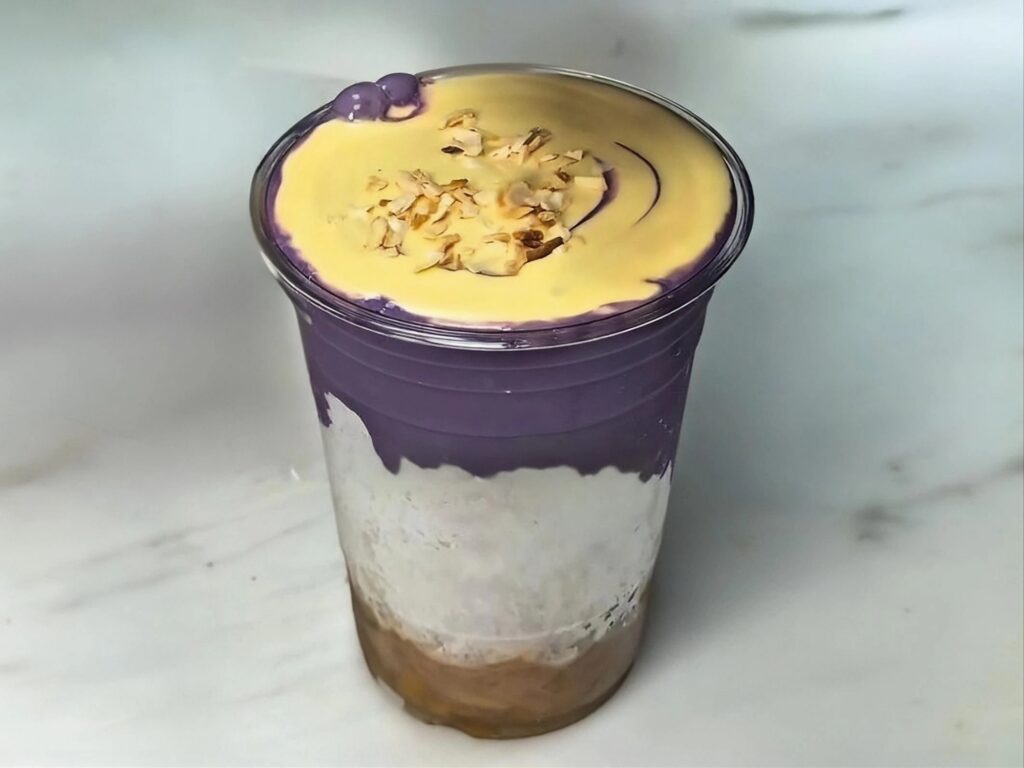
There are crisp lumpiang Shanghai, fries served with vinegar for dipping, macaroni and cheese inspired by the sweet-savory flavors familiar to many Filipinos, and halo-halo for dessert. Honey-calamansi fizz and iced ube matcha round out a menu rooted as much in memory as in technique.
Together, the offerings reveal a broader ambition.
Sanwits is not simply placing Filipino food between slices of bread. It is reframing dishes that many Filipinos have long associated with home cooking, family gatherings, and neighborhood bakeries. The sandwiches ask diners to recognize these flavors outside their customary setting while remaining true to their origins.
That approach reflects the broader philosophy of Unapologetic Foods.
Founded by restaurateur Roni Mazumdar and chef Chintan Pandya, the New York-based hospitality group has built its reputation on showcasing regional cuisines without diluting them for mainstream audiences. Its restaurants have challenged diners to look beyond familiar notions of Indian food, while Naks introduced Filipino comfort food to a wider audience. Sanwits extends that mission by exploring a corner of Filipino cuisine that has largely gone unnoticed.
Food critics have responded positively.
Reviews have praised the sandwiches for embracing bold Filipino flavors instead of softening them for American tastes. Bagoong retains its pungency, vinegar remains an essential ingredient, and dishes such as caldereta and lechon are recognizable despite their new format. The bread may be familiar, but the flavors leave little doubt about where the sandwiches come from.
For Filipinos, however, Sanwits offers something beyond culinary novelty.
It invites a fresh look at foods that have quietly shaped everyday life for generations.
The country’s sandwich traditions were never confined to restaurants. They lived in panaderias before sunrise, in school lunch boxes carefully packed by parents, in toasted flying saucers served at birthday parties, and in leftover adobo tucked inside warm pandesal before work. They were expressions of thrift, ingenuity, and comfort rather than dishes that sought recognition.
Perhaps that is why they were easy to overlook.
Filipino cuisine has long been defined by its rice meals, stews, and grilled dishes, while sandwiches remained in the background—ordinary enough to escape notice, familiar enough to be taken for granted.
Sanwits suggests that those ordinary meals deserve a second look.
It does not claim to invent the Filipino sandwich. Rather, it elevates something that has always existed, revealing the culinary possibilities hidden within foods that generations of Filipinos have considered routine.
In doing so, the restaurant makes a compelling argument: the Filipino sandwich was never absent. It simply lacked a name, a place, and a champion. Sanwits may be giving it all three.
Stay updated—follow Philippines Today on Facebook and Instagram, and subscribe on YouTube for more stories.