
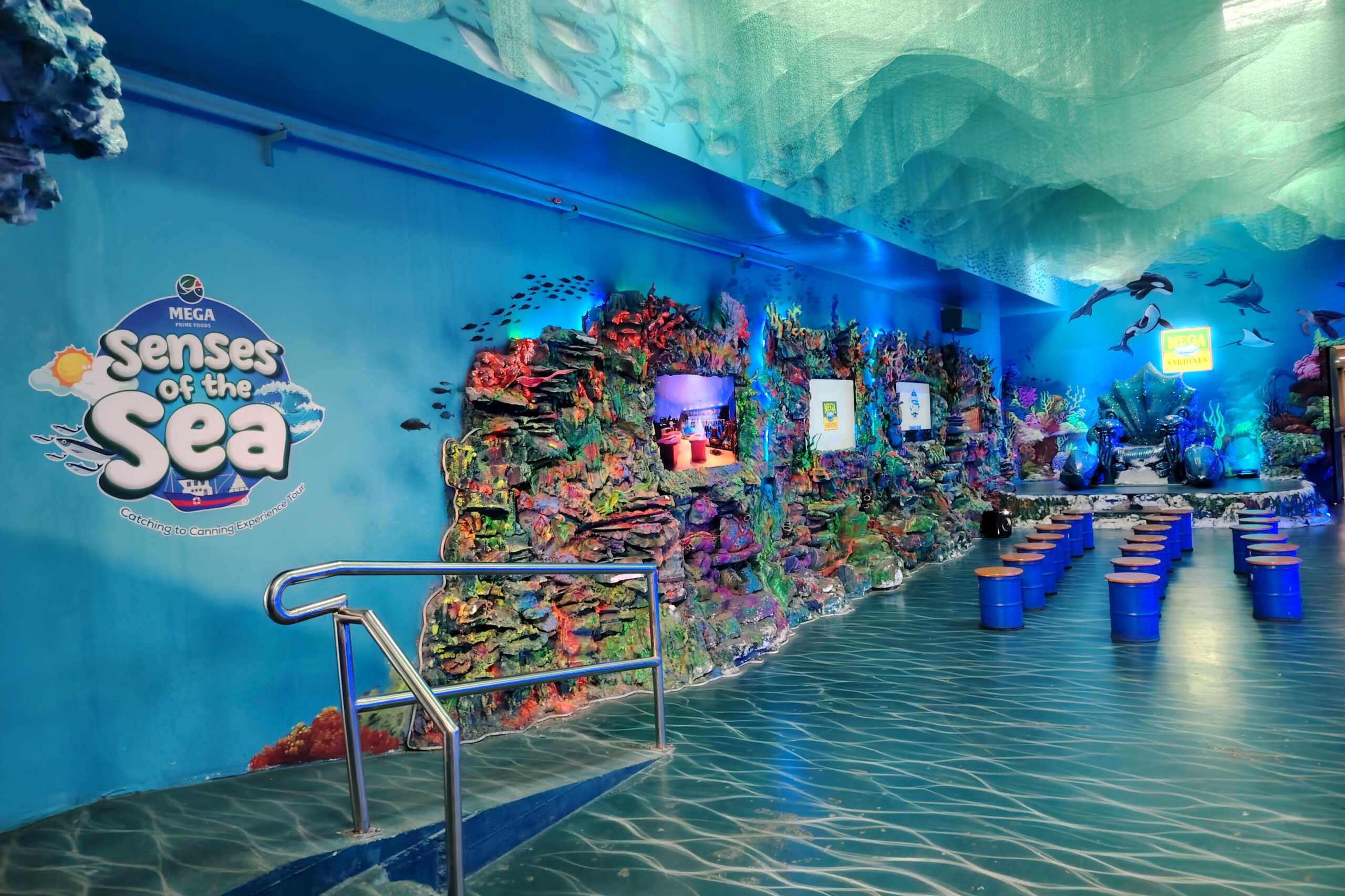

Mega Prime Foods Inc. has reopened its Senses of the Sea museum in Batangas, positioning the upgraded educational hub as part of its effort to promote ocean conservation and teach younger generations about responsible fishing and marine stewardship.
The museum reopened to the public on September 23 as part of Mega Prime Foods’ 51st anniversary celebrations this year. Located inside Mega Prime Foods’ manufacturing plant in Sto. Tomas, Batangas, the renovated facility combines interactive exhibits with lessons on marine ecosystems, biodiversity, and the company’s responsible fishing and processing practices.

The redesigned museum uses upgraded lighting, acoustics, and multimedia installations to give students, families, and visitors a closer look at the journey of sardines from the ocean to the dining table, while highlighting the importance of protecting marine resources.
“We are aware of several museums around the world surrounding the humble sardine,” says William Tiu Lim, chairman and founder of Mega Prime Foods. “But what makes us truly unique is we blend the story of the sardine, and how we uniquely catch and process in 12 hours, and link it to teaching ocean stewardship to young students.”
Mega Prime Foods said the relaunch reflects a commitment to sustainability that has been passed down through three generations of the Tiu Lim family.

During the launch, William Tiu Lim recalled how decades spent at sea after founding the company shaped his appreciation for the ocean and the need to preserve it. Michelle Tiu Lim-Chan said she inherited that commitment from her father and made marine conservation part of her own advocacy. The family said the legacy now continues with 22-year-old Lance Tiu Lim, who shares the same passion for protecting the sea.
“This is how it works. Generation to generation. We at Mega figure, if we start with the children now, we will preserve our seas for centuries to come.”
Marine education sits at the center of the refreshed museum experience. Designed for school field trips and family visits, the museum introduces visitors to ocean zones, marine food cycles, sea creatures, and the role healthy oceans play in sustaining marine life.
Interactive storytelling and multimedia displays explain environmental concepts while connecting them to responsible fishing practices and the fishing industry’s relationship with the marine ecosystem.
Among the museum’s highlights is an exhibit that explores underwater habitats through large educational displays featuring different marine species and ocean environments.
Another exhibit recreates the experience of working aboard a fishing boat. Visitors can step onto a life-sized vessel equipped with radios, sonar screens, fishing nets, and buoys to learn how fishers locate and catch sardines before they are transported for processing.
The museum also features Mega Prime Foods’ signature 12-hour catching-to-canning experience, guiding visitors through the handling, processing, and packaging of freshly caught sardines to explain the company’s freshness standard.
A separate interactive zone allows children and families to take part in hands-on fishing and canning activities, including a conveyor-style exhibit that demonstrates the speed and coordination involved in the production process.
Beyond the exhibits, the renovated facility includes an improved visitor flow and an expanded marketplace offering Mega products and exclusive merchandise. The company said the upgrades are intended to make the museum a stronger educational destination for schools, tour groups, and families.
Mega Prime Foods said the Senses of the Sea museum is open to the public and aims to encourage visitors to better understand the ocean, sustainable fishing practices, and the importance of protecting the Philippines’ marine resources through education and interactive learning.
Stay updated—follow Philippines Today on Facebook and Instagram, and subscribe on YouTube for more stories.