
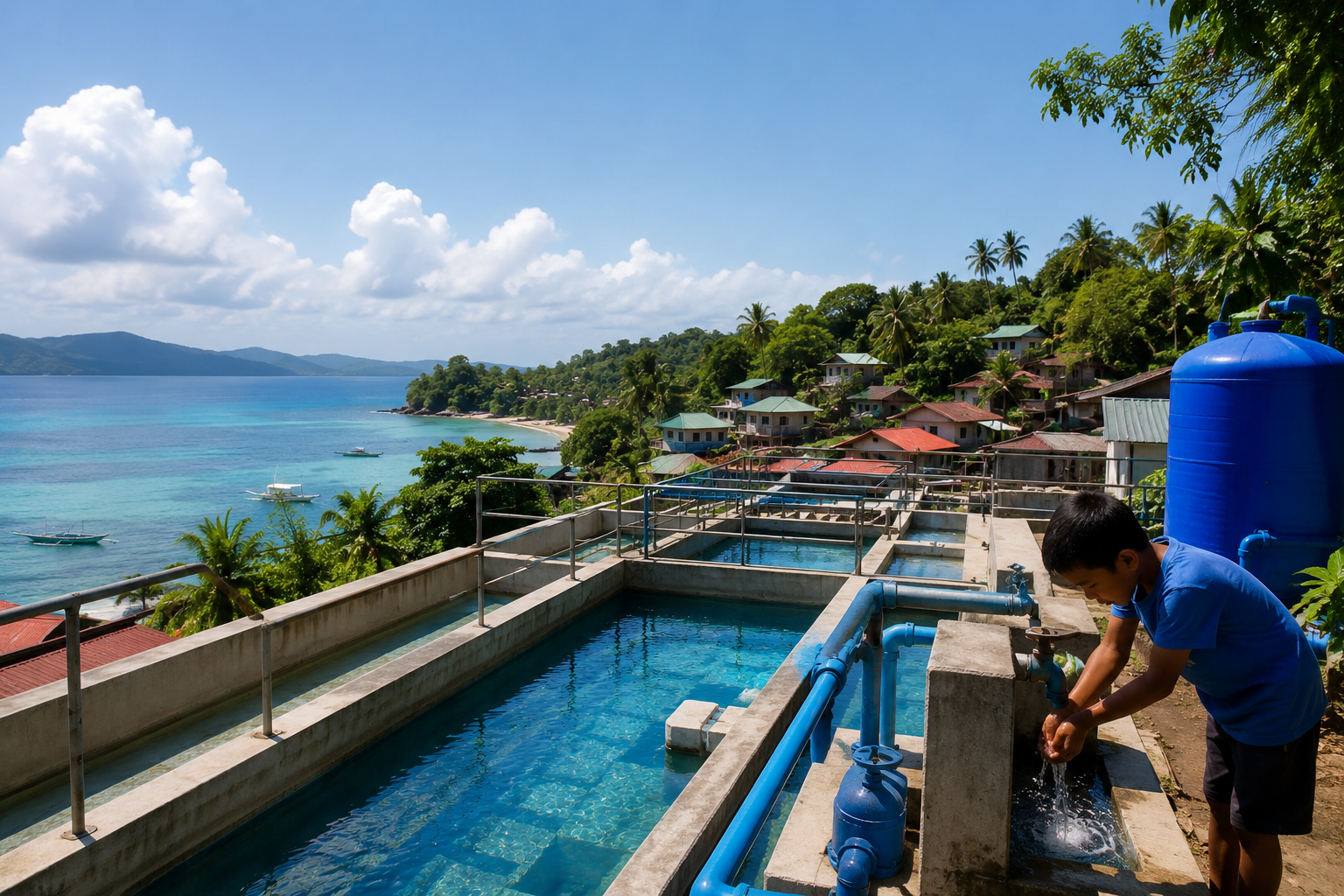

A new World Bank Group project approved on Friday, July 31, will extend safe and reliable access to water and sanitation in selected island provinces in the Philippines, improving water security, supporting tourism and local development, and creating more jobs.
The Philippines Accelerated Water and Sanitation Project in Selected Areas (AWSPSA) will expand climate-resilient water supply, sanitation, storage, distribution networks, and water sanitation and hygiene (WASH) facilities in the climate-vulnerable areas of Bohol, Siargao, and Jolo, where access to water remains limited and climate risks are high.
The project is expected to create 8,700 jobs within five years after completion, or around 46,500 jobs over 25 years, through construction work in the near term and the broader boost to local economies that comes when communities have reliable access to safe water and sanitation.
It will also benefit tourists, public school students, and people in healthcare and daycare facilities by providing improved, reliable water and sanitation services that are resilient to floods and droughts.
“This project tackles the core drivers of water insecurity and service gaps—climate vulnerability, operational inefficiencies, and financing constraints—while prioritizing the needs and voices of women, youth, and vulnerable communities,” said Zafer Mustafaoğlu, World Bank division director for the Philippines, Malaysia, and Brunei.
“By strengthening institutions and mobilizing private participation, it will help deliver reliable, safe services and support sustainable economic and tourism growth for island communities,” Mustafaoğlu added.
AWSPSA is the first comprehensive water and sanitation project in the Philippines to cover the entire service chain, from water source development to sanitation. It aims to expand access to safe, reliable water supply and sanitation (WSS) while improving the performance of local service providers by investing in climate-resilient infrastructure, promoting WASH practices, and strengthening institutional capacity and governance to enhance water security and resilience to climate-related risks. It will also pilot a collaborative approach for the national and local governments to work together toward achieving the country’s WSS targets and Sustainable Development Goal 6.
The operation is Phase 1 of the broader Multi-Phase Programmatic Approach (MPA) on Water Security and Resilience in the East Asia and Pacific Region, reflecting the World Bank’s long-term commitment to building water-secure and climate-resilient communities across the region.
AWSPSA will be implemented by the Department of Public Works and Highways and the Department of the Interior and Local Government. The total project cost is US$268.62 million, with World Bank financing expected to cover US$250.87 million. The remaining costs will be financed by the Philippine government and private-sector equity.
Bohol, Siargao, and Jolo were selected through a rigorous prioritization framework that considered poverty levels and water access gaps, vulnerability to climate hazards such as droughts and floods, and project readiness, including the availability of feasibility studies, permits, and local government support.
Follow PHILIPPINES TODAY on Facebook and Instagram, and subscribe on YouTube for the latest updates.