

A Philippine-led business council is pushing to deepen East Asia’s economic integration by helping micro, small, and medium enterprises (MSMEs) better access regional markets through new sustainability tools, policy reforms, and stronger private sector engagement.
Under the 2026 co-chairship of the Philippines and Japan, the East Asia Business Council (EABC) has placed MSMEs at the center of its agenda as governments and businesses seek to ensure that regional trade agreements deliver broader economic gains.
Guided by the theme, “Reinforcing Trust, Integration, and Sustainability in the East Asia Economic Architecture,” the council has convened business leaders and policymakers in Tokyo and Manila to advance initiatives aimed at strengthening supply chains, expanding digital trade, and accelerating sustainable growth.
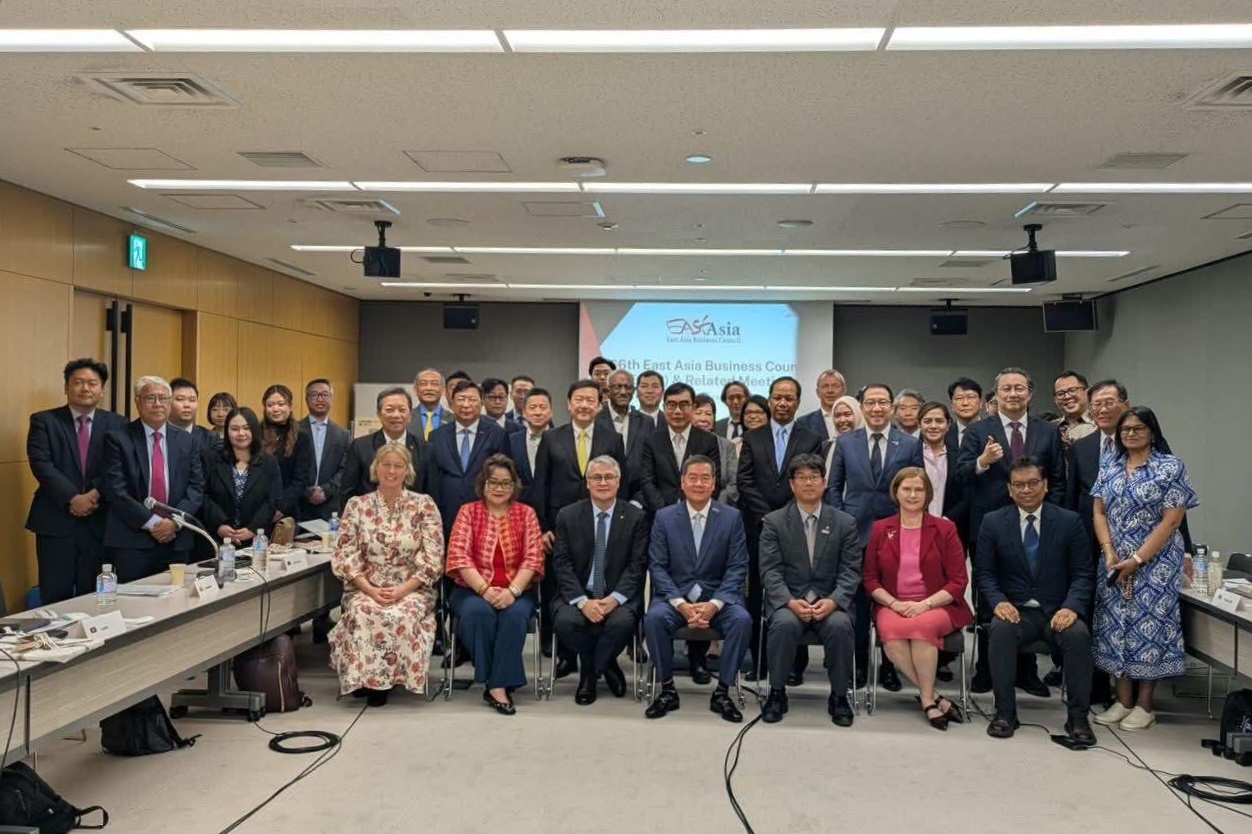
Those priorities took center stage during the 66th EABC Meeting on May 25 at the Tokyo International Forum, where representatives from ASEAN Plus Three economies endorsed the council’s 2026 work program. The meeting was led by EABC chairperson Jay Yuvallos of the Philippines and co-chairperson Tetsuya Matsuoka of Japan.
Discussions focused on strengthening regional value chains, improving implementation of the Regional Comprehensive Economic Partnership (RCEP), advancing digital trade, promoting sustainability, and enhancing MSME resilience as East Asia confronts a more complex economic environment.
A key outcome was the advancement of the East Asia Circularity Agenda, including work on the East Asia Circularity Roadmap 2030, the Green Business Diagnostics Toolkit, and regional training programs designed to help MSMEs adopt circular economy practices, improve resource efficiency, develop waste-to-value solutions, and meet environmental, social, and governance (ESG) standards.
Members also reviewed progress on the 2026 Business Outlook Survey being conducted jointly by the EABC and the Japan External Trade Organization (JETRO), which seeks private sector feedback on business conditions, RCEP utilization, supply chain resilience, digital trade, cross-border payments, and preparedness for the circular economy across ASEAN Plus Three economies.
The council also outlined preparations for a series of regional engagements later this year, including the inaugural Regional Comprehensive Economic Partnership Business and Investment Summit in Manila, the East Asia Business Forum 2026, and dialogues with ASEAN Plus Three economic officials and ministers.
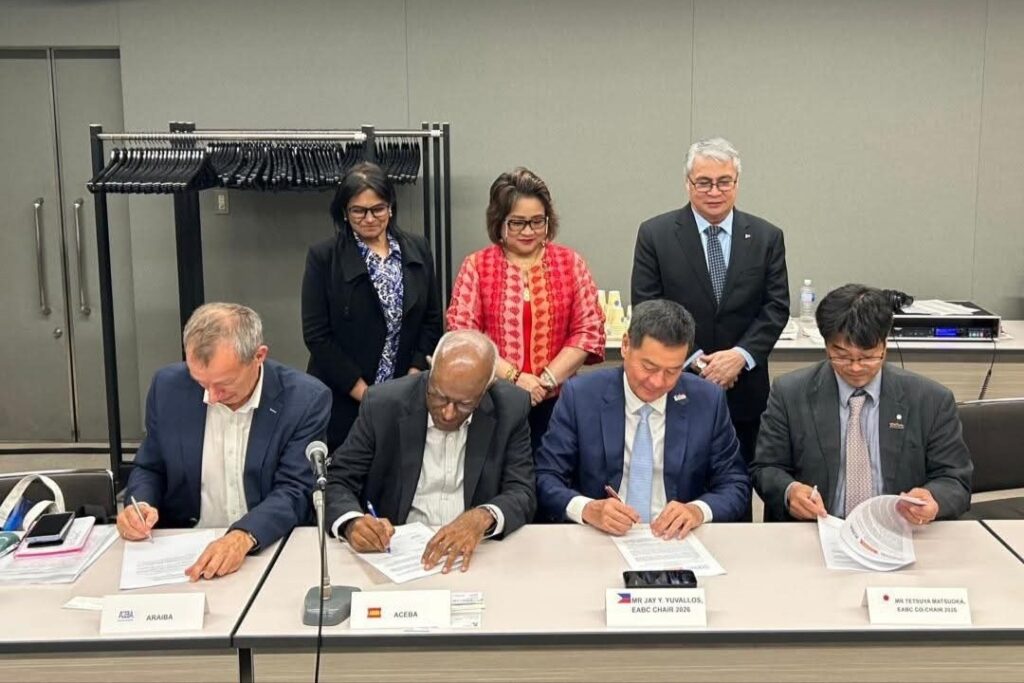
Building on its sustainability agenda, the EABC formalized a strategic partnership to expand circular economy adoption among businesses. EABC chairperson Jay Yuvallos joined Thomas Thomas, president of ACEBA, and Dr. Muhammad Firdaus Abdullah, chairperson of ARAIBA Sdn. Bhd., in signing a cooperation charter witnessed by EABC co-chair Tetsuya Matsuoka and ACEBA co-convenor Rene van Berkel. The partnership will promote the Circular Business Check, a self-assessment tool supported by the European Union’s SWITCH-Asia Programme that enables MSMEs to evaluate and strengthen their sustainability practices.
In his remarks, Yuvallos said many smaller businesses understand the importance of sustainability but lack practical ways to translate those commitments into measurable outcomes. “The circular economy provides a practical framework for MSMEs to demonstrate commitment and action on environmental, social, and governance performance,” he said.
The initiative will be piloted in the Philippines, Indonesia, and Thailand before a broader regional rollout during the EABC Forum in September 2026.
The council also took its recommendations directly to policymakers during the RBAC-RCEP Joint Committee Dialogue in Manila on June 1, underscoring the private sector’s growing role in shaping implementation of the region’s largest trade agreement.
Representing the EABC delegation were Melanie Ng on behalf of chairperson Jay Yuvallos, Gil Gonzales, senior adviser to EABC Philippines, Yasufumi Otaki of EABC Japan and JETRO, and co-chair Tetsuya Matsuoka, who participated virtually.
The council called for measures to increase RCEP utilization among businesses, reduce non-tariff barriers, develop an artificial intelligence-powered RCEP information chatbot, and institutionalize regular dialogue between business leaders and RCEP ministers.
Several proposals received strong backing from participating economies, including Indonesia, Japan, New Zealand, and the Philippines, signaling growing support for closer collaboration between governments and the private sector to strengthen regional economic integration.
Taken together, the engagements reflect a common challenge facing East Asia: ensuring that trade agreements, sustainability initiatives, and regional cooperation produce tangible benefits for MSMEs.
As economic integration deepens, the effectiveness of those efforts will increasingly depend on whether smaller businesses are able to participate more fully in regional markets, remain competitive, and capture the opportunities created by closer economic cooperation.
Stay updated—follow Philippines Today on Facebook and Instagram, and subscribe on YouTube for more stories.