


The Philippines needs to move more decisively to integrate into the Regional Comprehensive Economic Partnership (RCEP) or risk losing competitiveness as trade and supply chains deepen across East Asia, according to East Asia Business Council (EABC) Philippines chair Jay Yuvallos.
Speaking at a forum hosted by the Management Association of the Philippines, Yuvallos said the country’s fragmented policy approach and short-term planning could limit its ability to benefit from the world’s largest trading bloc.
RCEP, which took effect in 2022, groups 15 Asia-Pacific economies and accounts for about 30% of global output and roughly 2.3 billion people. The agreement is expected to strengthen trade flows, reduce barriers, and support deeper regional economic integration.
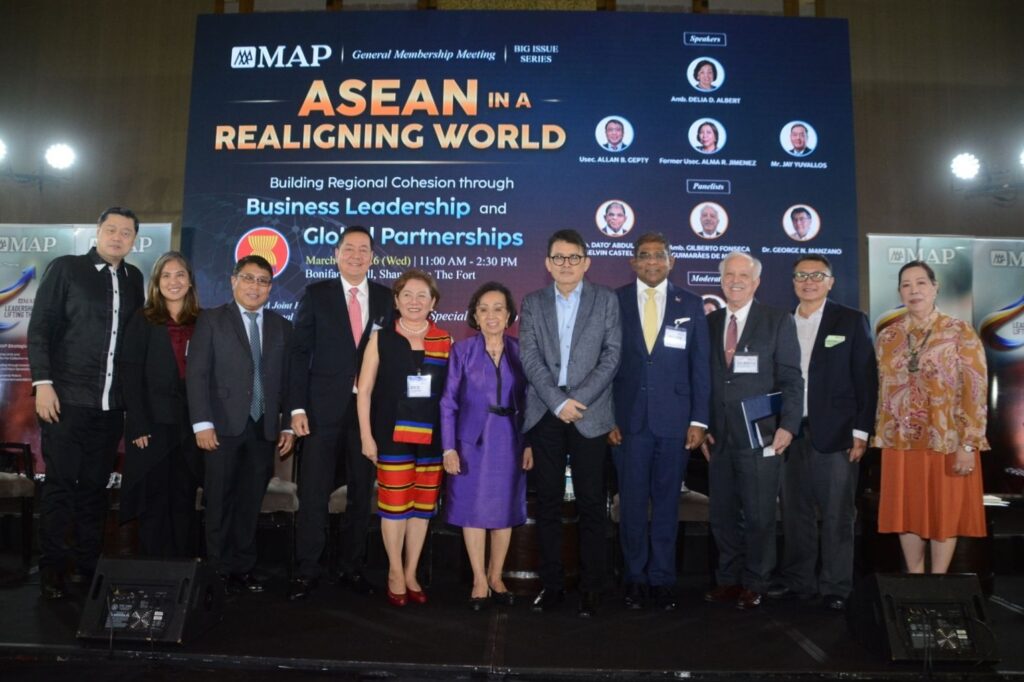
He said Philippine businesses and policymakers need to treat regional integration as a long-term national priority, particularly as companies across Asia reorganize supply chains in response to shifting economic and geopolitical conditions. A more coordinated approach, he added, would help firms plug into regional production networks and improve resilience.
“This year, our focus at the East Asia Business Council Philippines is reinforcing trust, integration, and sustainability in the East Asian economic architecture,” he said.
The council is advancing initiatives aimed at improving firms’ readiness for regional trade, including RCEP awareness programs, business clinics, support units for companies entering regional markets, and value-chain mapping to help micro, small, and medium enterprises participate more actively. It is also promoting digital trade and payment platforms, along with tools that support circular and sustainable production. These efforts are designed to make it easier for smaller firms to navigate trade rules and access cross-border opportunities.
“These initiatives are small steps, but when coordinated, they can create meaningful impact,” Yuvallos said.
Drawing on his experience as immediate past president of the Cebu Chamber of Commerce and Industry, Yuvallos pointed to Cebu as an example of how regional competitiveness can be built through coordinated development. The province’s economic corridors connect trade, services, and manufacturing with industries such as shipbuilding, logistics, agro-industry, and tourism, while the Cebu Investment Center supports investment promotion and business engagement. Such models, he said, can be replicated in other regions to strengthen national competitiveness.
At the same time, he said the broader Philippine economy continues to face structural constraints, including fragmented coordination across sectors and institutions, uneven infrastructure development and regulatory bottlenecks that slow execution.
“We must overcome our biggest challenge: fragmentation,” he said. “Fragmented agendas, silos, and turf wars slow progress. The enemy is us.”
The issue takes on added urgency as the Philippines prepares to chair the Association of Southeast Asian Nations (ASEAN) this year. Yuvallos said the role presents an opportunity to advance practical regional priorities and strengthen the country’s position in regional value chains, while also signaling policy clarity to investors.
“Are we prepared to compete and participate in ASEAN, East Asia, and the wider RCEP economic block?” he said.
He noted that regional peers such as Malaysia, Singapore, Thailand, and Vietnam are moving aggressively to position themselves within supply chains, highlighting the need for clearer direction and stronger coordination in the Philippines. These economies have pursued targeted strategies to attract investment and scale up industries tied to regional demand.
The country’s ASEAN chairmanship could help push initiatives that expand opportunities for micro, small, and medium enterprises, as well as creative industries and emerging sectors including semiconductors and critical minerals, he said. These sectors are seen as potential drivers of long-term growth and diversification.
Yuvallos also emphasized the importance of engaging younger Filipinos aged 17 to 22, who are expected to take on leadership roles in the next decade. He said their perspectives point to the need for greater accountability, transparency, and participation in shaping economic outcomes and sustaining reform momentum.
“We must do something for our youth and the future,” he said. “Their insights remind us that the future belongs to the prepared, united, and empowered.”
Stay updated—follow Philippines Today on Facebook and Instagram, and subscribe on YouTube for more stories.