As artificial intelligence blurs the boundaries between inspiration and imitation, the Philippines’ creative sector is facing a new urgency: protecting the very ideas that fuel its growth.
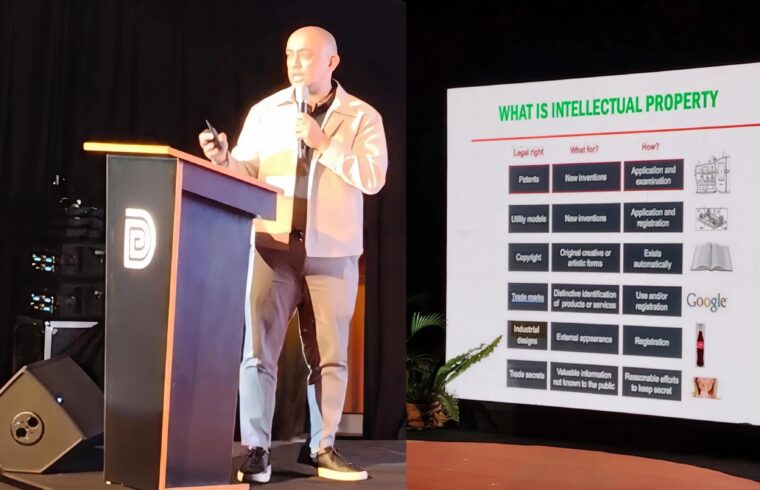
During the opening of Design Week Philippines, Intellectual Property Office of the Philippines (IPOPHL) director Chamlette Garcia urged designers, entrepreneurs, and cultural workers to treat intellectual property (IP) not as a legal afterthought but as a foundation for dignity, livelihood, and long-term sustainability in the creative economy.
“Ideas are the lifeblood of creativity,” Garcia said, underscoring how unprotected designs, motifs, or innovations can be quickly copied—especially on global platforms such as Instagram, YouTube, and Amazon, where prior disclosure can instantly void novelty.
He walked the audience through the layers of IP that protect a single product, from trademarks and patents to design rights and trade secrets. “When we talk about intellectual property, there are products as a bundle of IP rights… This mobile device or smartphone, it is one product with many intellectual property rights,” he said, breaking down how brand names, software, hardware configurations, and even ringtones fall under distinct legal protections.
Garcia also highlighted how industrial design rights—increasingly crucial in an era dominated by visual culture—extend beyond manufactured goods to include graphical user interfaces (GUIs), packaging, interior “get-up,” and typographic typefaces. But he warned that novelty is easily destroyed by social media exposure. Online posts with timestamps, URLs, and high engagement are treated as solid evidence of prior disclosure.
“Instagram posts constitute solid evidence of effective and sufficient disclosure of the prior design,” he explained, noting that even 300,000 likes or viral visibility can harm a later application. He emphasized the country’s first-to-file system, meaning whoever submits the design first—local or foreign—secures the exclusive rights for up to 15 years.
Garcia also reminded participants that industrial design applications must now be filed online. All documents, he said, should be submitted in PDF format, with applicants required to provide a valid email address for official notifications. Filing fees are ₱3,636 for big entities, plus a ₱970 publication fee; and ₱1,737.20 for small entities, plus a ₱930 publication fee.
Amid rising global competition, IPOPHL is encouraging Filipino creators to file more patents and designs through incentives such as Juana Patent and Juana Design Protection, programs aimed at supporting women inventors and entrepreneurs.
According to the latest World Intellectual Property Organization (WIPO) data, the Philippines recorded 1,205 resident industrial design filings and 1,533 designs in force—figures that stand in contrast to the 1.22 million design applications filed worldwide in 2024. China alone accounted for 825,330 filings, or more than half of the global total.
Moreover, the Philippines still trails its ASEAN neighbors in design filings, according to the WIPO IP Statistics Data Center, where countries like Vietnam, Thailand, and Indonesia consistently report higher annual numbers. The latest comparative data show that ASEAN design activity has continued to expand, reflecting growing investments in IP awareness, stronger national innovation programs, and broader creative-industry participation across the region.
This regional trend has contributed to rising competition within Southeast Asia, where creators are increasingly turning to registered design protection as both a commercial strategy and a safeguard in the fast-expanding creative economy.
For Garcia, closing this gap means equipping Filipino creatives with practical tools and raising awareness on risks—especially in a digital landscape where innovation can be replicated in minutes.
He emphasized that strengthening design protection begins with understanding the value of novelty: once a design is publicly disclosed, its protection potential diminishes. To illustrate this, Garcia walked attendees through the wide range of elements that can be safeguarded under IP—from the structural components of smartphones to the shape and packaging of everyday consumer products, including cup noodles, where patents, industrial designs, and trademarks work together to protect a single item’s commercial identity.
“Design produces an aesthetic and ornamental effect… the overall form matters, and it can be protected,” he reminded the audience, urging them to safeguard their work before sharing it online.
Garcia stressed that while the creative process thrives on visibility, creators must balance exposure with protection to prevent unauthorized reproduction, especially in markets where design-driven products are copied and redistributed quickly.
Follow PHILIPPINES TODAY on Facebook and Instagram, and subscribe on YouTube for the latest updates.