

The world’s metabolic health crisis has found an unlikely champion: the sardine. At a Manila press conference, health experts and industry leaders introduced the 2026 “Year of the Sardine,” reframing a pantry staple as a frontline response to one of the most urgent public health challenges of our time.
The initiative was led by the Medical Wellness Association (MWA) and supported by Mega Prime Foods Inc., marking the association’s first formal collaboration with a commercial food company. At the center of the campaign is Mega Sardines, which earned MWA “superfood” certification after a six- to seven-month evaluation focused on nutrition, sourcing, and processing standards.
Speakers framed the move not as a branding exercise but as a response to a widening global health emergency. Metabolic dysfunction—linked to diabetes, cardiovascular disease, and obesity—now affects nearly half of the world’s population, prompting MWA to promote sardines as an accessible, science-backed dietary intervention.

Sardines and the metabolic health reset
Jim Lafferty, a board member of the MWA, set the tone by anchoring the declaration in metabolic science rather than diet trends. He said metabolic dysfunction, not cholesterol alone, is the root cause of many modern diseases, affecting 46% of the global population and as much as 65% of adults in the United States.
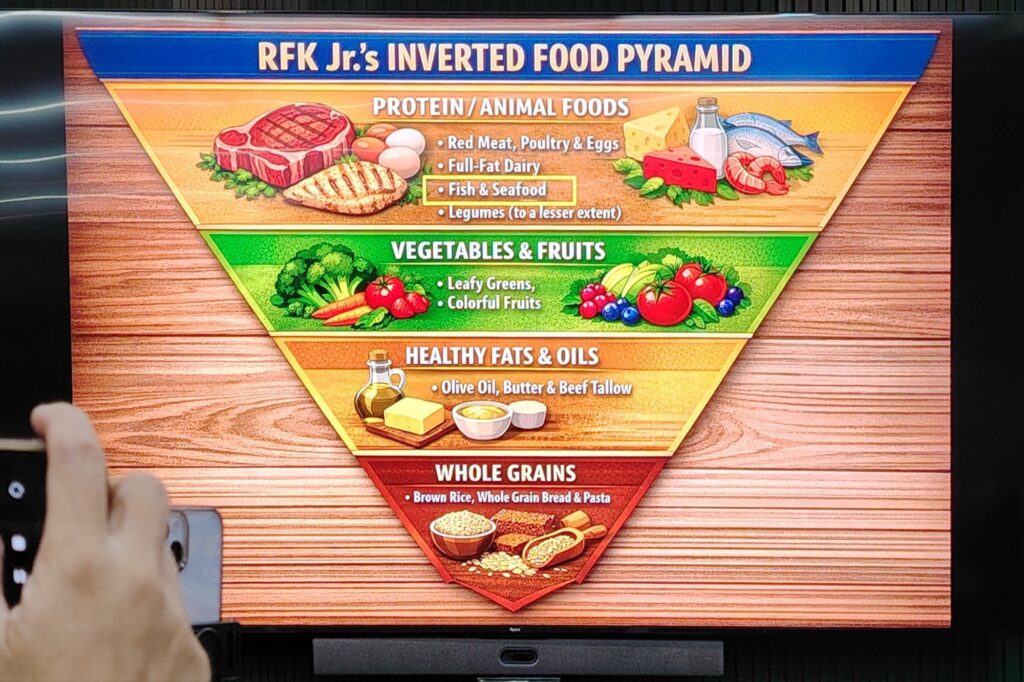
He pointed to sardines as uniquely suited to address this crisis because they deliver protein and omega-3 fats without carbohydrates, resulting in what he described as zero insulin impact. The timing of the declaration, he added, aligns with the release of a new inverted U.S. Food Pyramid that elevates animal protein to the top tier, with sardines ranked among the most recommended foods.
Lafferty also highlighted a practical protocol already used by some physicians: a short “sardine fast” in which patients eat only sardines for three days to rapidly lower insulin levels and initiate fat burning. As he put it, “It is impossible in my view to find a better food to combat metabolic crisis than sardines.”
Quality, credibility and global reach
Michelle Tiu Lim-Chan, president and CEO of Mega Prime Foods, shifted the discussion to product integrity and public trust, addressing long-held misconceptions about canned food. She explained that Mega Sardines are preservative-free, relying instead on retort sterilization—a heat-based process that ensures food safety and a three-year shelf life without chemical additives.
This process, she said, enabled Mega’s acceptance into the U.S. Natural Food Show, a milestone that reinforced its positioning in premium and health-conscious markets. Since receiving MWA certification, the company has expanded its export footprint from 35 to 45 countries and has been promoting the “Year of the Sardine” at major international trade events, including Gulfood in Dubai.
Beyond exports, Tiu Lim-Chan emphasized the initiative’s social dimension, particularly in the Philippines. Educating mothers to include sardines in children’s diets, she said, is critical given their protein and DHA (docosahexaenoic acid) content.
“We want to share to the world that sardines is really a health food… we don’t need to put any chemical preservatives which makes our canned sardines even healthier,” Tiu Lim-Chan said.

Scale, freshness and affordability
Mega Prime Foods chief growth and development officer Marvin Tiu Lim underscored the operational backbone behind the company’s certification, positioning scale and efficiency as enablers of both quality and affordability. Mega Prime Foods, he said, is the world’s largest producer of canned sardines, with a capacity of three million cans per day, and the only fully vertically integrated player in the sector.
Central to the MWA’s endorsement was Mega’s 12-hour catch-to-can process, which preserves freshness and nutritional value, supported by sourcing from what he described as some of the cleanest waters off Mindanao, reducing the risk of heavy metal contamination.
Despite rising costs across the food industry, Tiu Lim said Mega has held prices steady since 2023, absorbing margin pressures to keep sardines accessible at about ₱25 per can. He also pointed to packaging innovation, noting that Mega’s upright oval can—unlike the traditional flat can design dating back to 1836—keeps fish fully submerged, preserving moisture and taste.
“We have our 12-hour catching to canning process, which nobody else can have… that really sets us apart, and I think that’s how we got the very, very hard to get MWA stringent, very stringent by so many doctors,” Tiu Lim said.

From ‘poor man’s food’ to public health tool
Beyond individual statements, the press conference worked to dismantle persistent stigmas around sardines. Lafferty clarified that even sardines in tomato sauce meet MWA standards, containing only 2 to 3 grams of carbohydrates against a backdrop of 22 grams of protein and 7 to 8 grams of omega-3s, offering consumers flexibility without compromising metabolic goals.
Speakers also stressed that cooking does not diminish sardines’ nutritional value, though pairing them with high-carbohydrate foods can dilute their benefits. Incremental dietary shifts, rather than radical overhauls, were encouraged as a realistic path to better health.
Closing the discussion, Mega executives highlighted sustainability measures, including compliance with the three-month closed fishing season and the company’s “Mega Ocean Clean Up” initiative to remove plastic waste from the sea.
Framed together, health science, industrial discipline, and environmental stewardship formed the backbone of a campaign that seeks to reposition sardines—not as a fallback food—but as a credible, global response to a mounting health crisis.
Stay updated—follow Philippines Today on Facebook and Instagram, and subscribe on YouTube for more stories.