
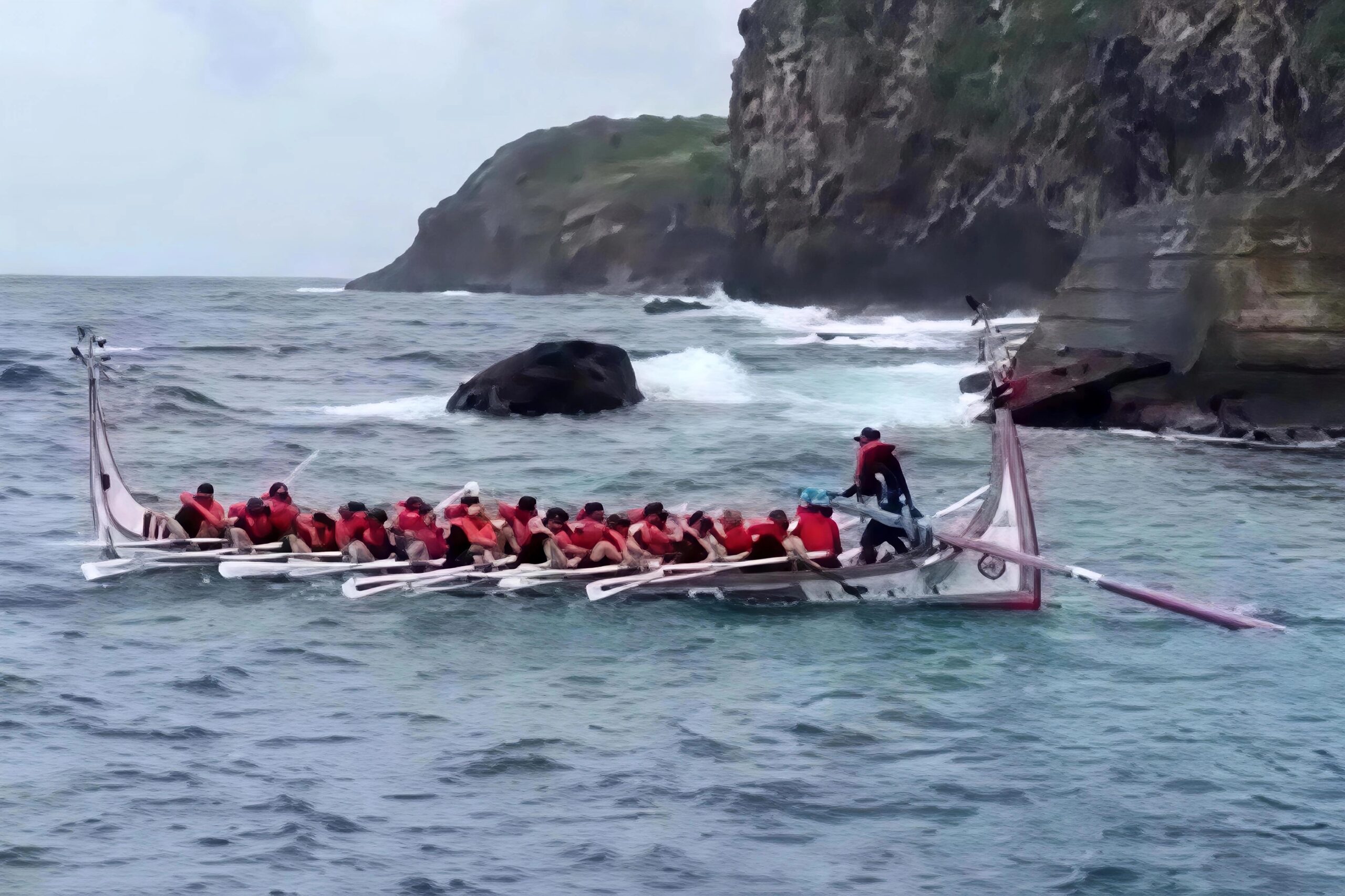

A traditional wooden boat carrying Indigenous Tao seafarers from Taiwan has crossed the Bashi Channel to reunite with the Ivatan people of the northern Philippines, reviving a maritime link that had lain dormant for three centuries.
The vessel, Ovayan, arrived in the Batanes archipelago on Tuesday, June 16, after a challenging journey from Orchid Island, known locally as Lanyu, off Taiwan’s southeastern coast. The voyage retraced an ancient sea route that once connected the Tao and Ivatan peoples through trade, migration, and marriage before regular contact ceased about 300 years ago.
The crossing was intended as a celebration of shared heritage, but the sea had other plans.
Shortly after departing Orchid Island on Monday, the Ovayan encountered strong winds and rough waters near Little Orchid Island. The conditions slowed the vessel’s progress and allowed seawater to enter the boat, forcing accompanying support vessels to intervene.
The situation worsened as the expedition approached Y’ami Island, the northernmost island of the Philippines. Waves reaching four meters battered the wooden craft, leaving much of it submerged and prompting organizers to tow it once again.
No one was injured during the ordeal.
Maraos, a Tao leader and board director of Taiwan’s Indigenous Peoples Cultural Foundation who took part in the voyage, said the boat was towed through the night before reaching Mahatao Port in Batanes on Tuesday morning for emergency repairs and inspection.
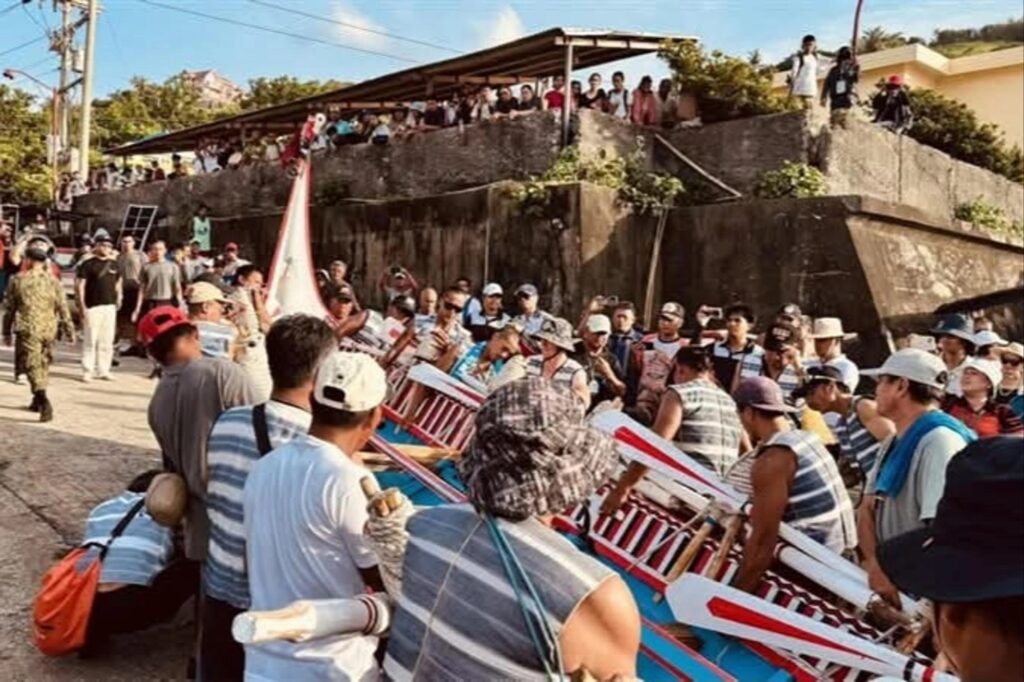
Once the vessel had been reinforced, Tao rowers resumed the journey under their own power, paddling the final stretch to a coastal reception point where hundreds of Ivatan residents were waiting.
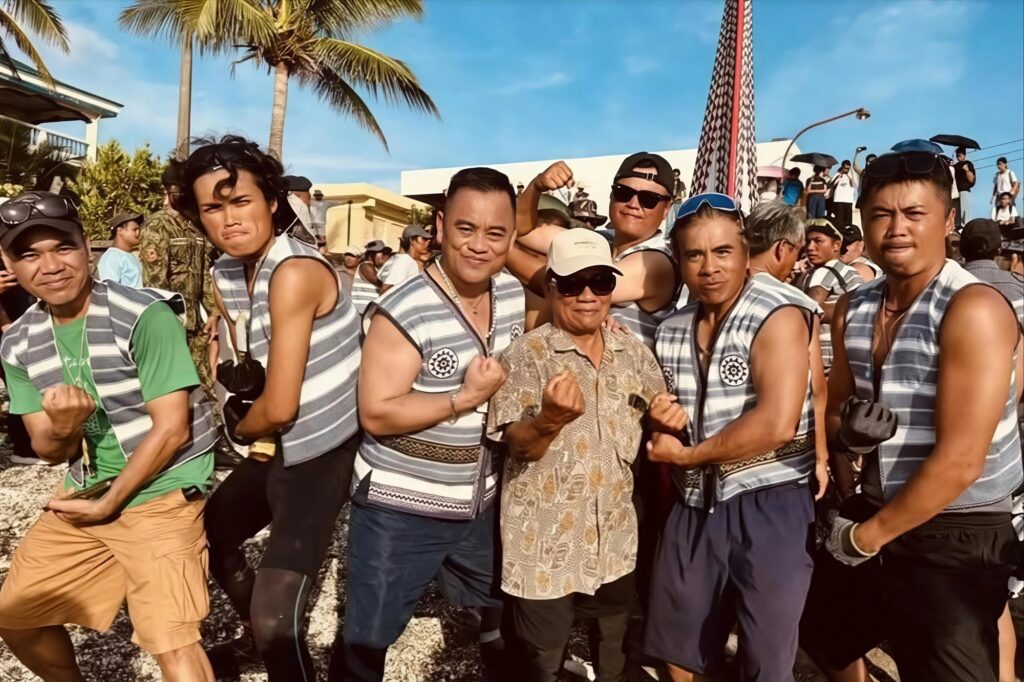
About 300 people gathered to welcome the visitors, greeting them as “family from Lanyu” in a ceremony marked by traditional performances, food, and celebration.
For many participants, the reunion carried an emotional weight that extended far beyond the voyage itself.
One Tao participant remarked that the food served during the welcoming feast tasted “90% similar” to that of Orchid Island, reinforcing what elders on both sides of the channel have long maintained: that “Lanyu and Batanes came from the same blood.”
The connection is more than symbolic. Despite centuries of separation, the languages spoken by the Tao and Ivatan communities remain about 60% mutually intelligible, reflecting a shared Austronesian heritage that has endured across generations.
Named after the gold breast ornaments traditionally worn by Tao men, the Ovayan was built using traditional methods by Indigenous craftspeople from six tribal communities in Taiwan. More than 200 people contributed to the project, constructing the vessel without nails and relying on techniques passed down through generations.
The boat’s name has also been interpreted as representing a “golden friendship” between the two communities.
The expedition forms part of a broader effort to revive cultural ties between peoples whose ancestors once navigated the waters of the Bashi Channel with remarkable skill.
The voyage also echoes a much larger story of human migration.
Many scholars believe Taiwan’s Indigenous peoples are among the ancestors of the Austronesian-speaking populations who spread across vast stretches of the Pacific and Indian oceans thousands of years ago. Their descendants would eventually settle territories extending from Hawaii and Easter Island in the east to Madagascar off the coast of Africa.
Archaeologists and linguists regard those journeys as one of humanity’s greatest maritime achievements, accomplished long before the advent of modern navigation.
Using knowledge of winds, currents, and the stars, Austronesian seafarers crossed immense distances in wooden vessels, connecting islands separated by hundreds or even thousands of kilometers.
“This is not only a significant day for the Pacific Ocean but also a day of commemoration for the Austronesian people,” Maraos said after the arrival in Batanes.
For the Tao and Ivatan communities, however, the voyage was less about distant history than restoring a relationship interrupted centuries ago.
Historical accounts suggest the two communities traded, intermarried, and traveled regularly between the islands until contact was broken off about 300 years ago. Even after the sea route fell into disuse, memories of a shared ancestry endured on both sides of the channel.
The successful crossing of the Ovayan has now transformed those memories into lived experience once again. After spending a few days in Batanes, the Tao sailors were set to return to their home island of Lanyu on June 18, having reunited with the Ivatan people they refer to as Kakteh du Chinayi—”siblings of the same womb”—a phrase that reflects the deep kinship both communities believe they share.
Yet the story of the Ovayan is far from over. The traditional wooden vessel will remain on display in Batanes for the next six months before making its return voyage to Orchid Island next year.
In a symbolic reversal of this year’s expedition, Ivatan residents will take up the oars and row the boat north to Lanyu, continuing a cultural exchange aimed at strengthening ties between the two communities.
Stay updated—follow Philippines Today on Facebook and Instagram, and subscribe on YouTube for more stories.