
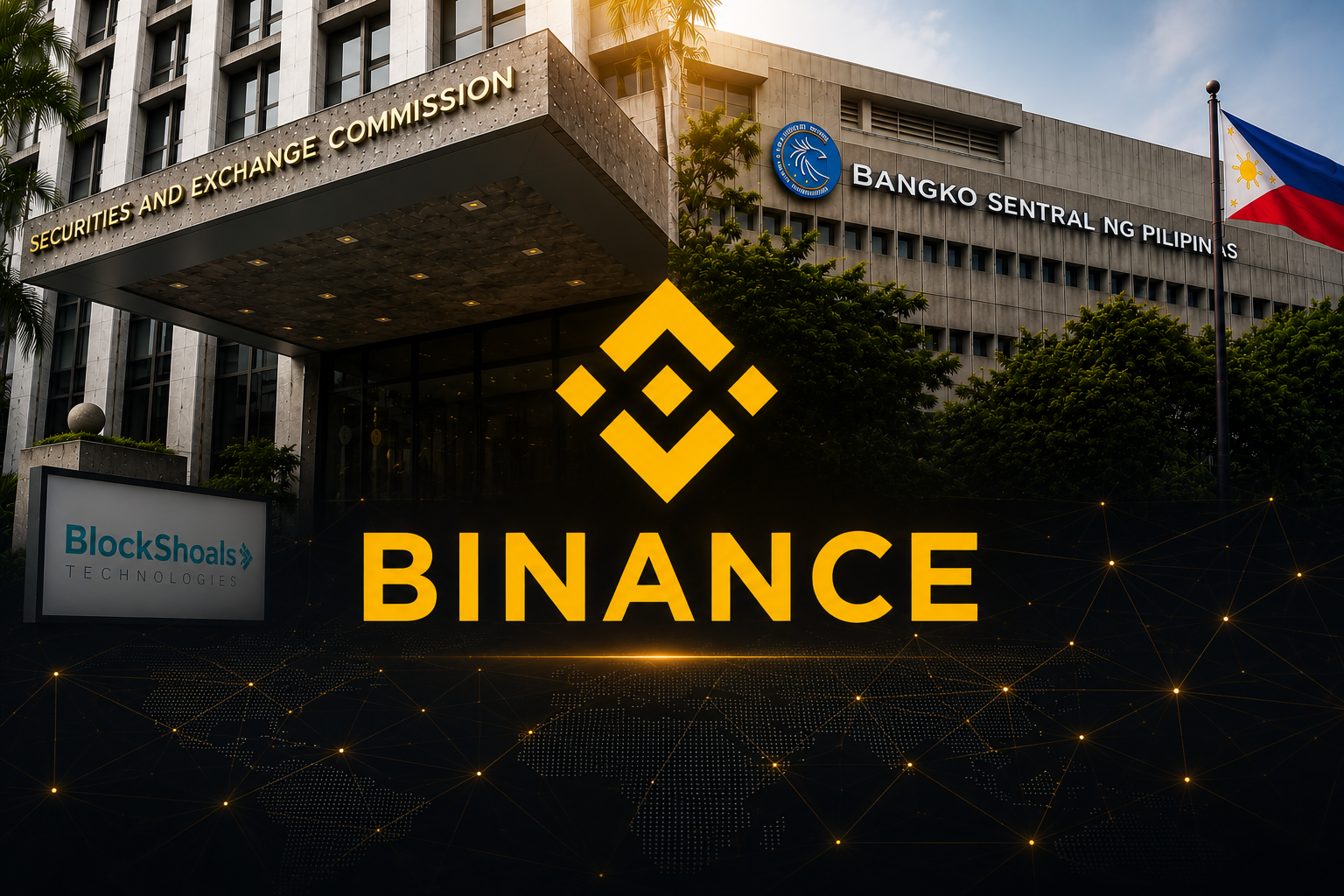

Binance’s years-long effort to return to the Philippine market has encountered another regulatory hurdle, even as the company acknowledged that the government crackdown which led to its ban fundamentally changed how it approaches regulation.
The Bangko Sentral ng Pilipinas (BSP) recently clarified that neither Binance nor its local partner, BlockShoals Technologies Inc., currently holds the virtual asset service provider (VASP) license required to offer crypto payment and transaction services in the country. The statement comes weeks after Binance executives publicly revealed that the exchange’s 2024 ban prompted a sweeping compliance overhaul and nearly two years of engagement with Philippine regulators.
“It flipped when we got banned from the market. I’ll be very honest, right? Sometimes it takes enforcement to make a big company realize that we need to build roots locally,” Raj Timothy Nandwani, Binance’s global business development executive, said during a panel discussion at the recently-concluded Philippine Blockchain Week 2026, offering the clearest acknowledgment yet that regulatory enforcement—not voluntary engagement—drove the company’s shift toward local compliance.
The BSP said neither Binance nor BlockShoals currently holds the VASP license required to provide crypto payment and transaction services in the Philippines, emphasizing that participation in the Securities and Exchange Commission’s (SEC) Strategic Sandbox (StratBox) does not replace separate licensing requirements imposed by the central bank.
While the SEC oversees investment-related crypto activities and trading platforms, the BSP regulates fiat-to-crypto conversion and payment services. Under revised sandbox terms, BlockShoals must integrate its systems with a BSP-licensed domestic VASP within 90 days before Binance-linked user onboarding can begin. The SEC also updated its description of Binance, referring to it as a global crypto-asset service provider rather than a global VASP, reinforcing the distinction between sandbox participation and full regulatory authorization.
The clarification adds another chapter to Binance’s effort to regain access to the Philippine market after regulators moved against the exchange for operating without the required registrations. In 2024, the National Telecommunications Commission blocked Binance’s website at the SEC’s request, while the Binance app was removed from the Philippine Google Play Store in early 2026, further limiting access for Philippine users.
Nandwani said Binance began discussions with the SEC almost immediately after enforcement actions were taken, abandoning its previous approach in favor of working within a locally regulated framework. The company ultimately chose to pursue its comeback through a partnership with BlockShoals under the SEC’s StratBox initiative, a process he said involved extensive due diligence and continuous dialogue with regulators.
“It was a long process. There’s a part of me that wishes it was not as long, but actually, now that we’re here, I respect the fact that it took us time to get there. It means we did the due diligence, we did our homework, and we actually put a framework together in terms of the way we enter that we think is robust and sustainable,” he said.
SEC assistant director Paolo Montano Ong said the regulator’s engagement with Binance began shortly after the exchange was blocked, eventually evolving into broader discussions on how digital asset firms could operate within a supervised framework.
“Because of that moment that we had, the people from Binance came to the office and started a collaboration on how we enable Filipinos to get access to these products,” Ong said.
Those discussions led to the creation of the SEC’s Strategic Sandbox framework, developed with support from the Asian Development Bank and the United Kingdom’s Financial Conduct Authority, followed by rules governing crypto asset service providers. The framework provides a supervised environment where firms can test digital asset products while remaining under regulatory oversight. Under the proposed setup, BlockShoals would serve as the licensed local intermediary while Binance supplies the platform’s technology, security infrastructure, and operational expertise.
BlockShoals legal and regulatory advisor Marie Antonette Quiogue said during the panel that neither BlockShoals nor Binance was ever intended to function as a VASP. Instead, both companies planned from the outset to work with a BSP-licensed third-party provider for fiat-to-crypto transactions, adding that discussions with a partner were already in advanced stages pending final due diligence and regulatory approvals.
The BSP’s latest statement indicates that this requirement remains a prerequisite before Binance-backed services can be rolled out locally. While the clarification does not shut the door on Binance’s return, it confirms that participation in the SEC’s sandbox is only one part of a broader regulatory process.
The episode illustrates how Philippine regulators have reshaped the rules for one of the world’s largest cryptocurrency exchanges. The enforcement action that once forced Binance out of the market ultimately became the catalyst for its compliance strategy, but the company’s return remains unfinished. Until it satisfies both SEC and BSP requirements, Binance’s comeback will remain a work in progress—testing not only the country’s evolving crypto framework but also whether one of the industry’s biggest players can successfully adapt to it.
Stay updated—follow Philippines Today on Facebook and Instagram, and subscribe on YouTube for more stories.