
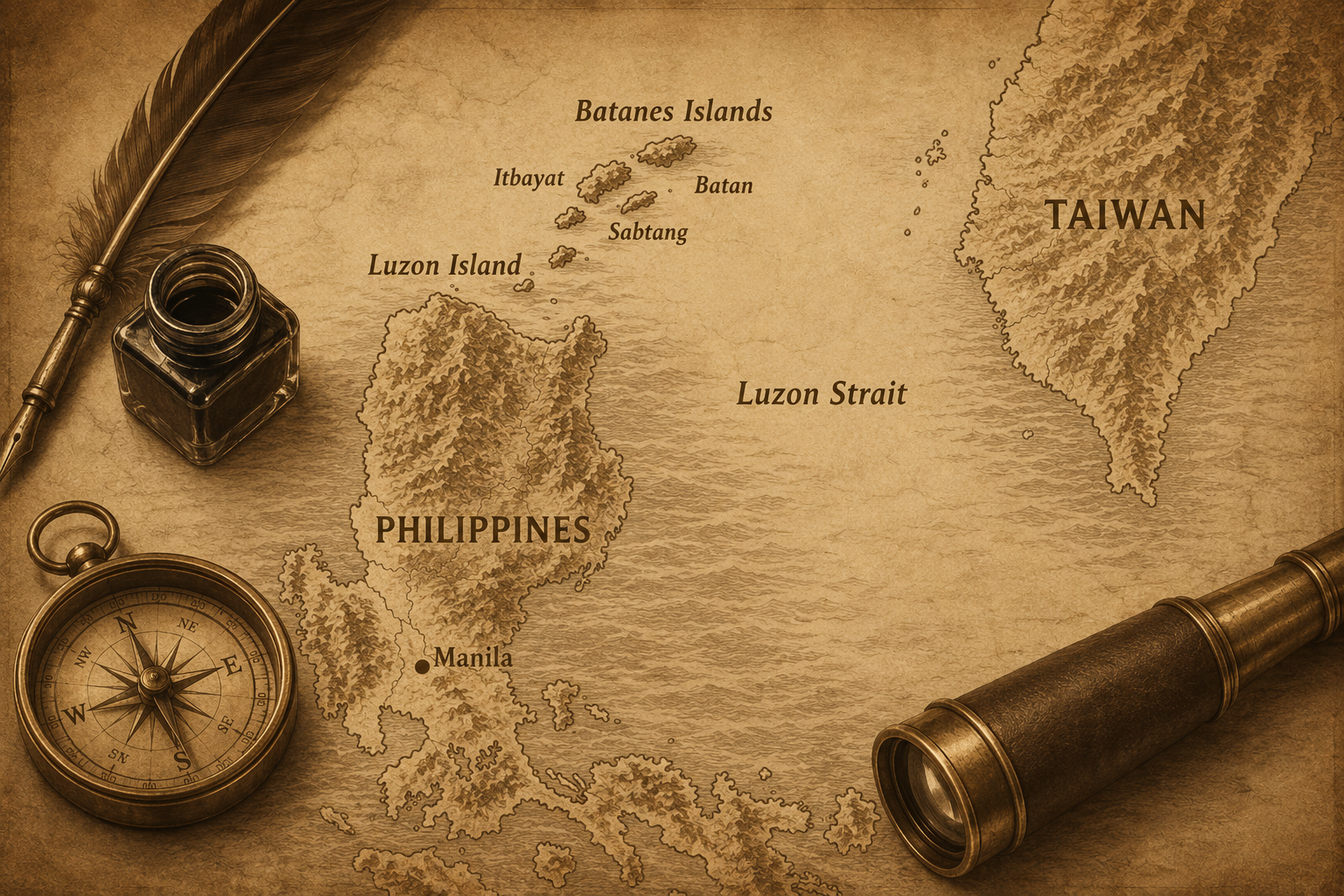

Recent debate over claims linking the Philippines’ northernmost province of Batanes to Taiwan has drawn renewed attention to the deep historical ties between the two neighboring islands. Yet history tells a different—and little-known—story: for a brief period in the 17th century, part of northern Taiwan was administered through the colonial government in Manila.
For 16 years, from 1626 to 1642, the Philippine capital served as the administrative center of Spain’s settlements in northern Taiwan, an overlooked chapter of history that reveals how colonial ambitions, maritime trade, and imperial rivalries briefly connected the two territories during the Age of Exploration.
Spain established Manila as the capital of its Asian empire in 1571 after Miguel López de Legazpi consolidated Spanish rule in the Philippines. From there, the city evolved into the administrative seat of the Spanish East Indies and the hub of the lucrative Manila-Acapulco galleon trade, which linked Asia and the Americas for more than 250 years.
By the early 1600s, however, Spain faced growing competition from the Dutch East India Company, which sought control of Asian maritime commerce. When Dutch forces established Fort Zeelandia in southern Taiwan in 1624, Spanish officials in Manila feared the new settlement could threaten shipping routes connecting the Philippines with China and Japan.
In response, the acting governor-general of the Philippines, Fernándo de Silva, dispatched an expedition from Manila in 1626. The force—composed of Spanish soldiers, missionaries, and troops recruited from the Philippines, including Filipino auxiliaries—sailed north and established Fort San Salvador at present-day Keelung.
The settlement became known as Spanish Formosa, named after the Portuguese description of Taiwan as Ilha Formosa, or “Beautiful Island.”
Unlike the Dutch, Spain never controlled the entire island. Its authority was largely confined to northern Taiwan, including Keelung and later Tamsui, where Fort Santo Domingo was established. Even so, the colony held strategic value as a military outpost protecting Spanish interests in East Asia and safeguarding maritime routes between Manila, China, and Japan.
What made Spanish Formosa unusual was its administration. Rather than being governed directly from Europe, the colony was administered by the governor-general in Manila as part of the Spanish East Indies. Orders, troops, funding, and supplies came from Manila, effectively placing Spain’s settlements in northern Taiwan under the jurisdiction of the colonial government in the Philippines between 1626 and 1642.
Historians caution that this does not mean Taiwan was “part of the Philippines” in the modern territorial sense. Only the Spanish-controlled settlements in the island’s north fell under Manila’s administrative jurisdiction, while much of Taiwan remained under Indigenous communities and the Dutch controlled the south.
The colony also became a center for Catholic missionary work. Dominican friars established missions among Indigenous communities while Spain sought to expand trade with merchants from China and Japan. Archaeological discoveries in Keelung and Tamsui continue to reveal traces of this brief but significant colonial presence.
Maintaining the outpost proved difficult. The colony depended heavily on supplies from Manila, faced persistent logistical challenges and struggled against Dutch military pressure. In 1642, Dutch forces captured the remaining Spanish strongholds, ending 16 years of Spanish rule in northern Taiwan. Two decades later, in 1662, the Dutch themselves were expelled by Zheng Chenggong, better known in the West as Koxinga.
Although Spain’s presence in Taiwan was short-lived, its legacy endures. The site of Fort Santo Domingo in Tamsui—later rebuilt and modified by successive rulers—remains one of Taiwan’s best-known historic landmarks, while archaeological remains in Keelung continue to shed light on this overlooked period.
Today, the Philippines and Taiwan are connected by migration, trade, tourism, and shared interests in regional security. Their relationship is often viewed through the lens of contemporary politics, but history tells a more nuanced story—one in which Manila briefly administered Spain’s settlements in northern Taiwan as an outpost of the Spanish East Indies.
Far from suggesting that Taiwan was historically part of the Philippines, the episode underscores something equally compelling: centuries before modern borders took shape, the seas separating the two islands also connected them through commerce, diplomacy, faith, and imperial rivalry, leaving behind a shared chapter that deserves to be remembered.
Stay updated—follow Philippines Today on Facebook and Instagram, and subscribe on YouTube for more stories.