
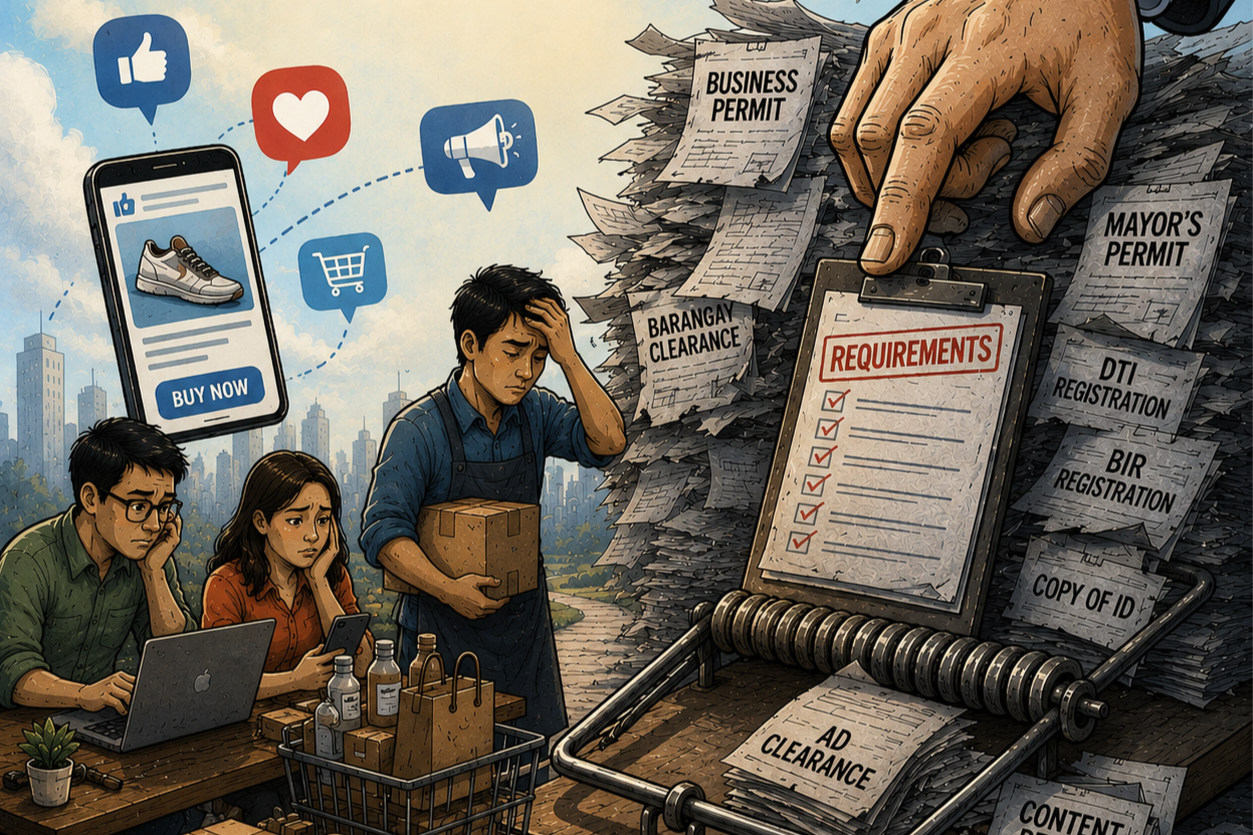

In fast-growing economies, governments often face a familiar temptation: regulate first, explain later. The Philippines nearly stumbled into that trap this week.
What began as a drafted Department Administrative Order (DAO) from the Department of Trade and Industry (DTI) proposing a pre-clearance framework for advertisements and sales promotions quickly triggered backlash from entrepreneurs, online sellers, and lawmakers—including Senator Bam Aquino.
The criticism was swift and, in many ways, predictable. At a time when small businesses are struggling with inflation, volatile fuel prices, logistics costs, and weakening consumer demand, the idea of requiring permits before posting advertisements online felt less like consumer protection and more like bureaucratic overreach.
To its credit, the DTI moved quickly to clarify that the proposal was merely an internal draft and “will not be finalized or enforced.” That response mattered. It helped defuse concerns from micro, small, and medium enterprises (MSMEs) already struggling with a difficult operating environment.
Still, the controversy revealed something deeper: an enduring disconnect between how regulators think and how modern businesses actually operate.
Today’s economy moves in real time. A small online seller promoting homemade pastries on Facebook, a startup launching a flash sale on TikTok, or a neighborhood retailer posting a weekend promo on Instagram cannot function on a government timeline built for paper permits and physical filing cabinets. In digital commerce, speed is not a luxury. It is survival.
That is why the reported proposal alarmed many entrepreneurs. According to the criticism raised, businesses could have faced fees ranging from hundreds to thousands of pesos per advertisement, alongside waiting periods that reportedly stretched up to a month. For large corporations with compliance departments and legal teams, this might merely be inconvenient. For MSMEs, it could threaten growth and survival.
The Philippines cannot claim to support entrepreneurship while simultaneously treating every small seller like a regulatory risk waiting to happen.
MSMEs account for 99.5% of businesses in the Philippines and employ millions of Filipinos, according to data from the DTI. They are not peripheral players in the economy; they are the economy. When regulation becomes excessively complicated, it does not hurt conglomerates first. It hurts the small shop vendor experimenting with online selling, the young entrepreneur building a startup from home, and the provincial business owner trying to reach customers through digital platforms.
None of this means consumer protection should be abandoned. Fraudulent advertisements, fake discounts, counterfeit products, and deceptive online promotions remain genuine problems. Governments have a legitimate role in protecting consumers from scams and misinformation. But there is a crucial distinction between targeted enforcement and blanket bureaucracy.
Good regulation punishes bad actors. Bad regulation punishes everyone equally.
The more intelligent approach is not pre-approval of every advertisement, but stronger enforcement against deceptive practices after violations occur. That means improving digital monitoring capabilities, strengthening complaint mechanisms, coordinating with platforms, and penalizing repeat offenders swiftly and visibly. It means precision, not paperwork.
What made the proposed DAO particularly tone-deaf was timing. The Philippine economy needs more entrepreneurial energy, not more hesitation. Across Southeast Asia, governments are competing to attract startups, encourage digital commerce, and lower barriers to entry for small enterprises. The countries that succeed will be those that make business creation easier, faster, and cheaper—not those that add another signature, another fee, and another queue.
In many developing economies, excessive regulation unintentionally protects incumbents. Large corporations can absorb compliance costs. Small competitors cannot. The result is a quieter form of market consolidation where bureaucracy becomes a moat guarding established players from emerging challengers.
That is the irony policymakers often miss: regulations written in the language of fairness can end up entrenching inequality.
The DTI deserves recognition for withdrawing from the proposal before damage was done. Its public clarification signaled an awareness that innovation and competitiveness require regulatory restraint as much as regulatory presence. But the episode should serve as a warning about the instinct toward overregulation that still lingers in parts of government.
The real challenge for economic managers is not how to supervise every business activity before it happens. It is how to create an environment where more Filipinos feel confident enough to start businesses in the first place.
That means reducing red tape, simplifying taxation, digitizing permits, improving access to capital, and making compliance proportional to business size. A vendor selling products online should not face the same administrative burden as a multinational corporation. The challenge is finding the balance between consumer protection and entrepreneurial freedom.
Entrepreneurship thrives when governments create space for businesses to grow. Filipinos do not lack entrepreneurial drive. What they need is a business environment where small enterprises are allowed to compete, expand, and succeed.
Stay updated—follow Philippines Today on Facebook and Instagram, and subscribe on YouTube for more stories.