

With Vice President Sara Duterte declaring her intention to seek the presidency in 2028, attention now turns to a more consequential decision: who she chooses as her running mate—and what that choice reveals about the coalition she intends to build.
That choice will be more than symbolic. In Philippine politics, the vice-presidential slot often functions as a bridge—to regions, to party machinery, to specific voter blocs. It can consolidate loyalty or expand reach. It can steady markets or electrify rallies. Above all, it signals whether a candidate intends to fortify a core base or broaden into the pragmatic middle that typically decides national elections.
This analysis, however, proceeds on a necessary constitutional assumption: that she is not convicted in any impeachment proceeding. Under Philippine law, a Senate conviction in an impeachment trial results in removal from office and permanent disqualification from holding any public office, without prejudice to separate criminal proceedings. An impeachment conviction would therefore end any presidential path. What follows assumes that scenario does not materialize.
Recent surveys by Social Weather Stations and Pulse Asia have shown Duterte with high national awareness and competitive trust ratings, even as she navigates legal and political headwinds. That resilience gives her room to maneuver. It also raises the stakes. The vice-presidential pick will signal whether she intends to fortify a loyal base, widen her reach to the pragmatic center, or underscore managerial competence.
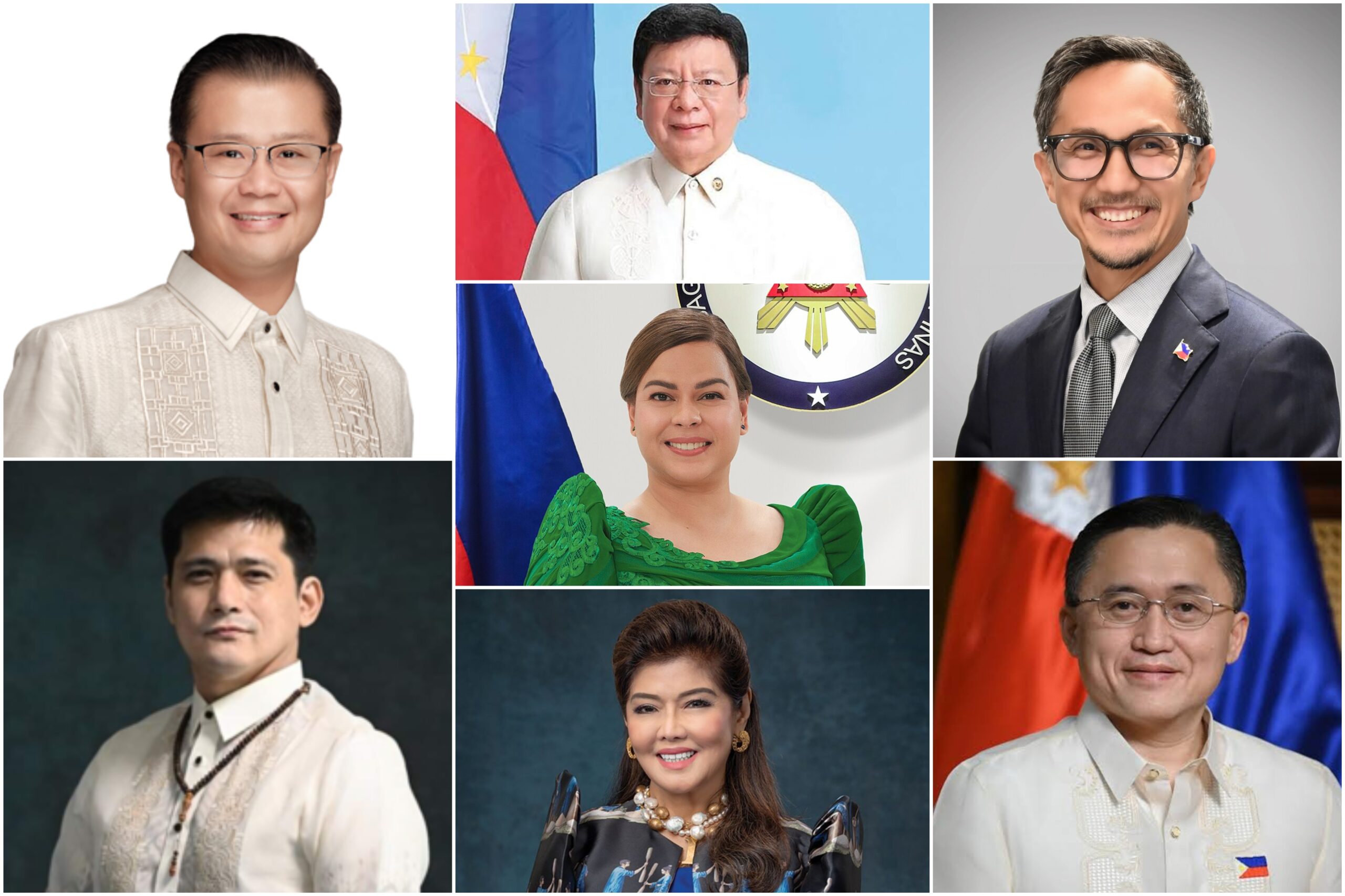
Six pairings stand out.
Duterte-Marcoleta
A Duterte–Marcoleta ticket would speak in a language of conviction. Senator Rodante Marcoleta’s disciplined, ideological posture complements Duterte’s firm, law-and-order brand. Supporters would see coherence; the base would feel consolidated.
But taking a firm stance can also divide voters. Loyal supporters may rally strongly behind it, but undecided urban voters could hold back if they see the platform as too rigid. The advantage is energizing the base; the downside is limiting broader support. The campaign would need to show that being tough does not mean being unwilling to listen or adjust.
Duterte-Marcos
An all-female ticket with Senator Imee Marcos would be symbolically powerful and organizationally formidable. Marcos brings national recall and established provincial networks. The pairing could consolidate machinery across key regions.
But in Philippine politics, lineage invites both loyalty and debate. Admirers may see continuity; critics may revisit history. The strength of this tandem would lie in consolidation. Its vulnerability would lie in persuasion beyond established spheres of support. The campaign’s success would hinge on anchoring the narrative in present-day economic governance rather than inherited identities.
Duterte–Padilla
Senator Robin Padilla offers instinctive rapport and broad public recognition. A Duterte–Padilla slate would command attention and potentially mobilize voters who respond to personality and accessibility.
Charisma, however, must translate into confidence. Excitement on the campaign trail must be matched by reassurance in economic management and diplomacy. The opportunity is expanded emotional reach; the test is policy credibility. With clear messaging and a strong, visible team of credible advisers, personal appeal on the ground can go hand in hand with steady and reliable governance.
Duterte–Dizon
A Sara Duterte – Vince Dizon partnership would send a measured signal: governance first. Dizon’s executive background in large public projects suggests administrative focus and managerial continuity. The current DPWH secretary is widely seen as a technocrat focused on delivering results rather than playing retail politics.
Such a pairing could reassure investors and centrist voters seeking predictability. Yet technocratic profiles rarely electrify rallies. Any past administrative controversies would resurface under scrutiny. The advantage lies in credibility; the challenge lies in emotional resonance. The campaign would need to translate competence into a compelling narrative of national progress.
Duterte-Go
A Sara Duterte – Bong Go tandem would signal continuity and loyalty. As a longtime Duterte ally, Go reinforces the family’s political network and could consolidate core supporters, particularly in Mindanao. The pairing would project cohesion and familiarity—qualities valued by their base.
The challenge would be expansion. While the tandem could energize loyal voters, it may face questions about its ability to attract undecided and urban constituencies. To widen appeal, the ticket would need to present a clear, forward-looking agenda beyond continuity.
Duterte-Gatchalian
A centrist legislator such as Senator Sherwin Gatchalian offers policy fluency, particularly in education and energy reform. His presence could reassure middle-class and business constituencies looking for pragmatic solutions.
He brings steadiness rather than spectacle. The strength of this pairing would be balance—populist appeal complemented by legislative experience. Its limitation would be the absence of dramatic momentum. The campaign would depend on Duterte’s machinery for energy while drawing on Gatchalian’s credibility to anchor debate.
Beyond the base
Eligibility comes first. The impeachment issue remains a constitutional hurdle: a Senate conviction would mean removal from office and permanent disqualification. If that does not happen, the focus shifts from legal survival to political arithmetic—building a coalition broad enough to win.
Philippine presidential elections are decided by addition, not by energizing loyal backers alone. Each potential running mate brings a distinct strength—a solid base, strong networks, public appeal, policy credibility, or administrative experience. The real test is which pairing can persuade undecided voters concerned about the cost of living, employment, health care, and reliable public services.
Stay updated—follow Philippines Today on Facebook and Instagram, and subscribe on YouTube for more stories.