
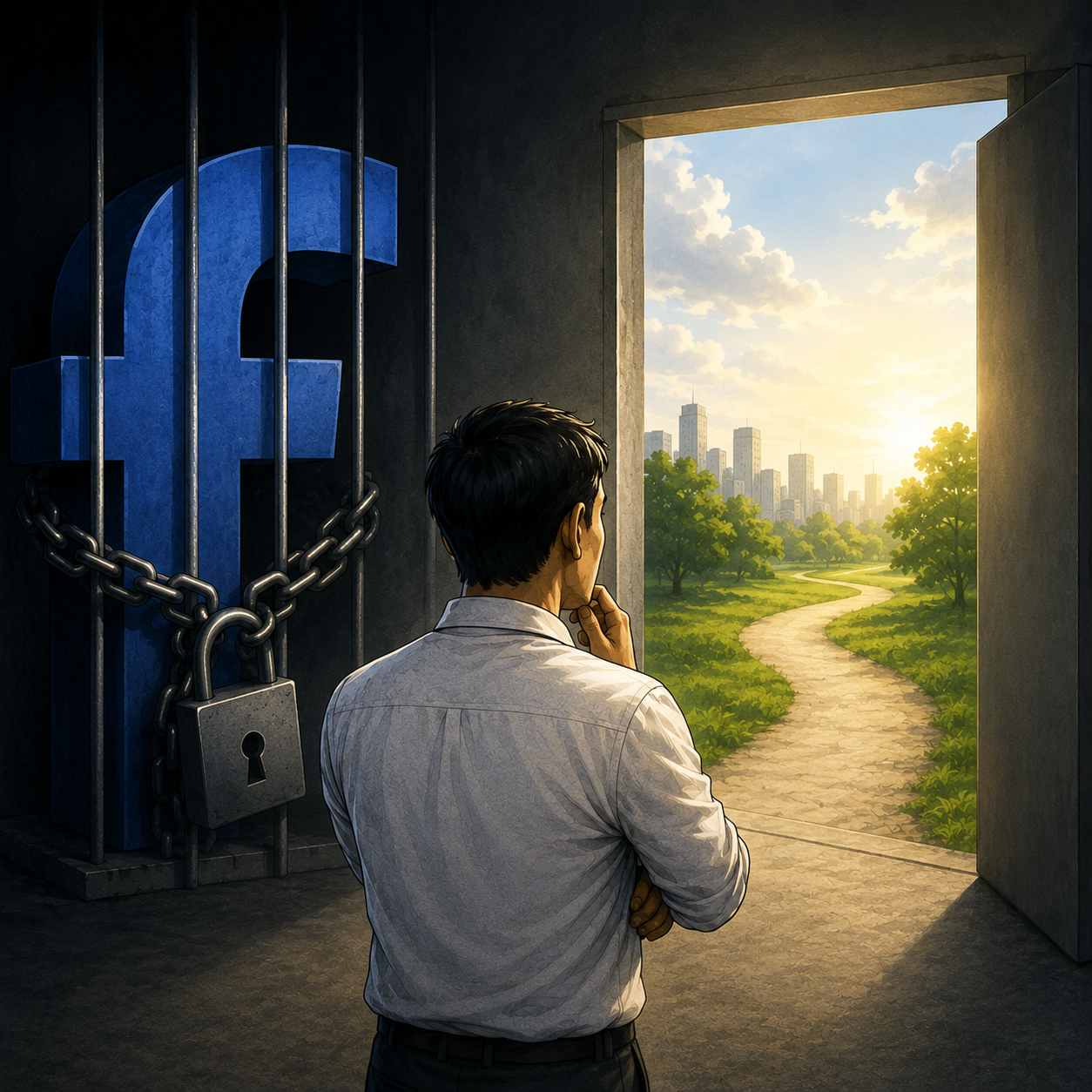

There are moments when public outrage makes the toughest solution sound like the right one. The livestreamed shooting at Ateneo de Zamboanga University was one of those moments. A horrific act of violence unfolded in real time on Facebook and, despite authorities reporting it within minutes, the video remained online for about 14 minutes before it was removed. That delay has prompted Philippine regulators to study an extraordinary response: banning or geo-blocking Facebook nationwide.
The outrage is understandable. The proposal deserves equally careful scrutiny.
Before the country considers one of its most sweeping digital policy decisions, it is worth asking a simple question: Will banning Facebook solve the problem, or simply create new ones?
The recommendation surfaced during a Senate committee hearing after Cybercrime Investigation and Coordinating Center (CICC) executive director Renato “Aboy” Paraiso said authorities flagged the livestream roughly five minutes after it was detected, yet Meta did not remove it immediately. Senator Risa Hontiveros criticized the social media company’s absence from the hearing, arguing that technology platforms operating in the Philippines should be more responsive when public safety is at stake. Malacañang has since said it is open to reviewing the proposal, emphasizing that the goal is accountability and stronger online safety—not restricting legitimate speech.
Those concerns are legitimate. The Zamboanga incident raises difficult questions about how quickly global platforms respond during emergencies, how they protect children from harmful content, and how governments should hold technology firms accountable when their systems fall short. No global platform operating at Facebook’s scale should be exempt from scrutiny when its moderation systems appear to fall short during a public safety emergency.
But acknowledging those shortcomings does not automatically make a nationwide Facebook ban the right policy response.
The Philippines is one of Meta’s largest markets in Southeast Asia, with more than 90 million users across Facebook, Messenger, and Instagram. For millions of Filipinos, Facebook is no longer simply a social networking site. It has become a marketplace for small businesses, a communications tool for families, a customer service channel for entrepreneurs, and an important source of news and public information.
The economic consequences of a shutdown would be difficult to ignore. More than 99% of registered business establishments in the Philippines are micro, small and medium enterprises (MSMEs), according to the Department of Trade and Industry. Many rely on Facebook Pages, Marketplace and Facebook Live as their primary sales channels, while countless informal sellers use Messenger to receive orders and serve customers. The DTI has also been encouraging MSMEs to expand through e-commerce and social media because digital platforms have become essential to reaching wider markets.
That is why this debate should not be framed as a choice between child safety and digital freedom. The real challenge is finding a policy that protects both.
History suggests that banning an entire platform rarely eliminates the problems that exist on it. Harmful content, misinformation and criminal activity often migrate to other services, encrypted channels or virtual private networks. Meanwhile, ordinary users and legitimate businesses bear the immediate cost of losing access. Digital policy organizations, including Mozilla and the Internet Society, have argued that network-level blocking is a disproportionate response to platform moderation failures because it disrupts legitimate internet use without addressing the underlying weaknesses in platform governance.
The Philippines should also consider the precedent such a move would create. The power to block a platform used by nearly every Filipino is an extraordinary one that should be exercised only under the narrowest circumstances and with clear legal safeguards. Once that precedent is established, future governments could face pressure to apply the same tool in different contexts. That is a conversation that extends well beyond Facebook.
Fortunately, there are more targeted and potentially more effective options.
Instead of banning Facebook, regulators can require Meta to strengthen its emergency response systems in the Philippines, expand Filipino-language moderation, publish transparency reports on response times to violent incidents, and cooperate more closely with local authorities during verified public safety emergencies. If those standards are repeatedly not met, government agencies can pursue financial penalties, compliance orders and other remedies available under Philippine law. Similar approaches that emphasize transparency and accountability over outright bans have been adopted in other jurisdictions regulating large technology platforms, including under the European Union’s Digital Services Act.
This is not about giving Meta a free pass. The Zamboanga tragedy exposed serious questions about whether its moderation systems are fast enough during critical incidents, and those questions deserve answers, stronger safeguards and measurable commitments from the company. Public safety, especially the protection of children, should remain non-negotiable.
But good policy is measured not only by its intentions, but also by its consequences. A Facebook ban may appear decisive, yet it risks punishing millions of Filipinos who had nothing to do with the platform’s shortcomings. It would interrupt businesses, communication and access to information while offering no guarantee that violent content or misinformation would disappear.
The impulse to ban Facebook is understandable, but public policy should be guided by evidence, not outrage. Before the Philippines pulls the plug on one of the world’s largest digital platforms, it should think before taking any drastic action. The better path is accountability through oversight, not prohibition through a ban.
Stay updated—follow Philippines Today on Facebook and Instagram, and subscribe on YouTube for more stories.