
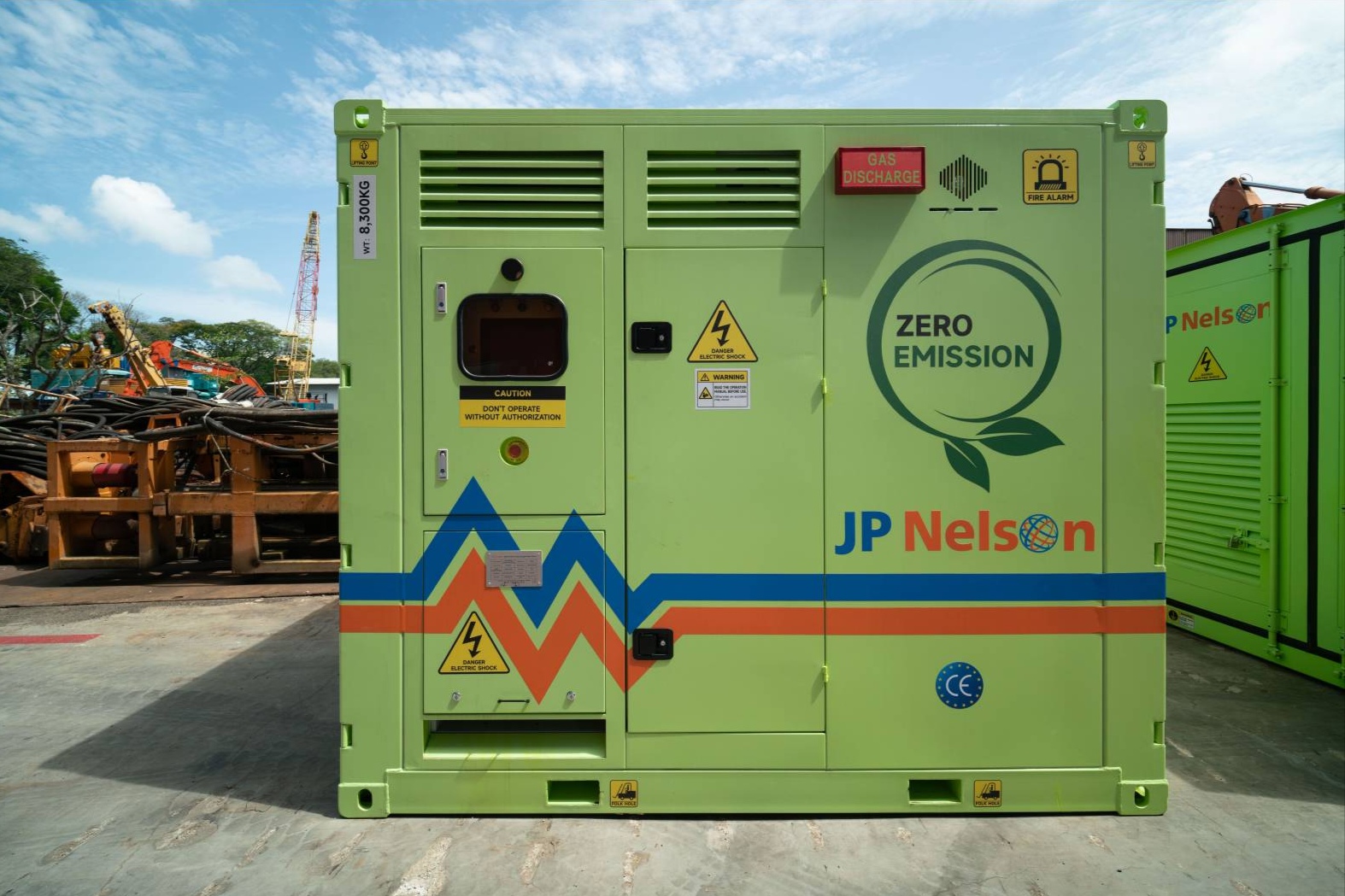

For companies grappling with soaring fuel prices and rising maintenance expenses, replacing diesel generators with battery energy storage systems may no longer be an environmental decision—it could be a financial one.
According to Jay Lim, a system analyst specializing in battery energy storage systems (BESS) at Singapore-based JP Nelson Equipment Pte. Ltd., businesses can reduce operating costs by as much as 80% to 90% by pairing BESS with renewable energy sources such as solar panels or the power grid.
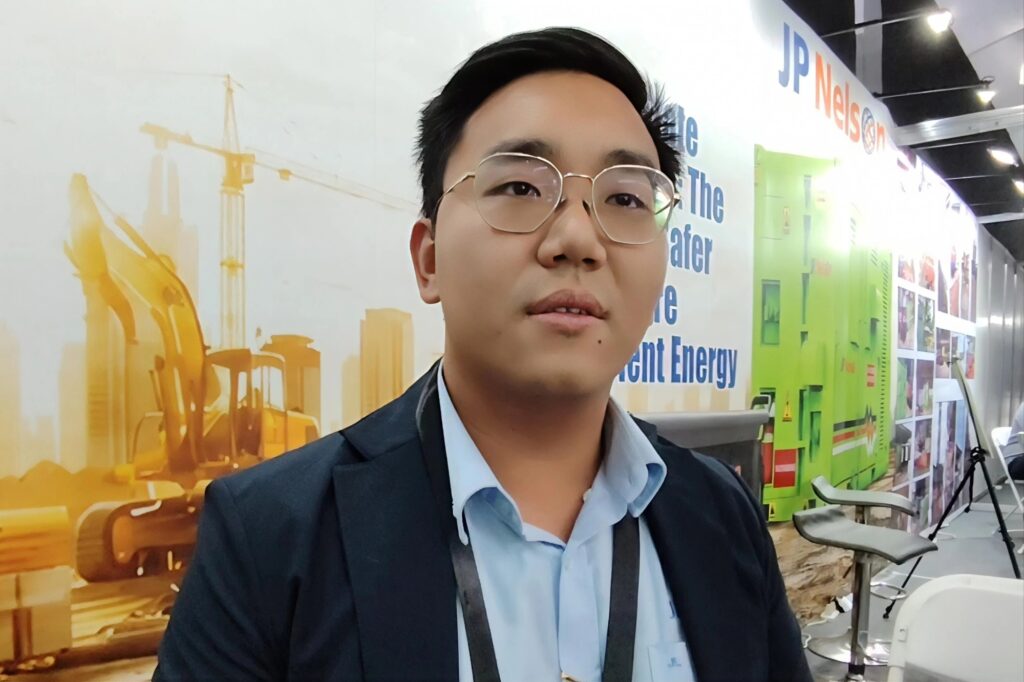
Even without renewable energy, companies can still cut fuel and maintenance costs by 40% to 60% by pairing BESS with a smaller diesel generator, he added.
“The battery energy storage system is similar to a large power bank,” Lim said. “So what you need, it will help to provide you with the electricity. It stores the energy and it is able to charge by renewable energy.”
The economics extend beyond fuel consumption. Conventional generators require regular oil changes, filter replacements, engine servicing, and frequent site visits by maintenance crews. A BESS, by contrast, primarily requires coolant replacement every three to four months, while most diagnostics, software updates, and troubleshooting can be performed remotely through an online monitoring platform.
“So for them, if you switch to the BESS itself, you will have low maintenance,” Lim said. “The main thing about the BESS is that you only have this liquid cooling system that you need to pump up the coolant every three to four months. But for your typical generator, every month you require servicing.”
That shift also reduces manpower requirements, travel expenses, and equipment downtime. Instead of dispatching technicians to multiple project sites every month, companies can monitor and resolve most issues from a central operations center.
“Everything can be monitored online,” Lim said. “Any issues happen, we can, from the backend on the internet to the system itself, we can control and monitor, we can test, upgrade security patch, we can fix the issue without going to the site.”
The savings become even more pronounced in heavy-duty applications. Lim cited tower crane operations, where a traditional 400-kVA diesel generator typically runs throughout a 12-hour workday. With BESS, the same operation can rely on a much smaller 40- to 60-kVA generator that only needs to run three to four hours daily to recharge the battery system.
Beyond construction sites, battery storage is finding applications wherever uninterrupted electricity is essential. Hospitals, commercial buildings, data centers, and other critical facilities can use the technology as backup power during outages while maintaining a stable electricity supply. The systems can also store electricity generated by solar panels or the grid, functioning much like a large-scale rechargeable power bank.
Environmental considerations are another factor driving interest in BESS. Lim described the technology as “a new green technology” with “low emission, low sound, and it is eco-friendly,” contrasting it with conventional diesel generators.
Founded in Singapore in 1992, JP Nelson Equipment Pte. Ltd. has grown from an industrial equipment supplier into a regional provider of construction and infrastructure solutions, specializing in equipment sales, leasing, and servicing across Asia. The company is now positioning battery energy storage systems as part of its expanding portfolio as industries seek cleaner and more cost-efficient power solutions.
Lim sees strong potential for wider adoption of BESS in the Philippines, saying the technology can help businesses reduce operating costs while providing a more reliable source of power.
“It’s a very good prospect, I see,” he said. “Helping the Philippine side to have a good saving with the BESS and also give them a stable output. So, they do not need to worry about too much of a power outage at times and also have a reliable energy solution.”
Stay updated—follow Philippines Today on Facebook and Instagram, and subscribe on YouTube for more stories.