

The beauty industry’s long-running promise of “anti-aging” is giving way to a different approach: healthy aging.
Instead of chasing a younger face, aesthetic medicine is increasingly focused on preserving facial harmony—understanding how the face changes over time while helping people continue to look like themselves.
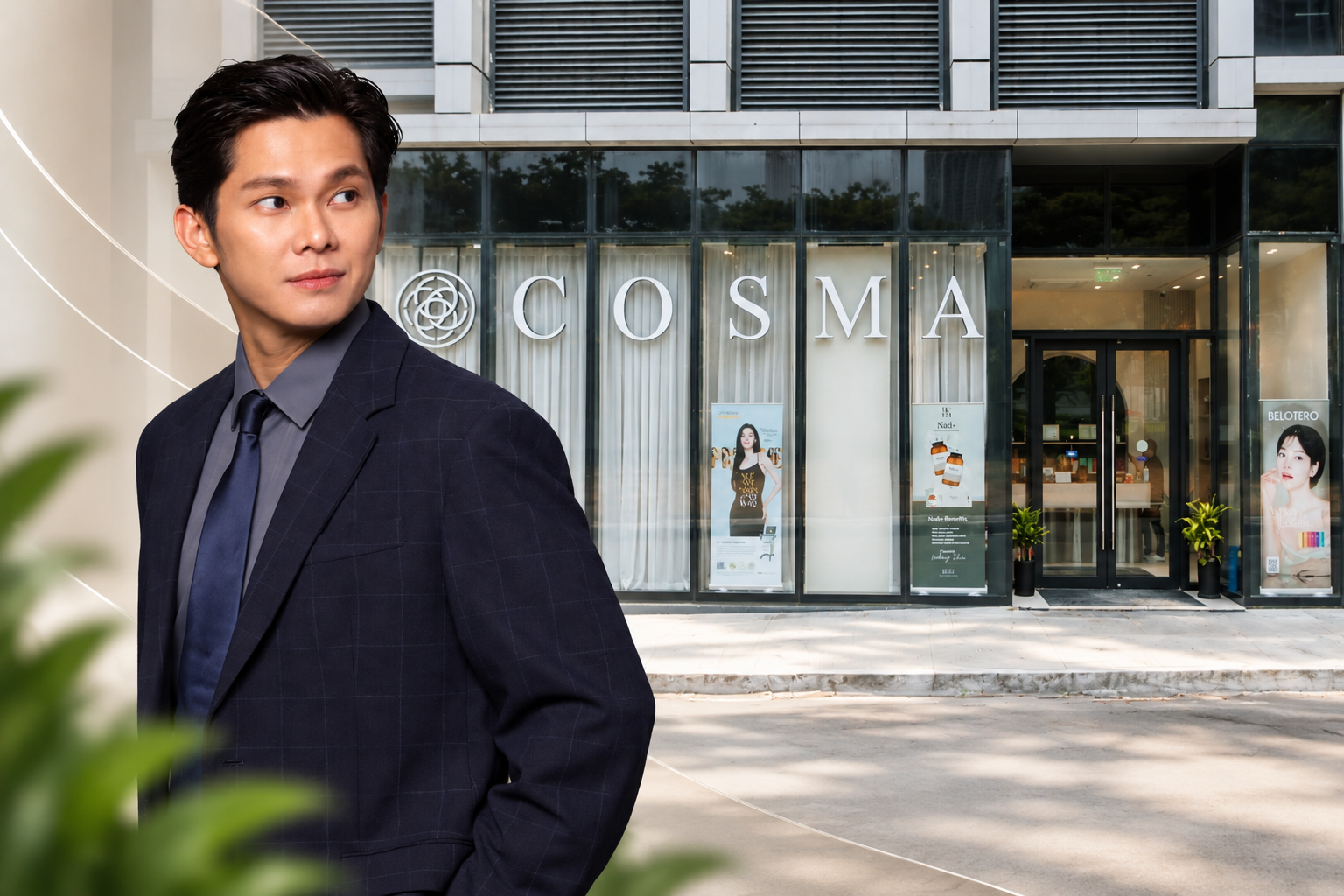
For Dr. James Co, founder of Cosma Institute and a multi-awarded aesthetic physician, that shift begins with recognizing that aging is not just about wrinkles. It is a biological process that affects every layer of the face, with different structures changing at different rates.
“Aging is not a disease we need to cure,” Co said. “It is a biological process. As physicians, our role is to understand what is changing beneath the surface, how those changes differ from person to person, and whether intervention is appropriate in the first place.”
Facial harmony starts beneath the skin
Scientific research shows facial aging is more complex than lines and sagging skin. Reviews published in Facial Plastic Surgery and the Aesthetic Surgery Journal describe aging as a gradual process involving changes in the skin, fat, muscles, ligaments, and even the facial skeleton.
Research published in Plastic and Reconstructive Surgery also found that facial fat is arranged in distinct anatomical compartments. As those compartments lose volume or shift position over time, they can change the contours and balance of the face.
For Co, those changes explain why facial harmony—the way facial features relate to one another—is a better guide than focusing on a single wrinkle or isolated concern.
“When you only look at the wrinkle, you are looking at the surface of a much bigger anatomical process,” Co said. “The face ages as a system. Good assessment means understanding what is happening underneath before deciding what should be done on the surface.”
No single formula for aging well
Two people can be the same age and still experience facial aging differently. Genetics, bone structure, fat distribution, skin quality, sun exposure, lifestyle, and environmental factors all influence how aging appears.
That means treatment should be tailored to the individual, not copied from someone else.
“Two patients can be the same age and come to me with completely different anatomy, lifestyles, concerns, and goals,” Co said. “Why would we expect their treatment plans to look exactly the same?”
Healthy aging, he said, is about looking refreshed without losing the characteristics that make a face recognizable.
“Someone can want to look refreshed without wanting to look 20 years younger,” he said. “Those are completely different goals.”
Preserving balance, not freezing time
As facial structures change at different speeds, the relationship between facial features also evolves. Co said physicians should assess the whole face and determine whether an intervention supports overall balance rather than simply treating one visible sign of aging.
“You cannot freeze one version of your face forever,” Co said. “But you can understand how the face is changing and make decisions that respect its natural proportions and your identity.”
He also cautioned against relying on social media to diagnose aesthetic concerns.
“Patients should not have to diagnose themselves from social media,” Co said. “You might recognize a concern, but deciding why it is happening and what should be done about it requires proper assessment.”
Looking like yourself
The conversation around facial aging is also expanding beyond appearance. A 2022 review of minimally invasive facial aesthetic procedures examined patient-reported outcomes such as satisfaction with appearance and aspects of psychological and social well-being, while noting that the evidence still has important limitations.
For Co, those findings reinforce the importance of understanding what patients hope to achieve before recommending treatment.
“We need to ask whether the result makes sense for the patient, whether expectations were met, and whether we preserved the things that make that person recognizable,” he said.
Success, he added, is not always about looking dramatically younger.
“I would rather someone tell my patient, ‘You look well,’ than immediately ask, ‘What did you have done?’”
At Cosma Institute, Co applies a consultation-led approach that emphasizes medical assessment, patient education, and natural-looking outcomes. Having trained aesthetic practitioners across Southeast Asia and Europe, he advocates using treatments only when they support facial harmony rather than follow trends.
For Co, the future of aesthetic medicine is not about stopping age, but understanding it.
“Aging cannot be stopped, and I don’t think that should be the promise,” Co said. “What we can do is understand it better. We can look at the science, understand the anatomy, listen to the patient, and make decisions that allow them to age while still looking recognizably like themselves.”
Stay updated—follow Philippines Today on Facebook and Instagram, and subscribe on YouTube for more stories.