
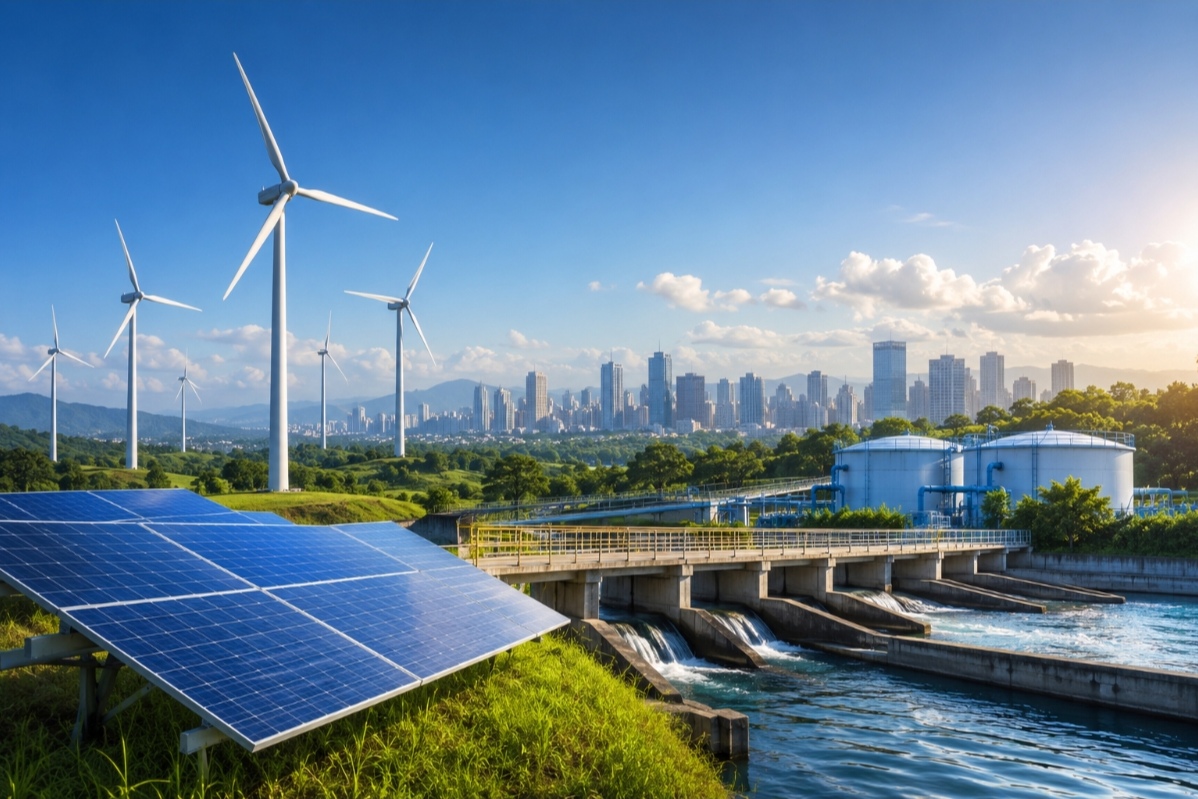

The World Bank Group approved $1.02 billion in financing for the Philippines to accelerate its shift to renewable energy, lower electricity costs, and strengthen water services, backing government efforts to reduce dependence on imported fossil fuels and improve infrastructure.
The financing package, approved last month, consists of a $1 billion loan from the International Bank for Reconstruction and Development (IBRD) and a $20 million performance-based grant from the Livable Planet Fund. It is among the largest IBRD operations approved for the Philippines and supports reforms under the government’s Philippine Development Plan 2023-2028 and AmBisyon Natin 2040.
The Second Energy Transition and Climate Resilience Development Policy Loan (DPL) aims to expand domestic energy production, attract private investment, and reduce the country’s exposure to volatile global fuel prices while improving access to reliable electricity.
The World Bank said the operation is designed to strengthen the country’s regulatory framework and market architecture, providing greater certainty for investors while encouraging larger flows of private capital into the energy sector.
“The Philippines has everything it needs to power itself at lower cost—wind along its coasts, sunlight year-round, and geothermal energy beneath its soil,” said Zafer Mustafaoğlu, World Bank division director for the Philippines, Malaysia, and Brunei.
“This operation helps turn those natural advantages into reliable, affordable electricity for Filipino families and businesses. At a time when global energy markets are deeply volatile, this DPL helps the Philippines take control of its own energy future, support growth, and create jobs,” Mustafaoğlu added.
The program supports key energy reforms, including the full operationalization of the Renewable Energy Market, integration of electric vehicle charging into utility planning, and the country’s first offshore wind auction, which targets 3.3 gigawatts of contracted capacity by 2030. The World Bank said the initiative could mobilize about $7 billion in private investment while creating jobs across the energy sector.
The government also aims to increase renewable energy’s share of installed generating capacity to 42% by 2027 from 30%, broadening the energy mix and reducing reliance on imported fuels. The reforms are intended to help stabilize electricity prices for households and businesses while improving the country’s long-term energy security.
The financing also targets long-standing challenges in the water sector, where more than 1,600 local government units oversee water services but often face funding and capacity constraints. Planned reforms include cost-recovery tariff systems, a unified financing framework prioritizing poor and climate-vulnerable communities, and bulk water pricing regulations. The program seeks to increase the number of local water providers operating under sustainable business plans to 100 by 2027 from 10.
The World Bank said the operation was developed through consultations with government agencies, utilities, private sector stakeholders, consumer groups, civil society organizations, and local government units to ensure the reforms address the needs of communities while supporting sustainable infrastructure development.
The World Bank said the operation builds on an earlier policy loan that established the legal framework for offshore wind development, launched the electricity reserve market, expanded retail energy competition, and laid the groundwork for more sustainable local water services.
It added that the latest financing underscores its long-term commitment to helping the Philippines deliver affordable, reliable, and sustainable electricity while building a more resilient, job-rich economy.
Stay updated—follow Philippines Today on Facebook and Instagram, and subscribe on YouTube for more stories.