
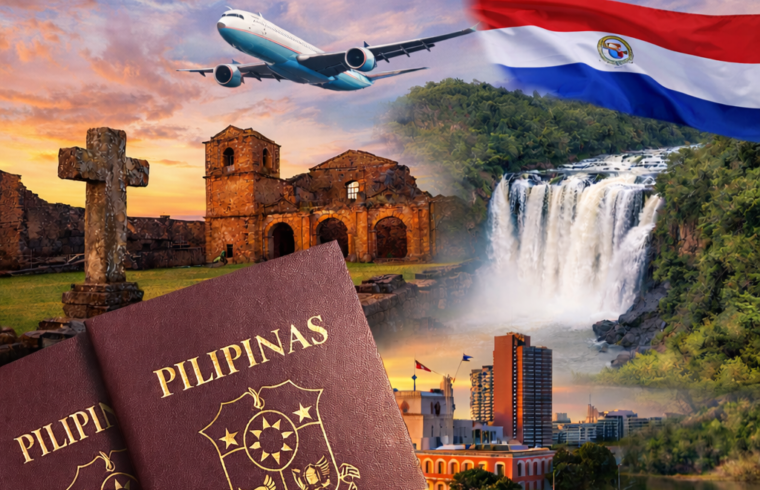
From the red-earth plains of South America’s heartland to river cities shaped by centuries of trade, Paraguay has long been a place travelers stumble upon rather than seek out. That may soon change, as Filipinos can now enter the country visa-free for short stays, removing one of the last barriers to discovering one of the continent’s most overlooked destinations.
Under a presidential decree issued in late December 2025, Paraguay lifted visa requirements for Philippine passport holders visiting for up to 30 days. The policy follows the principle of reciprocity, reflecting the fact that Paraguayans have long enjoyed visa-free access to the Philippines for short visits.
It also fits squarely within the government’s push for openness and stronger ties with Asian nations, signaling a quiet but meaningful shift in how the landlocked South American country positions itself on the global stage.
The visa-free status is now formally listed by Paraguay’s national migration authorities, making it official, straightforward, and traveler-friendly.
For Filipino travelers accustomed to Southeast Asia’s tropical density and Europe’s well-trodden routes, Paraguay offers something refreshingly different: space, slowness, and stories that are still rooted in place rather than performance.
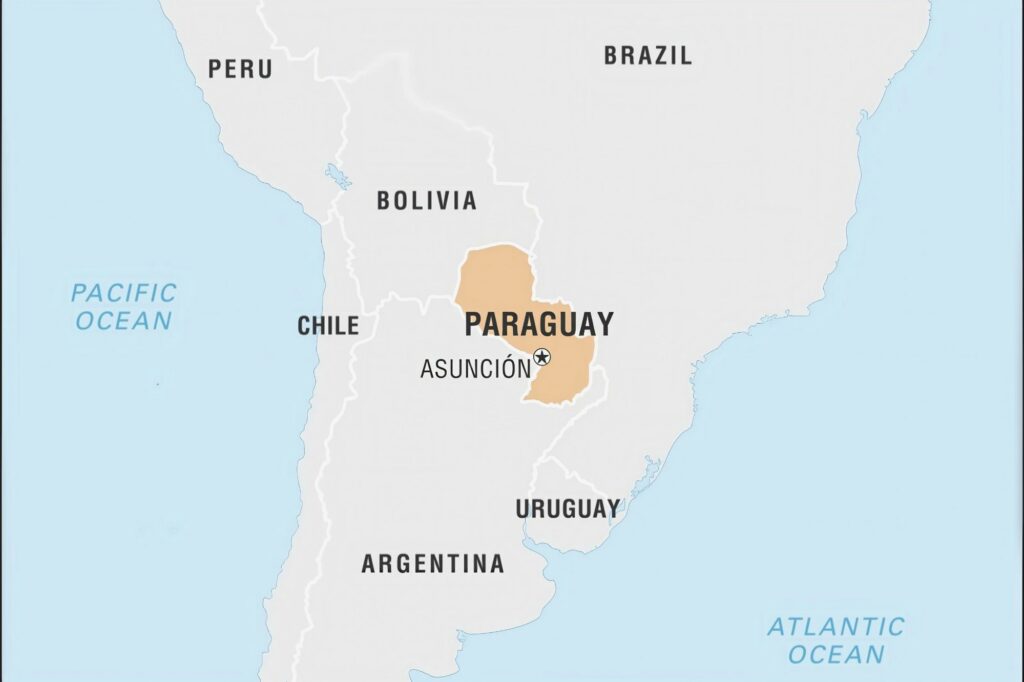
Sitting at the geographic heart of South America, the country is shaped by two great rivers—the Paraguay and the Paraná—and by layers of Indigenous Guaraní and Spanish colonial history that coexist to this day. Guaraní remains a living, spoken language alongside Spanish, woven into daily life, food, and customs in ways few other countries can claim so seamlessly.
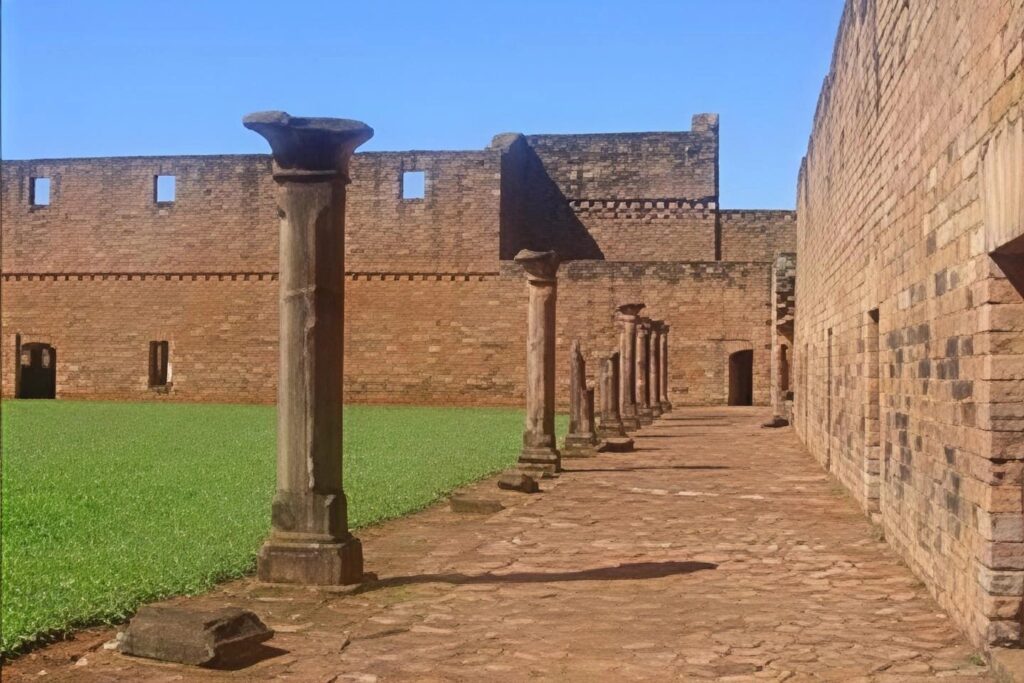
History lovers will find Paraguay quietly astonishing. In the southern part of the country stand the Jesuit Missions of La Santísima Trinidad de Paraná and Jesús de Tavarangüé, UNESCO-listed ruins that rise from green fields like stone memories of an ambitious 17th-century social experiment. Built by Jesuit missionaries with Guaraní communities, these complexes were once centers of faith, learning, and self-governance. Walking through their arches and plazas today, visitors sense both grandeur and loss, with wide skies and birdsong filling spaces once alive with ritual and labor.
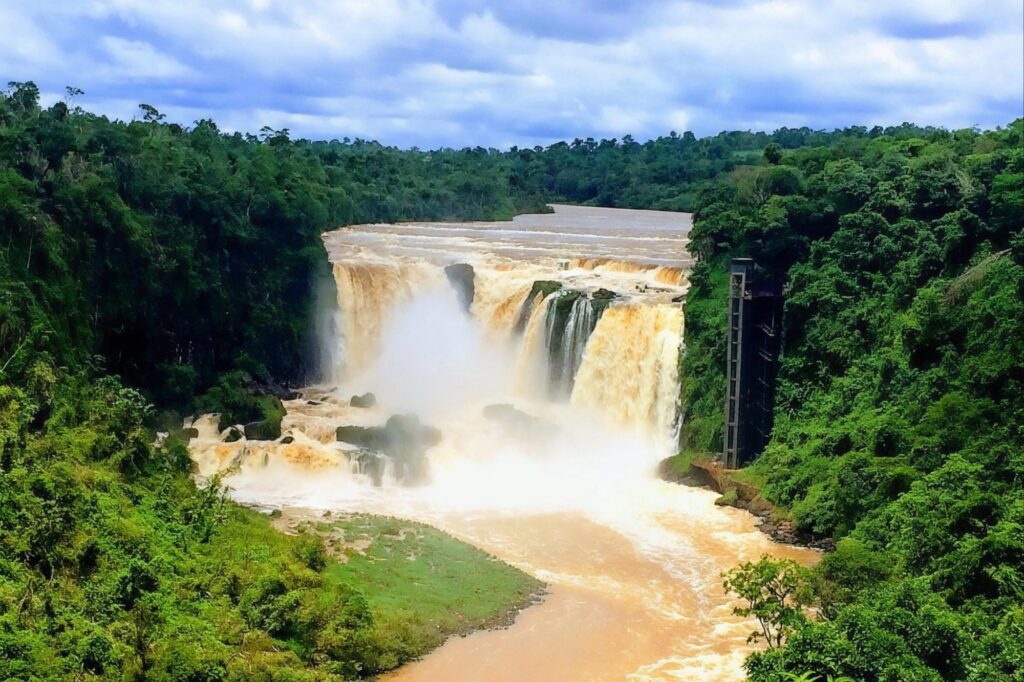
Nature is never far away. Just outside Ciudad del Este, the Saltos del Monday waterfalls thunder into a forested gorge, offering a dramatic counterpoint to the city’s reputation for relentless commerce. Further south, Ybycuí National Park shelters jungle trails, swimming holes, and smaller cascades, while the massive Itaipú Dam—one of the world’s largest hydroelectric plants—stands as a monument to human engineering on the Paraná River. To the west stretches the Gran Chaco, an immense and sparsely populated region of thorn forests and wetlands where jaguars, armadillos, and hundreds of bird species still roam. It is not an easy destination, but for eco-tourists, it offers some of the wildest landscapes left on the continent.
Paraguay’s cities move at a gentler rhythm. In Asunción, the capital, colonial façades, open-air markets, and government buildings sit beside riverfront promenades along the Paraguay River. Neighborhoods like Loma San Jerónimo burst with color, murals, and local eateries, while the Costanera provides evening views of the sunset reflecting off the water. A short drive away, the lakeside town of San Bernardino offers a breezier escape, popular with locals during the hot summer months.
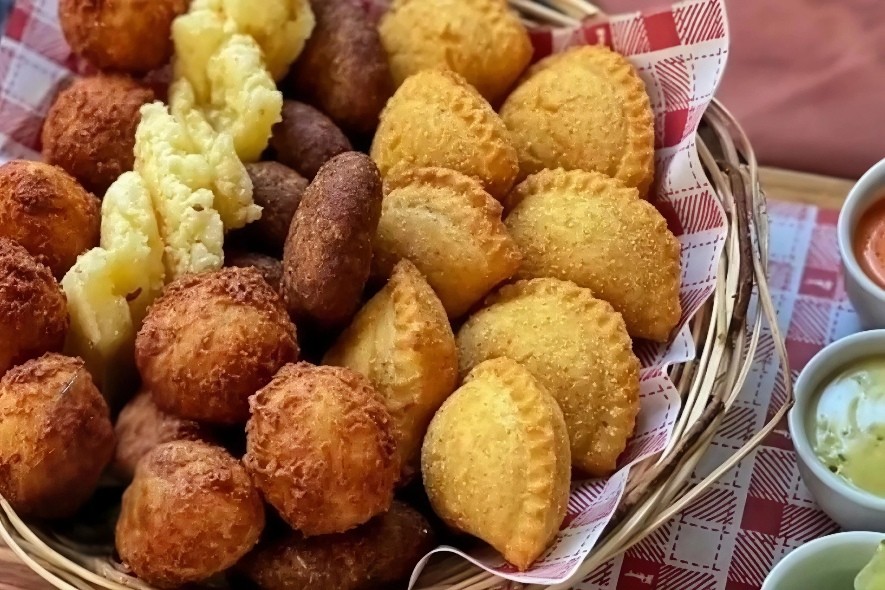
Culture in Paraguay is tactile and intimate. In towns like Itauguá, artisans still produce ao po’i, delicate hand-embroidered textiles, while nearby Areguá is known for pottery shaped from local clay. Food is simple, hearty, and deeply comforting: chipa, a dense cheese bread baked in clay ovens; sopa paraguaya, a savory cornbread despite its misleading name; and tereré, a cold herbal infusion shared communally throughout the day, especially in the heat.
Reaching Paraguay from the Philippines requires patience but rewards curiosity. There are no direct flights, and journeys typically take between 30 and 50 hours, with layovers in Europe, the Middle East, or the Americas.
Routes commonly involve a combination of major international airlines and may pass through transit countries with their own entry requirements, making careful planning essential. For those willing to make the long crossing, however, the journey itself becomes part of the story.
With the visa barrier removed, Paraguay is no longer just a name on the map for Filipino travelers—it is an open invitation. What awaits is a country that does not shout for attention, but reveals itself slowly, generously, and on its own terms.