
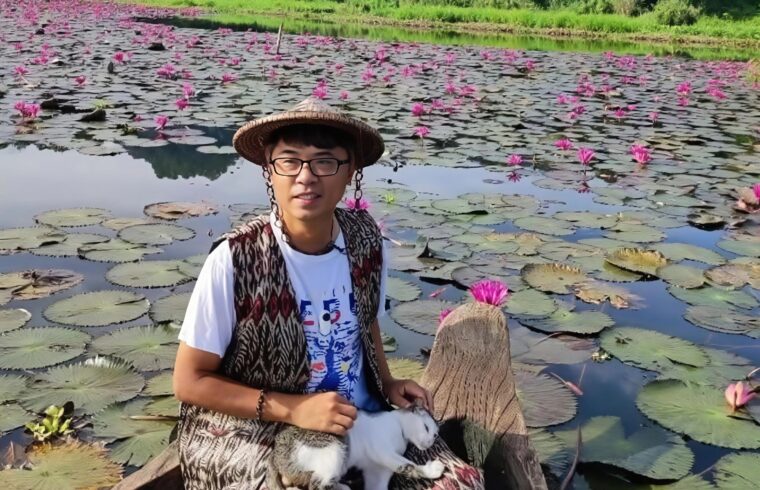

When Taiwanese national Justin Liu began exploring the Philippines more than a decade ago, he never imagined he would become the first known foreigner to set foot in all 82 of its provinces.
His milestone—quietly built over 15 years—will be formally recognized this December when the Philippine Global Explorers (PGE) awards him the title of Philippine Travel Master.
Liu, 37, shared in an interview with Esquire Philippines that his attachment to the country began long before the achievement took shape. “I have traveled around the Philippines for almost 15 years now because I love the Philippines,” he says. “I’m based in Manila now.”
Born and raised in Taipei City, he first arrived in Leyte in 2010 as a university volunteer, teaching Mandarin at a Catholic school in Tacloban. He knew little about the country then—only that it was close to Taiwan—but its landscapes quickly captivated him. “I started to love the nature of the Philippines,” he says. “That’s the main reason I stay here. The nature is really amazing.”
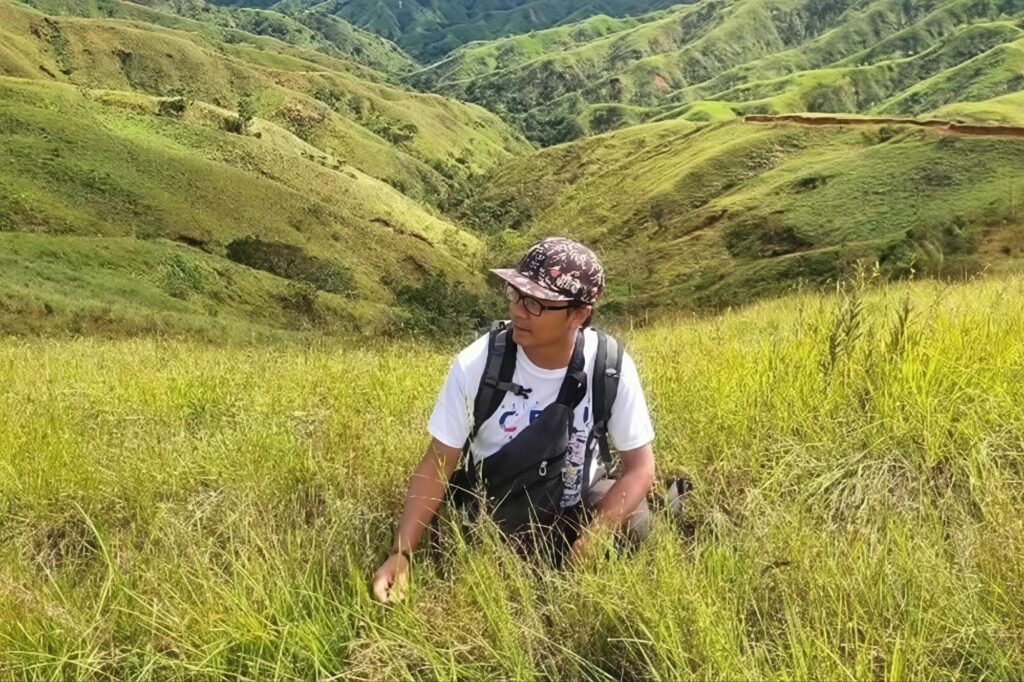
His travels were never driven by a checklist. Curiosity, not completion, pulled him deeper into the archipelago. A history major, Liu sought to understand how different communities lived and how culture shifted from island to island.
In 2013, he published a Chinese-language travel book about the Philippines, convinced at the time that he might be one of the few Taiwanese who could write about the country through firsthand experience. Over the years, he visited more than 2,000 destinations nationwide, averaging roughly 25 spots per province. He favored mountains with no marked trails, towns that rarely show up on itineraries, and islands that required patience and improvisation.
The last few provinces, however, pushed his persistence. Transportation, he says, was the real challenge—more than language or safety. Many routes lacked reliable schedules; some barely had online information at all.

Reaching Sulu, he said, required persuasion and luck. In Zamboanga City, he recalls being barred by the coast guard unless he secured a local guide, only to face a cancelled ferry. After convincing officials to let him board another vessel, he arrived in Sulu accompanied by three soldiers assigned for his safety. Quirino and Zamboanga Sibugay, both remote and underserved by public transport, were similarly difficult to access.
Despite these hurdles, Liu found what he considers the country’s greatest strength: its people. He remembers meeting a teacher on a bus who invited him and a roommate to stay the night, giving up her own bedroom for them. Encounters like that deepened his understanding of the Philippines, contrasting sharply with the more regulated life he knew in Taiwan.
He jokes that he speaks “kaunti lang” Tagalog, though he holds long conversations with ease and grasps uniquely Filipino words such as “kilig”. He has been swept into festivals by accident or by curiosity, joining the Magayon Festival in Albay and the Feast of the Black Nazarene in Quiapo, where he found himself amid millions of devotees.
His travels also sharpened his eye for what the Philippines has—rich culture, biodiversity, and warmth—and what it struggles with, especially transport systems that make remote travel difficult even for locals. Yet he also saw tourism officers, such as those in Sultan Kudarat, go to great lengths to welcome visitors and show what their provinces offered.
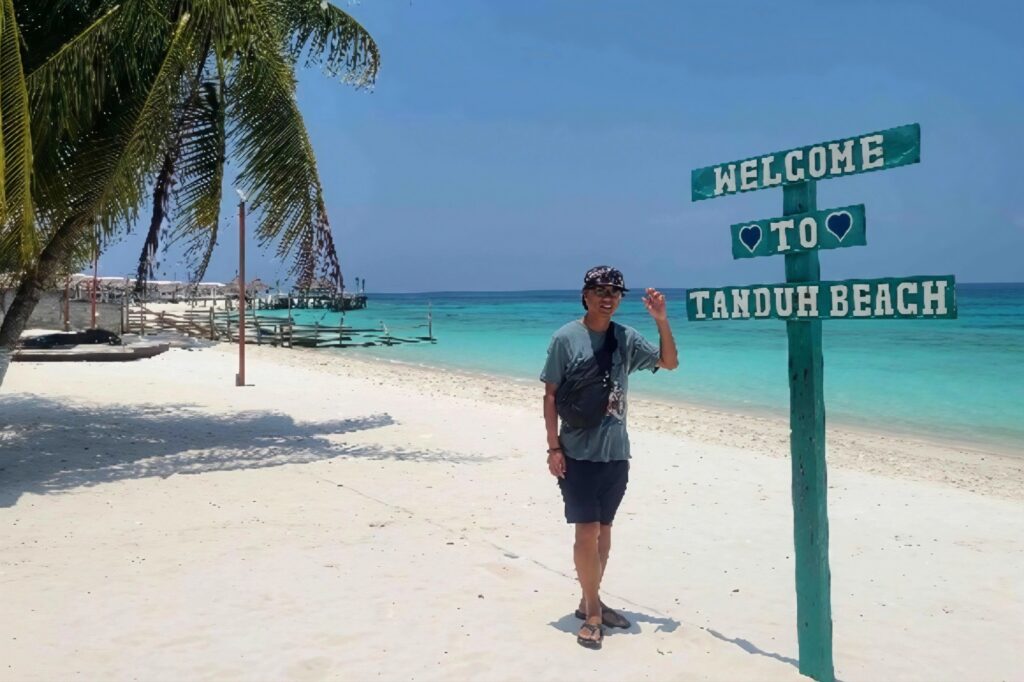
When PGE opened verification for travelers who completed all 82 provinces, Liu submitted his records. The recognition, he says, mattered because he had spent so many years exploring the country and wanted to meet others who shared the same passion for Philippine tourism.
As he reflected on his journeys, he said traveling across a country not his own also reframed his sense of “home,” teaching him perspective “as a Taiwanese” on appreciating what one has and understanding how different societies function.
Even after completing all 82 provinces, Liu has not stopped traveling. He recently returned from Malaysia and hopes to continue exploring the rest of Southeast Asia and beyond. Still, the Philippines remains a place that shaped him in ways he didn’t expect when he first landed in Tacloban as a volunteer more than a decade ago.
Asked by Esquire what he would say to those who hope to visit every province, Liu offers simple advice: “If you want to do the same thing, don’t be scared. Just be brave and keep your passion. Just come to the Philippines.”
Follow PHILIPPINES TODAY on Facebook and Instagram, and subscribe on YouTube for the latest updates.