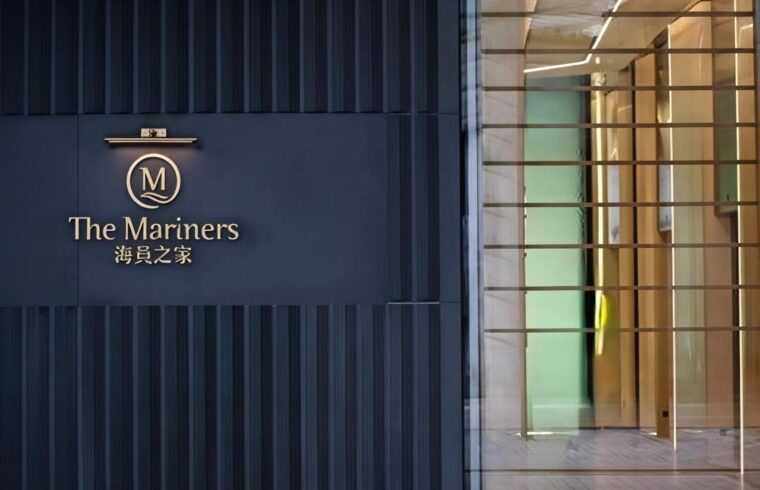
The Mariners Club in Hong Kong reopened on November 18 after seven years of redevelopment and a 2023 construction-site fire that nearly derailed the project. Its return revives a long-standing haven for international crews, among them the many Filipino seafarers who frequently pass through the city.
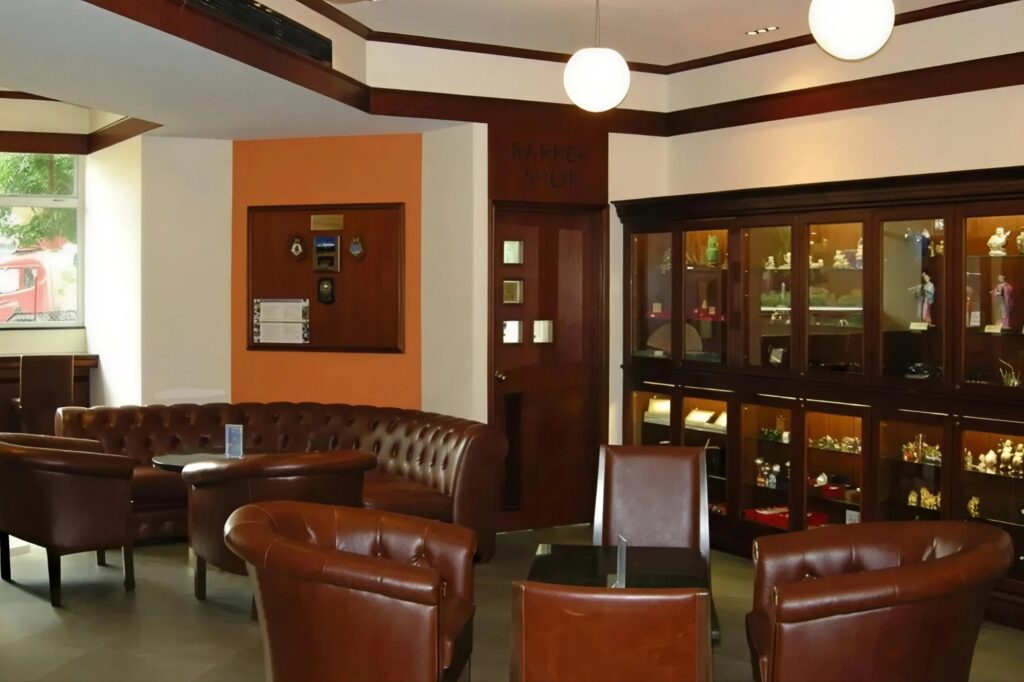
The new facility—now officially renamed The Mariners—occupies the lower floors of a 43-storey tower in Tsim Sha Tsui, replacing the modest nine-storey block that had served mariners since 1967. The Sailors Home and Mission to Seafarers, known as the Mission and active in Hong Kong since the 19th century, continues to run the club, while an international hotel operator manages the upper floors. The setup allowed the Mission to rebuild without compromising its purpose: serving people whose jobs take them far from home for long stretches of time.
For Filipino seafarers, who make up more than 25% of the global maritime workforce according to the International Chamber of Shipping, the reopening restores a familiar touchpoint in a routine shaped by long voyages, tight schedules, and brief shore stays.
Hong Kong has long been a practical hub for crew changes, and before redevelopment, a substantial portion of The Mariners’ rooms was booked for workers transitioning between ships or completing medical checks. Many of those arrivals were Filipinos, whose regular movement through the city made the club an understated but dependable shelter.
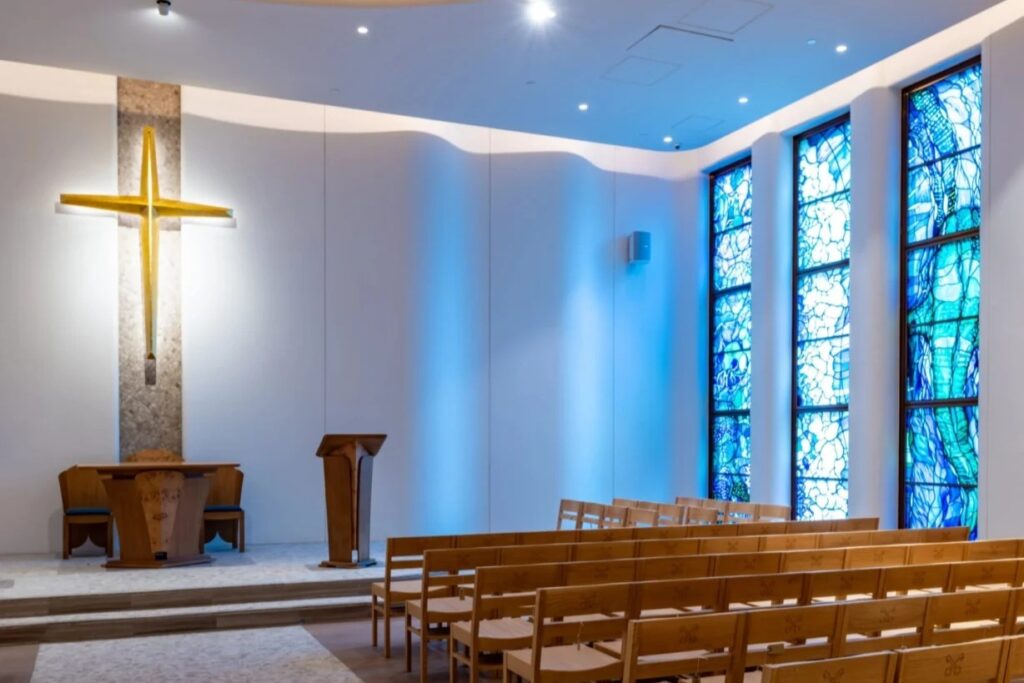
The rebuilt Mariners offers 75 guest rooms, St. Peter’s Seafarers Church, a restaurant, coffee lounge, gym, and swimming pool—spaces intended not for tourists but for workers needing rest after weeks or months offshore.
Reverend Canon Stephen Miller, in an SCMP interview, noted the club’s global mix of visitors and the steady presence of Filipino crews, saying, “Now, 25 percent of the world’s seafarers are from the Philippines, so we would expect naturally to get the same demographic staying here.” His remark underscores the broader pattern of global shipping, with Filipino mariners working on ships along most major routes and Hong Kong positioned as a frequent stop.
The redevelopment itself had been prompted by the old building’s deterioration, but the process became far more complicated after the 2023 blaze, which triggered a No. 4 alarm and was visible across Victoria Harbour. Despite the damage, developer Empire Group continued the project, ultimately handing over a completed, fully fitted series of floors to the Mission. The interiors—designed by P&T Group with fit-out by TCG Construction—draw on maritime motifs without straying into extravagance: wave-like timber walls, a blue-and-white palette, and windows framing the harbor to evoke open horizons. The design signals change, yet the club’s atmosphere remains grounded in its original intent.
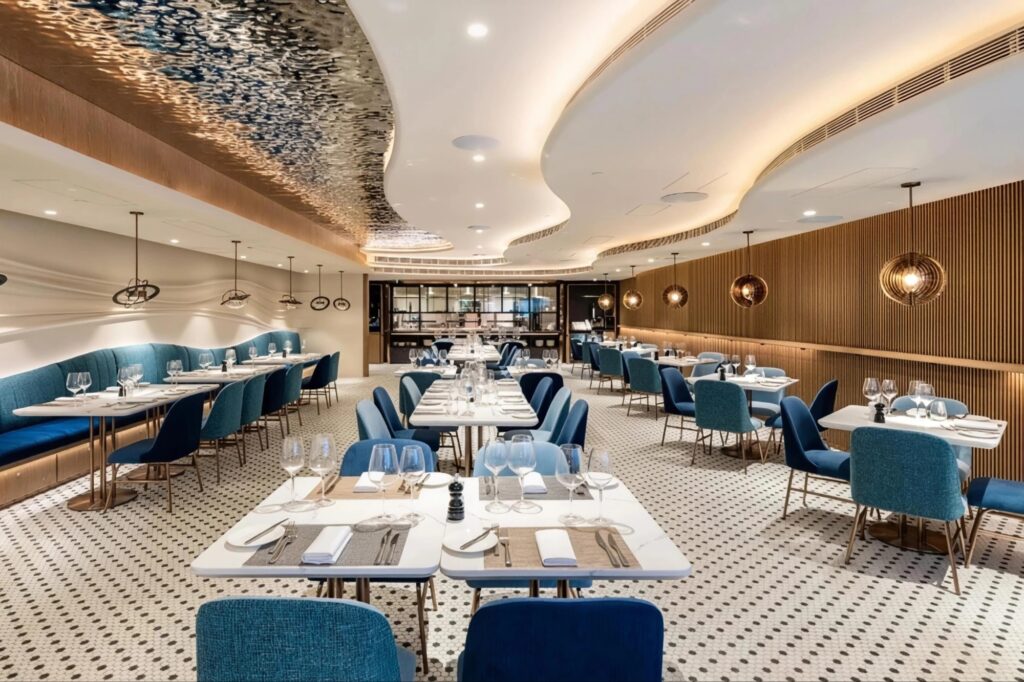
For many Filipino crews, the significance of the Mariners has never rested on architectural details but on what the place represents: stability. Seafaring work demands long absences from family, often under isolating conditions. A stop in Hong Kong—where a warm meal, a quiet room, or a brief visit to the chapel is possible—offers a sense of normalcy between contracts. It is a place to make calls home, sort out paperwork, or simply rest in a space where the staff understand the routines and pressures of maritime labor.
This familiarity is echoed by patrons who knew the earlier building. Retired mariner Derek Hung told the SCMP that the club had long been a meeting place for colleagues working on different vessels, saying, “It’s a community. I’d sometimes catch up with my former colleagues here. It’s a special bond that we have.” That sentiment applies across nationalities, including the many Filipinos who—despite their constant movement—often cross paths with countrymen navigating the same routes and cycles.
The Mission’s efforts also extend beyond transient crews. A part-time Cantonese-speaking social worker engages retired Hong Kong mariners who have grown less connected to the community, demonstrating that the club’s role spans both the global maritime workforce and the local one rooted in the city.
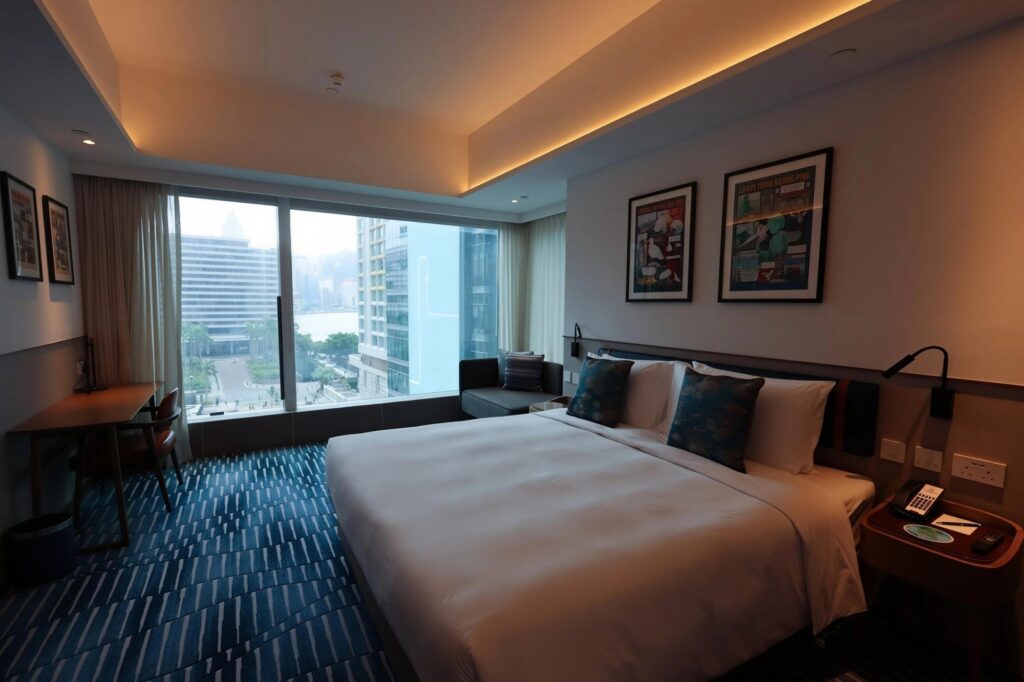
With its reopening, The Mariners resumes the rhythms that have defined it for decades: crew members arriving with luggage and documents in hand, chaplains moving between ship visits and pastoral duties, and workers settling briefly into a place designed for them.
For Filipino seafarers especially, the new club is not merely a modernized building but the return of a steady point of rest in a profession built on constant movement—a home port, even if only for a few days at a time.
Follow PHILIPPINES TODAY on Facebook and Instagram, and subscribe on YouTube for the latest updates.